Showing posts with label Inflation. Show all posts

49 - Cash savings cost you money

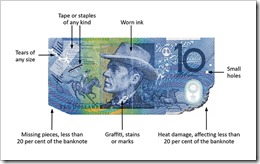
damaged-noteInterest earned has a nasty sting in its tail: it's considered taxable income. Save some cash in a savings account (or term deposit or similar) and interest earned will be included in your taxable income and taxed at your marginal tax rate.

Don't forget to take out inflation too (which was not inconsiderable at 1.9% for 2016/17).

Here's the simple workup:

  • Invest $10k @ 5% p.a to earn $500
  • Assuming your income is $87-180k, your income will be taxed at roughly $0.37 per $1 earned. As such, the ATO takes $185 of your $500.
  • The cost of inflation, calculated on the principal of $10k @ 1.9% p.a., is a further $190 (in other words, your $10k is now worth $9,810 in real terms).
  • Instead of earning $500, you've only earned $125 (or achieved a rate of return of 1.25%)

Current interest rates are already low and a 5% interest rate is probably unrealistic. Most 60-month term deposit rates are earning less than 3%.

If you're saving cash, you'd better have a very generous interest rate or a very low income—or you're probably going backwards. Let’s not get started on the opportunity cost of not putting those savings into a better-performing (and safer) investment.

Given the above example again, if you’re earning 2.5% interest, your actually working at a net negative interest rate of –0.33% at a cost of $32.50. As a bonus exercise for the reader, compound these examples over multiple years.

If you have a mortgage, get an offset account and stash your money in there right now. Either way, get a good accountant who can help you legally maximise your deductions.

I suppose a disclaimer is also worth posting: I'm just a guy, I'm not an accountant, lawyer, solicitor, tax agent, mortgage broker, banker, financial adviser, insurance agent, land developer, builder, government agent, or anything else so I disclaim your application of anything I write here is to be applied at your own risk. What I write may be incorrect and you are best to seek your own professional advice (tax, legal, financial, and otherwise) before entering into contracts or spending your money. Your situation is unique to you and what I write here reflects my experience only. This content is not professional advice and is not tailored to your situation. I’m not selling anything and I do not receive any form of commission or incentive payments for any companies or individuals I endorse. I'm learning too and expect to make many, many mistakes along the way.

Enjoy,

Michael

37 – A Few Reasons for Investing in Property

rcrIt’s been a hard couple of weeks here. With a bank pre-approval valid for only three months before the reams of documentation would need to be supplied anew, it was go-time for getting agreement from Gemma and setting the wheels in motion with Open Corp for the second investment property purchase. I thought Gemma remembered and understood the reasons for buying the first property—and how that logic extends to a second. As my external voice of reason, however, she was reluctant.

A refresher was in order. I spent a few evenings nagging Gemma to think it over. I drew a few simplistic diagrams on the kid’s chalkboard to reinforce the key points. I asked her to re-read the very readable Property Investing Mini Guide from Open Corp (which I’d helpfully underlined and annotated—because that’s how I roll).

Gemma wasn’t sure about the risks but couldn’t explain to me the basis for her reservations—her default financial strategy is to ‘put it in the bank’ and ignore the negative impact of inflation. Her preference was to take a wait and see approach with the first property, which isn’t a good move if house prices continue to climb and become less affordable. How long do we wait? This first year also won’t tell us much: since the first property is in her name and she’s on maternity leave, we won’t see many tax benefits this financial year.

I argued the experience of the first build went well and the process of buying and tenanting was an exceptionally solid result with Open Corp. We wouldn’t have a long-term view of success or failure for the better part of ten years or more (one property cycle) but doing nothing with our available equity would leave us behind as inflation eats away at out savings at a rate of ~3% a year.

What should be an emotionless decision was quickly becoming a very heated emotional debate between us.

In addition to my points above, I banged on about historical growth rates, leverage, and risk.

Historical Capital Growth

Looking back in time we see Australian house prices growing continuously since the 1970’s (and well beyond). Whatever happened (or started happening) back then—be it government forces, population and other demographic shifts, war, tax incentives, rising incomes, or other market forces—has tended to continue. That’s over forty years of generally positive data.

chart2

The past is not a guaranteed predictor of the future but it does provide some guidance. Of course you’ll also find arguments against property investment using similar data—see this article which proposes we’re in a housing price bubble.

Leverage

Buying a property seems expensive but it’s not. We pay the up-front transaction costs (indirectly through a line of credit) and borrow 100% of the cost of the property through a combination of the line of credit and a primary loan. In other words, we put in about $70k to invest $380k. That’s a powerful thing: by my very simple math, if we put in a dollar, the banks put in $5 and the interest costs are largely covered by the rental income, tax deductions, and depreciation. Yes, both the LOC loan and the primary loan are subject to interest rate increases and other legislative changes (e.g. negative gearing) and it’s always wise to take these variables into consideration when doing your sums.

Risk

I’ve written about risk before but the options are simple.

1. Do nothing and inflation calls the shots. Even in a term deposit or a high interest savings account, your position will probably decrease or remain flat (i.e. unproductive). Real estate can be considered as a hedge against inflation given the relationship between GDP growth and demand.

2. Invest in the share market and Ben Graham’s insane Mr. Market calls the shots—in other words, the share markets are unpredictable and crazy; unless you’re investing in the company itself and understand the industry and the internals of the company, you’re betting against the house—so to speak. Plus, you don’t have any control over how your investment is put to work.

3. Invest in real-estate. Land has a long-term history of appreciating in value and putting a house on it will ensure the costs involved in holding the land are manageable. In time, the rental income may cover those costs and provide an income stream. If everything else turns to pot, at least you can live in a house and capital increases are potentially accessible via equity loan.

These aren’t the only arguments to consider but they’re a good starting point and encompass many of the finer details. Here a few more points to consider:

  • Real-estate investment is relatively easy to understand
  • You have more control over your investment than you would as a stock investor
  • You can create value (e.g. by renovating)
  • As a long-term investment the impact of any initial mistakes are likely to be lessened over time
  • There’s less volatility in the real estate market than there is with the stock market
  • Bricks and mortar have a high tangible value (compare to investment in a start-up that may have a product idea but no product and no revenue stream)
  • Rental income provides a stable income
  • Housing will always be in demand as our population increases
  • You have many options for managing your investment (subdividing, doing your own maintenance work, using a property manager or doing it yourself)
  • Portfolio diversification
  • And so on

In the end, Gemma came around and the IP#2 wheels are turning. We signed the hold agreement with Open Corp, put down the $1k hold deposit and $2k land deposit when returning the land contracts.

Gemma did caveat her approval of this build: this second property would be our last for a little while. I’m fine with that as this purchase will come close to exhausting the small line of credit we took out for the first build, secured against our PPOR, and the banks may not be too willing to extend us a third loan given the fact I’ll be back on stay-at-home dad duties in the next few months. The general tightening of the financial lending market over the last few years doesn’t help much either on this front (I’m not quite sure how the 26 year-olds in the magazines amass 10 properties in such a short timeframe!).

On request, Open Corp came back to us with a 400sqm property in Victoria, an hour’s drive south of Melbourne. I’ll discuss the specifics—and recount the process to acquire and build, as I did with the first IP, in future posts.

I suppose a disclaimer is also worth posting: I'm just a guy, I'm not an accountant, lawyer, solicitor, tax agent, mortgage broker, banker, financial adviser, insurance agent, land developer, builder, government agent, or anything else so I disclaim your application of anything I write here is to be applied at your own risk. What I write may be incorrect and you are best to seek your own professional advice (tax, legal, financial, and otherwise) before entering into contracts or spending your money. Your situation is unique to you and what I write here reflects my experience only. This content is not professional advice and is not tailored to your situation. I'm learning too and expect to make many, many mistakes along the way.

Enjoy,

Michael

35 - Subprime Equity Loans

abandoned-house-auburn-2008jpg-089b37cb6d68e85b_largeGemma and I watched Michael Moore’s documentary Capitalism: A Love Story the other night. In the film, Moore connects the sale of suspect equity loans in the US and the ensuing subprime housing collapse. I first read about all of this in The Big Short: Inside the Doomsday Machine by Michael Lewis and it was a fascinating recounting but given how we’ve structured our investment property loans I thought it’s important to distinguish between a subprime equity loan and an equity loan in Australia.

From what I understand (and the entire situation was designed to be incredibly complicated), bank deregulation in the US lead to the availability of cheap finance for people who couldn’t actually afford to make the repayments. Banks, politicians, capitalism—you know what a dangerous cocktail that is. The US financial system then created products which bundled up those loans and subsequently sold products which bet against the homeowners making their repayments (derivatives and collateralised debt obligations or CDOs). It was only a matter of time until the foreclosures started rolling in en-masse and a few people got rich while a lot of people lost a lot of money.

Banking regulations are much tighter in Australia but more importantly I wouldn’t take on a loan if I hadn’t myself assessed our ability to afford the repayments. In other words, the closest we got in Australia in recent times to a subprime situation was around 2006 and the banking regulators here put a stop to all of that pretty quickly (and of course what was happening in Australia was nothing like what was allowed to happen in the US). From recent experience, I can vouch for the bank’s rigour in assessing our credit situation—it’s only gotten harder to get credit in the last few years, especially with the 2015 changes implemented by the Australian Prudential Regulation Authority.

As always, there is lot of information circulation about what’s good and what’s bad from sources which are good and bad. It’s important to do your own research and make your own decisions before acting but don’t forget it’s equally important to do something so inflation doesn’t do it for you.

I suppose a disclaimer is also worth posting: I'm just a guy, I'm not an accountant, lawyer, solicitor, tax agent, mortgage broker, banker, financial adviser, insurance agent, land developer, builder, government agent, or anything else so I disclaim your application of anything I write here is to be applied at your own risk. What I write may be incorrect and you are best to seek your own professional advice (tax, legal, financial, and otherwise) before entering into contracts or spending your money. Your situation is unique to you and what I write here reflects my experience only. This content is not professional advice and is not tailored to your situation. I'm learning too and expect to make many, many mistakes along the way.

Enjoy,

Michael

24 – Teaching the Kids About Money

Kids_money_lemonadeI grew up watching my mother balancing the cheque book (manually) at the kitchen table. She worked as a bank teller before she had us kids and she’d regularly fret about being out by a penny or a few cents. I’ve written previously about some of the key financial nuggets my mom implanted in my mind—mainly the old line “every penny counts!” and the idea that you can call up and challenge the banks if they’re not being helpful.

My father was an economist working for the Canadian federal government and although he did not regale us with the highs and lows of economic social policy, he was an educated man with a lot of common sense. My dad was a newspaper subscriber and we had the Ottawa Citizen delivered daily, which of course contained a business section which I’d infrequently leaf through.

Every night over dinner we’d talk about school and friends and some news but we’d also talk about family. Specifically, both of my parents were open, in simple terms, with us about the family’s financial situation. Money was never a “dirty” subject within the confines of our immediate family and we always received an honest answer when we curiously put up the question “how much money do you make, dad?”

My sister and I both received a modest allowance and when we were older we were also paid to mow the lawn—a sweaty, two-hour job in the Canadian summer humidity and blackflies! We had piggy banks and bank accounts from an early age and would occasionally buy a few savings bonds. Our parents covered our basic needs in terms of clothing, shelter, and food but if we wanted something special, we were encouraged to save our money until we could afford it. We also had to buy our lunch at school one day a week and did so from a young age—I remember buying my lunch in second grade.

My first allowance was a quarter: 25c.

Beyond those basics, the financial education I received at home was minimal. Some of these core tenets I’ve noted today form the foundation of my financial sensibility but I plan to raise the benchmark considerably with my children.

Growing up, for example, I knew my dad earned a “salary” of x dollars and my parents had a mortgage on the family home. I knew my paternal grandmother gave my parents a chunk of money when she downsized and I knew our family home (land and house) was bought and built for $60k in the early 70’s. I was also vaguely aware the inheritance received following the death of my maternal grandmother allowed my parents to pay off the mortgage. I was told we were a middle class family and my mom returned to work when my sister and I were older because she wanted to not because she had to. Beyond that, I was not taught about the relationship between income (salary) and expenses (mortgage, cars, and other costs). I knew my parents were cautious and somewhat frugal—definitely not flashy in their spending—but I didn’t know why; I always assumed it was because we were balancing on the knife-edge of affordability.

With our kids—the newborn and a clever toddler—I’m starting them young. Both kids have their own bank account (high interest accounts at 5% interest currently with deposit/withdrawal limitations imposed by the bank). Interest is paid monthly and I make a point to take a moment on the first day of every month to show our eldest her bank account and note how much interest she’s earned “for doing nothing” (as I put it!).

I pay each child, despite being very young, a weekly allowance (currently paid monthly into each account and rounded up slightly to $25/month). Although I don’t want to train her that working is the only way to earn money, I remind her that she needs to her earn her allowance by helping me vacuum, for instance (with her toy vacuum). We also receive the occasional cheque from family in Canada for birthdays and Christmas and that money typically goes into accounts. My 3yo already has a fair chunk of money to her name and earns monthly interest of about $10 (which stays in the account to earn interest).

I’ll note here I typically wouldn’t recommend an adult save their money in a bank account or even a high interest savings account. Although the risk is theoretically low, the interest rates are typically low too and the interest earned is counted as taxable income. And then inflation quietly takes most of whatever gain is left. In the kid’s case, the interest rate at 5% is higher than our mortgage interest rate, for example, and there are no bank fees or income tax. At the end of the day, this is an accessible learning exercise for the kids; if they eventually have the savings to fund a house deposit (possibly as a team) I’d encourage them to go that route but they may opt to travel or study or start a business instead.

I also talk to our oldest child about money. My goal is to create in her a clever, shrewd consumer able to work the system to her advantage, rather than be taken advantage. I typically take her grocery shopping with me each week and I explain to her how I compare prices. I’ve taken her to the accountant in the past and she’s sat beside me when the mobile mortgage broker has come out to the house (she colours…). She comes with me to the bank to deposit cheques and when we opened her brother’s bank account. She can count to ten and I’m slowly teaching her to add.

The core message I’ll be teaching our children is money can set you free but you have to be prudent and sensible in your financial dealings. This may work for us—will it make us wealthy? I can’t say but my hope is it won’t leave us poor. In either case, I hope our children will learn from our successes and our mistakes and my intention is to be as generally transparent on the subject of money as I am other subjects. Instead being taught to be a worker/consumer, my intention is to teach my children to think and behave wisely about money.

I suppose a disclaimer is also worth posting: I'm just a guy, I'm not an accountant, lawyer, solicitor, tax agent, mortgage broker, banker, financial adviser, insurance agent, land developer, builder, government agent, or anything else so I disclaim your application of anything I write here is to be applied at your own risk. What I write may be incorrect and you are best to seek your own professional advice (tax, legal, financial, and otherwise) before entering into contracts or spending your money. Your situation is unique to you and what I write here reflects my experience only. This content is not professional advice and is not tailored to your situation. I'm learning too and expect to make many, many mistakes along the way.

Enjoy,

Michael

9 - Performance Measurement

My wife is my yardstick for measuring reality. I’m admittedly a bit of a dreamer at times (with the ability to get mired in the details, mind!) but my Dr. wife, being smarter than me, is always ready to offer the checks and balances I occasionally require to cool me off when I get carried away.

Part of that is because she hasn’t learned what I’ve learned so she asks a lot of tough questions which forces me to think hard about the answers. She’s also far more conservative than I am and could probably be labelled a reluctant partner in all of this—her preferred approach to investment is to save cash in the bank.

Related to all of this, Cam McLellan over at Open Wealth, with who we’re building our first investment property, did an early podcast on the subject of what he calls “Dream Crushers”. A Dream Crusher tells you what they think (i.e. which is usually a negative, subjective view about what you’re thinking about doing) without having the experience or objective education on the particular subject to support their comments. This commentary gets you down and ultimately prevents you from taking action. The wife is effectively my lead Dream Crusher—although she usually comes around, either because I babble at her so much she wants to shut me up or because what I’m saying makes sense to her and she comes to understand my intention.

Which leads me into the subject of today’s post.

The investment strategy I had yet to—until yesterday—articulate to my beloved wife was to complete construction of IP #1 by mid-year (ish) and look at identifying and securing finance for IP #2 (and possibly IP #3) through the end of Q3 and the start of Q4 2015. This would tie in well with the fact I’d be back at work full time by that point, which the banks would hopefully look at favourably in terms of debt serviceability.

Then my wife hit me with her strategy: evaluate the performance of IP #1 before rushing forward. To me that was the sound of the cord being pulled and the lights going out. Fizzle. Zap. “No more property investing for you, dear hubby!”

We didn’t speak more on the matter initially but her comments certainly got me thinking: what is the detailed set of criteria we might use to define performance?

I’ve honestly been a little bit stumped about how to measure performance for a while now.

The easy one, of course, is a doubling in value (capital increase of 100%) every 7-11 years for good metro properties. The market will generally do this for you unless you’re adding value somehow (i.e. through renovations or infrastructure projects coming online).

Gross—or better yet—net rental yield is a good starting point as it’s a metric that’s easy to calculate and track.

Perhaps more important is the transition from negative gearing to neutral or positive gearing within a timeframe you can afford. Let’s say 1 to 5 or 7 years. This might happen in a number of different ways. Rents increase. Debt might be reduced or retired (but I wouldn’t take this approach) and interest rates might move—down like we’re seeing these days. You earned income may increase as you progress in your career, allowing for more effective tax deductions.

The conclusion that I’ve come to is performance must be measured over specified time intervals: 1 year (or less initially); 3 years; 5 years; 10 years; 15 years; 20 years. My strategy is to hold for the very long term and hence I believe performance should therefore be measured over the long term too. Hopefully in that time our property would have become positively geared and seen reliable capital growth.

Simply looking at results year on year doesn’t work for me. A property might be sitting pretty one year but take a step backwards the next before recovering again in year three, for example. The contextual economics need to be factored in to your assessment at the very least and this will happen automatically by measuring performance over a multi-year period.

More importantly, deciding to invest or not invest in a second property, which will likely be in a different suburb if not a different market (i.e. a different capital city), based on the performance of the first property isn’t an equitable comparison.

There are also other factors that I’ll say are beyond your control, for lack of a better expression. Let’s say you buy a negatively geared property in the years before you retire.  Your income is hopefully at the highest level it ever has been and so your tax deductions go further and, were you to keep working, that negatively geared property might be able to generate a positive cash flow for you in a few years.

And then you retire, hopefully with structures in place that will minimise your tax burden. Realistically your income will likely decrease in retirement. But what about those deductions?! That negatively geared property might remain that way for longer than you anticipate if you’re not able to pay down debt. At worst, it might eat into your retirement income and put a hold on your big retirement plans. Moreover that property may have seen only insignificant capital growth in the short term, making any sale not worthwhile despite the potential CGT savings.

If you’re younger, as I am, what if you’re working full-time one year but not earning at all the next? This is my reality as a stay-at-home dad. Bring forward tax deductions, yes, but that muddies the waters somewhat across the financial year boundaries.

Tenant churn might be a problem. That is, you might struggle to retain tenants, leading to more vacancy periods than another investor might have with an elderly couple who’ve been in the rental for a decade—doing their own light maintenance no less! (I read an investor profile just like this one in API). If you’ve got a strong property manager now, what happens if he or she moves on and you’re left with an average manager?

What about bad tenants? Insurance claims? Construction defects if you’re building new?

Interest rates may (will) increase, reducing positive cash flow.

Special circumstances may also intervene. Let’s say you lose a tenant for a length of time greater than you planned for because a major industry pulls out of the local market and rental demand evaporates. Or a flood leads to a broad stagnation in the market in terms of capital growth (as per Brisbane). I can only imagine what impact the earthquakes in New Zealand had on rental property there.

If you’re holding long-term, these sorts of events that occur in one year, or even over a number of years, don’t necessarily mean you’ve bought a dud. It might, if you’re being forced to subsidise a negatively geared property you easily can’t afford—in which case you’ll probably want the situation to come good within a defined time period (i.e. five to ten years); you’ll also need to decide whether that subsidy is worth the cost to you—especially if it’s not a burden. The selling costs (agent’s fees, possibly CGT, timing, etc)—coupled with the costs to acquire a replacement property (stamp duty, possibly LMI, time lost in the market)—make selling off an “underperforming” asset problematic.

I’ve written previously that time heals all problems but the flip side to this statement, of course, is that time is not on our side! Even for me as a relatively young man I’ll only get two to three decades (two to three growth cycles) before we both retire and our earned income dries up. With a goal of holding 6-10 properties at minimum, and natural constraints around how quickly we can do that, time is most definitely not on our side!

I’ll keep working through this one but I wanted to share while the subject was front of mind.

I’ve been reading a lot of Robert Kiyosaki lately so I’ll close by highlighting a recurring theme in all of his Rich Dad books: don’t buy investments that will cost you money. Speaking to us Aussies, I’m pretty sure he’d say “buy positively geared properties, mate”. That doesn’t completely solve our performance question—a positively geared property could revert back—but it’s a sound idea where it’s possible to find and buy such an asset.

I suppose a disclaimer is also worth posting: I'm just a guy, I'm not an accountant, lawyer, solicitor, tax agent, mortgage broker, banker, financial adviser, insurance agent, land developer, builder, government agent, or anything else so I disclaim your application of anything I write here is to be applied at your own risk. What I write may be incorrect and you are best to seek your own professional advice (tax, legal, financial, and otherwise) before entering into contracts or spending your money. Your situation is unique to you and what I write here reflects my experience only. This content is not professional advice and is not tailored to your situation. I'm learning too and expect to make many, many mistakes along the way.

Enjoy,

Michael

4 - Risky Business?

Risk is one of those misunderstood concepts that seemingly plagues everything we do: riding a bike is risky, crossing the street is risky, buying property is risky.

I’ve found people throw around the word risk in a very self-limiting way and when it’s used in the context of any random conversation they: 

a) haven’t identified the actual risks that apply to that situation;

b) haven’t classified those risks in terms of their likelihood of actually occurring and the impact if they do occur;

c) haven’t identified ways of mitigating those risks or reducing the likelihood of their occurrence and severity should they occur.

Your mom or sister or brother or uncle will just say “oohhh that’s too risky for me” without understanding why it’s risky. This annoys me to no end because their ignorance suggests I haven’t evaluated risk and am therefore as ignorant and blind as they are myself—I am not!

Experience also reduces the risks that apply and time, of course, redresses many risks—especially in the world of long-term property investment.

Not taking risks could be said to be just as risky as taking managed risks! How else do we move forward as individuals and as a society and culture?!? NASA didn’t put men on the moon without taking risks.

The key to managing risk in any situation is understanding and qualifying the risks that might eventuate.

The example cited above of riding a bicycle is simplistic but the risks of riding a bike are numerous and include falling off, getting hit by a car, riding into a pedestrian, vehicle, animal, or lake, the chain falling off, getting wet if it rains, getting a flat tyre, having to shower when you get to work but having no soap. I used to ride my bike to work every day and these are all real risks!

Having identified the risks, scrutinise each risk in further detail to categorise and rate each one. Here are a few examples from bike riding:

  • Falling off: There’s a small chance you might fall off your bike and the result might be of no consequence if you land on your feet or it might be catastrophic if you bump your head. Maybe you’re riding over a loose surface or in the snow. Maybe you’re trying to stay balanced while you’re clipped in at a traffic light. Maybe you’ve made the poor decision to ride home after a few beers on a Friday night after work. The risk of falling off could be decomposed into several risks which are easier to think about and to manage but let’s keep things simple for now. In all cases, you can mitigate the risk of falling off by wearing a helmet and gloves, taking a safe route on bike paths and becoming familiar with the route and all of its hazards, and of course making good decisions while you ride such as unclipping from your pedals at intersections! You could also take out life insurance to cover your healthcare expenses, protect your income if you’re seriously hurt, and reduce your liability if you hurt someone else.
  • Flat tyre: This one’s easy: the risk is very low as it’s bound to happen every so often and is something that can be fixed on the spot in ten minutes (or worst case: call someone to collect you and your bike). Mitigation includes not riding over broken glass and fields of prickles; of course, you’ll also want to carry a spare tube or patch kit, tyre levers, and a pump and a flat may make you late for work… which might get you fired.

Don’t forget to take a moment to look at the risks in the context of what you gain, which in the case of our example include improved health (if you don’t fall off!), cost-effective transport and exercise, less stress, nice tan, etc.

In a similar vein, property investment has it’s own set of risks but it’s not inherently “risky”. You’ll want to identify the risks that apply to your situation but this is easily done and takes only a few minutes to think through the details. You’ll sleep better at night having done so—I promise: if your mind starts playing tricks, all you have to do is return to your risk assessment and you can say “nup, that’s a low-likelihood risk and although the consequences are high these mitigations are in place” and carry on sleeping.

Here’s a shortlist of property risks to get you started:

  • Buying a low growth property
  • Buying a property with expensive problems (pests, asbestos, etc)
  • Buying a low cash flow property
  • Paying more than the property is worth (i.e. buying at auction)
  • Sharks and dodgy investments
  • Problem tenants/property management
  • Vacancy
  • Unexpected repairs/shonky builder
  • Interest rate increases
  • Job loss
  • Hidden costs (stamp duty, mortgage lender’s insurance, council rates, insurance, accounting, management, etc)
  • Change in legislation (i.e. taxation laws relating to negative gearing)
  • Liquidity
  • Capital gains tax
  • Selling costs

It’s also important to weigh up the risks you identify in context of the reward—the gains you stand to make if the risks you identify do not eventuate. These might include income through a positively geared property, equity, and wealth.

We mitigated a number of the early risks related to buying by going through Open Wealth but I compiled a risk matrix for each of the risks that do apply in our case, specifically as we move into the post-construction phase. It’s a simple grid. I noted the risk, the criteria for that risk to be fulfilled, probability, impact, ranking, mitigation, and contingency.

Simplistic definitions for these terms are as follows:

Probability:

  • Improbable
  • Remote
  • Occasional
  • Probable
  • Frequent

Impact:

  • Negligible
  • Marginal
  • Critical
  • Catastrophic

Ranking:

  • Acceptable as-is
  • Acceptable with controls
  • Undesirable
  • Unacceptable

If, in future, I do encounter one or more of the risks I’ve defined, I have a ready-made framework for understanding those risks—at the very least—and some initial guidance for dealing with them in the heat of the moment. Hopefully I’ve taken steps to mitigate a risk before it becomes a big problem. If nothing else, my risk matrix is an integral part of my strategy relating to property investment and prompts me to think about things that might go wrong before they go wrong—or more specifically—how to measure my success or lack thereof.

Property investment is not inherently risky and I consider it to be far less risky than investing in stocks, where you have no real control over how your investment performs, or leaving in the bank to suffer at the hand of inflation. Many risks in the property sphere are readily overcome and the risk of losing money—or not making money—are often under your control with reasonable opportunities for mitigation.

Of course not doing anything is the biggest risk of all to building your future wealth. Time, conversely, is your biggest ally and will help to remove many short-term risks if you’re prepared to hold and ride out any lumps and bumps.

I suppose a disclaimer is also worth posting: I'm just a guy, I'm not an accountant, lawyer, solicitor, tax agent, mortgage broker, banker, financial adviser, insurance agent, land developer, builder, government agent, or anything else so I disclaim your application of anything I write here is to be applied at your own risk. What I write may be incorrect and you are best to seek your own professional advice (tax, legal, financial, and otherwise) before entering into contracts or spending your money. Your situation is unique to you and what I write here reflects my experience only. I'm learning too and expect to make many, many mistakes along the way.

Enjoy,

Michael
Setting the Scene

I’ve previously mentioned property investment and that’s what I’m here writing about (or will be soon once the formalities are out of the way). So before we get started in earnest allow me to explain why we felt the need to invest. As always, I’ll go into specifics in future posts—I promise.

Our pathway through life has been, to date, very much what most people would expect: grow up, go to school (university), get a good job (refer to Robert Kiyoasaki’s excellent Rich Dad Poor Dad book for more on this mantra). You might follow that with work hard, retire, die.

In my case, I opted to start my tertiary education in the arts to lay the groundwork for future specialisation so I studied English Literature and Art History. I followed that with a Masters in Information Technology.

My wife followed a similar path, starting out in veterinary studies before shiftingd over to medicine.

I did alright, academically, in my undergraduate degree and did very well in my Masters degree. The wife did very well throughout. I landed in a pretty good job out of university and my wife entered the public health system to complete her training.

Our incomes grew rapidly as we progressed from junior positions in the first few years of our respective careers and we soon focused on buying a block of land and building a house. We saved enough for a deposit on the land and took on a mortgage worth a lot of money (not quite three quarters of a million dollars at the time—2006—but close enough to make me uncomfortable) for the purchase costs and the build. Interest rates were higher then and bounced around a lot but we were protected by naivety, our double income, and a thrifty nature.

We went to work. We paid our mortgage (which cost over $4,000 a month in the early days). We saved a bit where could, using high-interest savings accounts—and paying tax on the interest of course. We were scared to spend and saved hard to establish a buffer or rainy day account.

At one point, the CIO I was working under suggested to me the best thing we could do with our saving was reduce the interest costs on our mortgage by pushing our spare cash into the included redraw facility. If you’re not familiar with redraw, it works very much like an offset account: any money you put in reduces the principal on which you pay interest. Whereas an offset account is a separate transaction account, a redraw account is basically your mortgage account. The cash you push in can just as easily be pulled back out again. It’s not quite as flexible as an offset account but redraw didn’t attract any fees in our case.

Important note: there are significant downsides to redraw if you ever want to turn the property into an investment property—against which  you would likely want to claim tax deductions. The ATO considers payments into redraw as payments which reduce how much interest you can claim. So watch out for redraw and prefer an offset account instead which doesn’t have the same problem.

From this simple idea was born our financial strategy: manually move cash into the redraw account when it was available, thereby reducing interest costs. This approach would save us hundreds of thousands of dollars and result in the mortgage being paid off early. Oh and there would be no tax to pay (if our cash was instead held in a high-interest savings account or other investment vehicle we would pay tax on the earnings).

Meanwhile, the equity in our home was increasing. It’s now 2014, we’ve owned the block of land since mid-2006 and been in the house since mid-2008. As we worked at our jobs, the property market—and the property cycle—kept working in our favour too, ensuring the value of our house was aligned to the median house price and comparable recent sales in our area.

In round numbers, let’s say we’ve been living in the house for five years; in that time, the equity in the house has increased by over $400k. Of course there’s inflation to contend with and we spent close to $100k on very necessary post-construction activities like pouring a very long driveway (we’re on a rear block), building a deck and pergola, fencing, tiling, painting, carpets, blinds, built in vac, etc, etc.

Equity, locked up in a family home is like almost-free money. That’s simplistic, of course, because to access that “money” really and truly you’d need to sell the house and crystalise the gain which most people probably won’t want to do if they’re living in that house. But—and very importantly—the banks will loan money against that equity using a line of credit or an equity loan. You’ll pay interest just like any other bank loan but you can effectively do whatever you want to with that money such as use it to pay for a deposit on an investment property (or buy stocks or go on a holiday or whatever—but ask an accountant about the idea of mixing the purpose of the loan before you do anything other than attempt to generate money). A line of credit can be established for smaller amounts but can go quite high too—the bank site I’m looking at as I write suggests $750k and up.

At this point, we have a problem. We’ve got a plan to pay off our mortgage in ten years or less (by paying less interest, basically) and we’ve got increasing equity in our home. That’s good problem to have, I suppose! It also sounds like lazy money to me: money—or rather other people’s money (the bank’s)—that could be working for me to make more money (so I don’t have to) but that hasn’t been put to good use.

Following an initial conversation directly with our bank I realised we could be approved for an investment property mortgage and could effect the transaction with no money from our own pocket. Really. Nothing. We couldn’t get a 105% or 110% loan because they aren’t offered by the mainstream lenders post GFC but by combining a line of credit with an investment home loan we could cover all of the purchase costs and we’d avoid paying mortgage lender’s insurance.

Rental income would cover a significant majority of the ongoing costs and tax deductions would take us up near 95%, leaving only a small difference for us to pay. By my (pessimistic) calculations that works out to $4,000 or less a year.

The property will therefore be “negatively geared” but the plan is for it to become neutrally or positively geared in the years to come meaning it makes money (“net cashflow positive”) and costs me nothing in the long-term. All the while the equity in this first property is growing and can be used for other investments.

So we’ve redefined our financial strategy—I plan to dedicate a future post that topic. In short we’ve now outgrown what was a simplistic and great plan (put it all in redraw!) and are now thinking long-term and bigger picture (through retirement and on to death). I’ve done a lot of reading over the last six months and spoken to brokers, accountants, other investors, lenders, and solicitors to understand the moving parts when it comes to property investment. I have a lot more learning to do however!

I’ll write more about risk in the future as well but the way I see it property is in a sweet spot between shares and savings accounts. Understand the risks and they seem rather manageable for the long-term returns you hear about. [Update: see my post Risky Business? for my views in this area.]

A side note: I earned ten thousand dollars one summer as a young man planning bus routes for the school board in my area. Another long story but that money was invested in a handful of tech stocks around 1998/99—just before the tech bubble burst, if you’ll recall! I watched some of the five or six stocks I held soar magnificently in value but was mentored to hold for the long term and I neglected my instinct to sell and cash in the gains. The bubble burst soon enough and my $10k became almost worthless in a short matter of time. In retrospect, I probably bought when prices were already high so the correction left me hanging in the wind. In the next decade that money would have come in terribly handy for immigration to Australia, getting married, studying as an international student, and buying our first home. Of course by that time it was long gone. It’s easy to call stocks a gamble but there are reasons why I have no interest in stocks (to list some of those reasons quickly: market mentality, lack of control or direction over the investment, lack of time and interest to understand company fundamentals, and so on).

Super would be fine and dandy—apart from the fact any contributions are locked away until you reach your preservation age (55 in my case) and the canned investment options are built around securities (and property and cash). Self-managed super would be great, especially when it comes to property investment, but then the ATO won’t allow you to buy a block of land and improve it (build) and building new is what maximises your depreciation benefits.

Other options we considered were to simply save our income. This is simple and surely it’s safe, right? The bank guarantees your savings but it won’t protect your savings from inflation (which is roughly 3% a year on average). Most importantly, your money isn’t working hard enough, even if it is keeping pace with inflation. With interest rates so low, high-interest savings accounts are still quite boring in terms of their returns and term deposits, etc aren’t much better as far as I know.

So we’re starting with property. It costs very little to build an asset base that will grow in value over time and allow us to save tax. Our strategy, if you can’t tell, is very much buy and hold—forever.

Hopefully that gives you some context for the stories and tales that follow. Our situation is unique in that it is our own but in dollars and cents I think you’ll find we’re not all that different from you or your friends and neighbours. There are no secrets and no magic tricks. Yes, there are tricksters and sharks who will attempt to lead you astray and while they may not steal from you, you may not get what you expect in return for payment. There are alternative strategies and approaches you’ll come across, of course. And there is plenty to learn: the financial aspects are fascinating and then of course there’s the tax office and different state laws and functions to consider. As a simple person, however, I don’t believe this stuff is beyond my grasp… but I’ll keep you posted either way!

I suppose a disclaimer is also worth posting: I'm just a guy, I'm not an accountant, lawyer, solicitor, tax agent, mortgage broker, banker, financial adviser, insurance agent, land developer, builder, government agent, or anything else so I disclaim your application of anything I write here is to be applied at your own risk. What I write may be incorrect and you are best to seek your own professional advice (tax, legal, financial, and otherwise) before entering into contracts or spending your money. Your situation is unique to you and what I write here reflects my experience only. I'm learning too and expect to make many, many mistakes along the way.

Enjoy,
Michael