Showing posts with label Construction. Show all posts

31 – Thoughts on Upsizing

small-house-big-houseA couple of houses recently went up for sale on our street and when I saw the home open signs this weekend past I thought I’d take our daughter for a walk and go have a nosey. And then I got to thinking—which never ends well!

We looked at two houses: the first quite new (modern but lived in, on a rear lot like our PPOR) and the second quite old (not quite a “bonus house” but almost, on a large block with the potential for subdivision). Our neighbour’s owner-built house is also unofficially on the market. Give or take a few hundred thousand dollars, we could sell up and buy one of these places instead.

We had a project builder construct our family home in 2008 to one of the builder’s stock plans which we butchered to suit our requirements. After construction, we did a lot of work ourselves, including the painting, the tiling, the carpets, the skirting boards, the window coverings, light fittings, having the driveway poured, the pergolas and decking, the reticulation, the gardens, the paving, the fencing, air conditioning, the ducted vacuum, etc, etc. By my estimation, there’s about $95k of equity (materials, trades, and my free blood, sweat, and tears!) we’ve bolted on to the original $290k build price.

But here’s the thing: while our living areas are of a good size, the four bedrooms are modest (i.e. small) and we both feel we’ll outgrow this house in time as our children grow (funny what kids do to you…). Although this house was designed to be our “forever house” and we absolutely love the location in relation to the city, shops, and beaches and we can’t think of any place better than our particular block and its valley views, we built to our short-term requirements as DINKs, to a budget, and to a medium specification. I said to Gemma recently I feel like we built the wrong house on the right block.

Our house has served us well in the seven or eight years of living in it and it’s home. We’ve built strong relationships with our neighbours and the feel safe and happy in our local community. Gemma’s always insisted we spend an arbitrary minimum of ten years in our living in this house given our personal investment—as in, let’s enjoy the space we’ve had a significant hand in crafting and creating.

I’m not a status symbol type of person and having a large house in a nice area is not on my list of necessities. I do appreciate light and space, however; we can control the former to an extent but are bound by bricks and concrete when it comes to the latter (unless we extend) with our current house. I’ve also got a long list of must-have and wish list requirements for the next family house build… the things that to my mind would make the space in which we live more liveable.

Beyond that it’s just a matter of accommodating the kids’ friends when they have a sleepover, having storage to hide the clutter of daily life, and better flows and ambience.

I’d love to build again and probably would go through the pain of doing a lot of the finish work myself. I’d employ an architect this time around and wouldn’t go near the project builders.

Will the next house be our forever home? Perhaps the idea is a silly one and we’d be better off thinking about matching our home to our current life stage requirements. Of course Gemma and I are both Cancerians and therefore homebodies so just bury me in the back yard, thank you very much!

I suppose a disclaimer is also worth posting: I'm just a guy, I'm not an accountant, lawyer, solicitor, tax agent, mortgage broker, banker, financial adviser, insurance agent, land developer, builder, government agent, or anything else so I disclaim your application of anything I write here is to be applied at your own risk. What I write may be incorrect and you are best to seek your own professional advice (tax, legal, financial, and otherwise) before entering into contracts or spending your money. Your situation is unique to you and what I write here reflects my experience only. This content is not professional advice and is not tailored to your situation. I'm learning too and expect to make many, many mistakes along the way.

Enjoy,

Michael

29 – Pets Allowed?

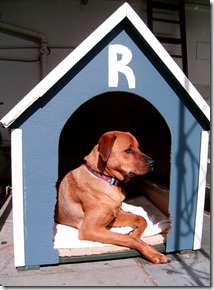
RileyOf all the varied decisions we’ve had to make of late, we also had to consider whether to allow our first tenants to keep pets. Queue the cat lady.

By way of a preface to this post, we’ve always been “dog people”, had pets in the properties we’ve tenanted, and keep a dog and a cat in our own home—so we know all about animals. The dog in the photo is Riley. She's a ridgeback cross Rottweiler, around ten years old now (the photo was taken when she was younger). We also have a cat, who thinks he's a dog—and he's almost as big, named Ted. This crux of this post is our personal story about how we acquired Riley without permission while renting and our experience as pet owners (in case you’re not). I discuss some other considerations further down.

Ten or twelve years ago, we were living in in Adelaide near the university where we both studied. We found a house through the university's accommodation board after landing in Adelaide from Perth, days after I emigrated to Australia (a sordid tale, those first few weeks in Adelaide).

The landlord, Grant, worked next door as a steel fabricator and the house was ancient—or felt that way to us. Think green and yellow motif in the kitchen, gold threadbare carpets, a toilet in the sagging rear addition that was so cold on a winter’s night you might as well have been in an outdoor dunny, and ceilings that stretched to infinity. Our view from the front veranda was an old Colourbond fence across the street, what I would come to call an "ugly tree" on the verge, and Grant's crane through the twisted chain link fence separating the house from his factory. Grant started early—7am at the latest—and steel deliveries would often arrive around that time with a flatbed truck reversing down his drive which ran alongside the boundary of the rental property—and the master bedroom—with only inches to spare.

The house was close to the university and shops, it was clean, and it served us well given the affordable weekly rental of $125. Despite the occasional late night and weekend, Grant was a good neighbour and it was convenient having our landlord next door when it came time to pay the rent. Upon meeting Grant, we told him we had an old cat to deal with but, to quote me, "she'd be dead soon", and he was okay with that.

We spent four years in Adelaide, in the same rental. I think our rent increased once by five or ten dollars—a very good thing too as we had no money to our name (I was studying as an international student and we simply had nothing behind us despite menial part-time jobs, a meagre Centrelink allowance, and a simple existence).

At the start of our last year in Adelaide we woke up one overcast Saturday morning and started talking about dogs. We'd both had dogs we loved growing up. The wife said, hypothetically, she'd really like a Ridgeback. I said I'd really like a Rottweiler. We decided to drive down to the RSPCA that morning "just to look." We came home with 10 week-old Riley: a laughable sack of brown, wrinkly skin and a Ridgeback-Rottweiler cross.

Sunday we spent playing with Riley and thinking through how we might explain this situation to Grant. We thought he may not be too keen on the idea but we knew he had a family dog of his own. The rent was due on Monday so we had to go over anyway and he would have seen Riley in the garden if we weren't upfront things. We took Riley with us in the hope of persuading our landlord with puppy cuteness. Of course she was happy as any puppy can be be out for a walk, not knowing how much trouble her new parents might be in.

Grant met us at the roller door of his shed. The sun typically came up behind the shed and, walking up the workshop’s driveway it was often impossible to see what was going on inside, through the deep shadows beyond the door.

As we approached and my eyes adjusted to the dimness I saw an inquisitive smile on Grant's face and a raised eyebrow. He asked us what we'd done as we both cringed slightly and avoided eye contact.

Grant told us she'd dig holes in the grass and I promised him we'd look after the place. By this point he'd bent over to scratch her ears. All the necessary exchanges, of course—there was really no negotiation required and Grant's smile said it all.

And so we had a dog. The surprise was sprung upon our landlord but at least he was on board. The puppy dug holes every so often and I dutifully filled them in. She peed and pooped on the kitchen floor, where we left her the first few days when we had to go off to uni; when we arrived home, we washed the tired lino floor after collecting the mess and the freshly shredded newspaper we’d left down. She ate our phone once, while in that kitchen. She pulled laundry from the clothesline, once outside more regularly, and we arrived home one afternoon to find wifey’s unmentionables strewn across the front lawn. Thankfully she was quiet about it all and never barked much.

Grant would park his ute in a little garage at the corner of the factory lot and open the side gate first most mornings. As Riley slept outside in Adelaide, she'd come to greet him through the chain link fence every morning, sauntering sheepishly past our corner bedroom window to say hello. Or so we thought: we peeked at the two of them one morning from behind the curtain and realised Grant was actually sneaking Riley treats.

When we left Adelaide to move to Perth, Grant asked for a picture of Riley. Obviously we lucked out as Grant could have told us to get rid of the dog or cancelled the lease when we brought her home.

We still have Riley today. She still digs holes and sheds fur and tracks mud and sand into the house. She’s older now and drools brown slobber through her old teeth. As work progressed on our first investment property we discussed whether it would be wise to allow prospective tenants to have pets. The house and all of its fittings, including the carpets and gardens, are brand new. We can’t ask tenants for a pet bond in Queensland but I suppose we could charge a premium rent if the market would tolerate it (Open Wealth’s rental guarantee might not, however). Allowing pets has the potential to widen the market of applicants and might also help install a long-term tenant at that.

We've read horror stories about the smell that lingered even after the carpets were pulled out. We know from first hand experience dogs and cats have oils on their fur that gets left behind on every doorway and corner they rub past. Fur gets into everything. Cats have claws that pick at carpets. Dogs dig holes. And they all get poop and occasionally vomit on floor coverings and walls. They sometimes bleed (another story). They sometimes claw at doors. They sometimes chew wood. They sometimes dig up new gardens. They bark (and meow). Even a fish tank might leak and a snake might eat the kids. Is any premium really worth it? It would likely be hard work to evict a cat lady and insurance might or not might not cover some of these problems.

We've loved our pets. They cause us no end of heartache at times but they're good value nonetheless and the kids love them. I don't think a new house is the best place for tenants with pets—from my perspective as a landlord, anyway. Maybe in ten years when the place has been bumped through by several shorter term tenants and is due for a fresh coat of paint and new carpets.

Nonetheless, our property manager at Century 21, Kerry West, indicated most of the applicants looking for a 4x2 house in the area have pets (think family: mum, dad, and two or three kids plus cat or dog or both). Kerry further suggested a family without a pet on move-in day might seek to acquire a pet later on, which would likely be a juvenile animal instead the mature animal(s) we might get upfront. All valid points we hadn’t considered.

And so we left the Pets Allowed box ticked on the appointment form and agreed to wait and see what happens. In the end, the first application through (which we accepted) is from a trio of roommates with no pets and the lease formally stipulates no pets.

If the tenants come to us in time asking to have a pet (or having acquired one) I can’t say I’ll be as sympathetic as Grant was with us but I can’t say that I’d say no either. At the very least there would the cost of replacing the tenants if they chose to leave in order to find a more accommodating rental. We certainly understand the benefits of having pets in our lives and it would be hard to begrudge someone else that luxury.

I suppose a disclaimer is also worth posting: I'm just a guy, I'm not an accountant, lawyer, solicitor, tax agent, mortgage broker, banker, financial adviser, insurance agent, land developer, builder, government agent, or anything else so I disclaim your application of anything I write here is to be applied at your own risk. What I write may be incorrect and you are best to seek your own professional advice (tax, legal, financial, and otherwise) before entering into contracts or spending your money. Your situation is unique to you and what I write here reflects my experience only. This content is not professional advice and is not tailored to your situation. I'm learning too and expect to make many, many mistakes along the way.

Enjoy,

Michael

28 - To Inspect or Not to Inspect?

Defect-cor1_2

One of the inclusions of building an investment property with Open Wealth Corporation is a travel “allowance”, of sorts, funded from the development management fee paid at the beginning of the process. The question facing us now is whether we take advantage of those funds and see the property and the house for the first time with our own eyes.

Open Wealth offered us the opportunity to fly to Queensland from WA to inspect the area when we were considering a purchase and again at land settlement. With construction now complete, and no tenant in the house as yet, we recently received a final offer to have a look. In our case, we’ll be reimbursed $400 for costs to get to Brisbane and back, which is money that will otherwise go back to Open Wealth. As a return flight to Brisbane from Perth costs $538 at a minimum, we’ve been asking ourselves whether we spend the extra money and inspect the build or not.

Were it not for the money (and possibly the time), the question would be a silly one and the answer would be “of course! We’ve just built a new house so why wouldn’t we want to see it?!?”

The obvious response is to remain emotionally detached from what is a purely financial investment. We have no plans of ever living in Queensland or in this property and as long as it can be successfully rented to fund the cost of holding the true asset—the land—we shouldn’t care if the front door is pink or what the view out the front window looks like. We don’t actually need to see it in person.

The practical man inside of me, however, has a slightly different opinion on such things. Including our family home, this is the second house we’ve now had constructed by a project builder. From experience with our first build, we know some things will have been overlooked and some things will have been delivered to an unacceptably low standard. These defects, if not addressed during the builder’s warranty period, have the potential to translate into a significant cost to us in the future.

I’ve previously noted Open Wealth conduct a number of inspections throughout the build and the first and second practical completion inspections have already occurred. A small number of defects were logged and the builder addressed those defects promptly. The defect list seemed well-considered and detailed. To that end, my visit is likely redundant but for the $200 and a day out I’d rather be certain—I don’t have laser vision but it’s pretty close and I’m a stickler for details.

I’d also like to photograph the house inside out before tenants move in. Open Wealth will again be providing us with professional photographs of the completed house and the property manager will take dozens of photographs for the baseline property inspection report before the first tenant moves in. Like I said, stickler for details.

Beyond the basic house inspection, Open Wealth will supply me with a driver for the day and suggested I have a look around the local area. I’ve never been to Brisbane before and, if we opt to build again, having a better (albeit very quick) feel for the city and state will be helpful. I’ll also be meeting the builder’s site manager and one of the property managers from Century 21 and it will be great to have that personal contact.

As we’ve got two young kids at home it’s going to be a quick one: fly over in the morning and fly home that night. I’m hopeful it will be worthwhile.

I suppose a disclaimer is also worth posting: I'm just a guy, I'm not an accountant, lawyer, solicitor, tax agent, mortgage broker, banker, financial adviser, insurance agent, land developer, builder, government agent, or anything else so I disclaim your application of anything I write here is to be applied at your own risk. What I write may be incorrect and you are best to seek your own professional advice (tax, legal, financial, and otherwise) before entering into contracts or spending your money. Your situation is unique to you and what I write here reflects my experience only. This content is not professional advice and is not tailored to your situation. I'm learning too and expect to make many, many mistakes along the way.

Enjoy,

Michael

27 - Appointing a Property Manager

Hoarding

The first step in transitioning our newly-built Queensland investment property to an income-generating asset—rather than a financial liability—is to find a rent-paying tenant. But let’s not jump ahead because first it’s time to find a good property manager.

As we reside in Western Australia, managing an interstate investment property ourselves would be challenging but not impossible.

Travel costs to inspect an investment property are tax deductible once the property is income generating but not before. Once a property is tenanted, the ATO allows its owners to deduct travel costs twice per year but be careful because if you and your spouse are joint owners and travel together that’s your two trips (and if you’re thinking about making the trip into a holiday opportunity, think again: you may not be able to deduct all—or any—of your costs). It’s also worthwhile attaching a dollar amount to your time and asking yourself if that time can be spent more productively.

Then there’s Queensland law, in our case, which entitles a property owner to only four inspections per year. That number includes regular, scheduled inspections by the property manager.

To my mind, hiring a licensed property manager to manage an investment property offers another layer of risk management—an insurance of sorts—and is yet another cost of “doing business” as a property investor. We could play the role ourselves but it doesn’t seem to be a good idea apart from the cost savings, which are tax deductible anyway. Speaking of insurance, some insurance companies offering landlord insurance require the insured property be managed by a professional property manager.

In theory, even an average property manager will know the area (and rent benchmarks for that area) and may have a database of possible applicants ready to go. The property manager will advertise the property, schedule and host open for inspections, screen applicants, conduct rent inspections, and manage maintenance. We also have the option of having the property manager arrange payment of some charges, such as rates, the water connection, cleaning, landlord insurance, etc from rents collected. Of course a property manager also deals with rent collection and bond monies and can represent you at tribunal (for an additional fee) if necessary.

Importantly, a property manager offers a layer of separation between you and your tenants to avoid getting too personal and keep things business-like.

Expect to pay between 7 and 10 percent for a property manager. In our case that breaks down as commission of 5.5% of one week’s rent (including GST) plus a 2.2% management fee.

I’ve heard it suggested finding a good property manager is imperative but perhaps not the easiest thing to do. There are countless property managers for hire out there and a much smaller selection of really good ones.

Open Wealth recommended us to West Property Group (Century 21) and I spoke with Kerry West, the proprietor, who was extremely helpful and patient as we talked about everything from insurance to rent expectations to annual rent increases to pet bonds and so on. Kerry is a property investor herself and having someone representing you who understands what you’re trying to achieve is a big plus in my view.

Notably, Open Wealth include a rental guarantee with their properties, the terms of which mandate the property is to be managed through the agent they nominate.

Our success is linked with that of Open Wealth, in a way, so it’s obviously good for Open Wealth to have their client’s properties managed by good managers, with the added bonus that we receive a slightly discounted management rate. At the end of the day, this property is a turn-key investment and I’m happy to accept Open Wealth’s advice as we move from acquisition and construction to “commissioning”.

There were a few minor differences between property management norms in WA and Queensland that surprised us.

We’ve previously rented in Perth and, as tenants, had to pay the letting fee ourselves; in Queensland, the landlord pays the letting fee (of 110% of one week’s rent—inc GST). 

Apparently the area attracts many families with pets. In WA, as pet owning tenants, we paid a pet bond. In Queensland it’s not legal to charge a pet bond. I’ll be writing more about pets in an upcoming post.

Given the rental guarantee, the geographic distance between Perth and Brisbane, and our lack of experience as landlords, appointing a professional property manager is the right thing do in our case, at least for now. Hopefully they earn their keep and attract a quality tenant at a good weekly rent!

I suppose a disclaimer is also worth posting: I'm just a guy, I'm not an accountant, lawyer, solicitor, tax agent, mortgage broker, banker, financial adviser, insurance agent, land developer, builder, government agent, or anything else so I disclaim your application of anything I write here is to be applied at your own risk. What I write may be incorrect and you are best to seek your own professional advice (tax, legal, financial, and otherwise) before entering into contracts or spending your money. Your situation is unique to you and what I write here reflects my experience only. This content is not professional advice and is not tailored to your situation. I'm learning too and expect to make many, many mistakes along the way.

Enjoy,

Michael

26 – Progress Update: Final Stage

3_2015-07-31 10-50-47-606

It’s hard to believe how quickly it’s all happened but construction of our first investment property is complete (well, “practically complete” anyway). As with all of these milestones and progress update posts, we received another—the final—invoice and we’ve been scrambling ever since to ensure everything is in order.

The builder’s Invoices are due within seven days of receipt (communicated to us through Open Wealth) so the first order of business was to authorise payment by the bank. This payment also required proof of insurance, which had to be purchased. Our client liaison manager at Open Wealth forewarned us about this one to avoid any delays so I’d been comparing insurance products when the call the came in to let me know the last invoice had been issued. Even still, it caught me off guard a little bit as I wasn’t expecting everything to be finished until the end of August. The bank is also doing a final inspection/valuation so this payment will likely take a little longer than most. 

As it’s now time to move into the next phase of this project, tenants, it was also time to select a property manager and get my head around all of the services covered, our options, and the necessary paperwork. I’ll write about that in an upcoming post but the house is on the market and seeking a good tenant.

Finally, there’s now the critical decision as to whether we fly over to Brisbane to have a look, ideally in the next few weeks before the house in tenanted. We’re only entitled to inspect the property, legally, four times a year (including official property inspections by the property manager). Open Wealth contributes $400 towards travel so it seems silly not to take advantage of that offer (the $400 ultimately comes out of the development management fee we pay to Open Wealth at the beginning of the process—we could have gone over earlier, i.e. at land settlement).

We’re ultimately very keen to stay emotionally detached from this property. That said, while I’m confident the build was executed well and has been fully inspected, I’d very much like to do my own, thorough inspection and snap a million photos of all the nooks and crannies while it’s new and before tenants arrive. The property manager will also provide evidentiary photos before tenants move in but I’ve got eagle eyes and want to ensure all the defects are spotted so they can be addressed by the builder now.

Speaking of which, Open Wealth will have now completed their first inspections and the builder will have the next few weeks to address any issues. If all goes well, we’ll have a tenant lined up by the time we handover formally.

The pictures below look great—if not slightly out of date as the fencing and gardens obviously aren’t complete. Gotta love the security screens—at least they should stop tenants from coming and going through the windows!

3_2015-07-31 10-50-55-7313_2015-07-31 10-51-05-2783_2015-07-31 10-51-05-7623_2015-07-31 10-51-23-2313_2015-07-31 10-51-22-9183_2015-07-31 10-50-46-840

I suppose a disclaimer is also worth posting: I'm just a guy, I'm not an accountant, lawyer, solicitor, tax agent, mortgage broker, banker, financial adviser, insurance agent, land developer, builder, government agent, or anything else so I disclaim your application of anything I write here is to be applied at your own risk. What I write may be incorrect and you are best to seek your own professional advice (tax, legal, financial, and otherwise) before entering into contracts or spending your money. Your situation is unique to you and what I write here reflects my experience only. This content is not professional advice and is not tailored to your situation. I'm learning too and expect to make many, many mistakes along the way.

Enjoy,

Michael

23 – Progress Update: Fixing Stage Complete

fixing 2On Monday came the “enclosed” invoice for a not-insignificant chunk of cash; today the “fixing” stage invoice arrived for about half that amount again. Apparently the builder was hanging on to invoices around the end of financial year period.

If nothing else, it seems like progress is moving quickly now (quicker than it really is!). In either case, we’re now nearing the end of the construction phase with “practical completion” the last outstanding invoice.

Stacey, our Client Liason Manager at Open Wealth, called this morning to let me know the fixing stage invoice would be sent through and we also spoke briefly about inspections, insurance, and property management. Notably, the real estate agency recommended by Open Wealth will send us an updated rental appraisal. The initial appraisal we received late last year was (a conservative) $380/week and I’m curious to see whether this has moved up or down (Open Wealth suggested the actual rental income on many of their builds in this estate is closer to the $410/week mark—I based my forecasts on the $380 figure). As more new product becomes available in this estate, and on the back the health of the national economy, I’ll be interested to see where we land—hopefully above the $380 benchmark and also in relation to the higher $410 figure.

It’s hard to believe we’re already nearing the point when a tenant will move in and the property will become income generating. Although I’d obviously prefer to be on the ground supervising the details of the build and feeling in-tune with this aspect of the process, I’m also comfortable knowing we don’t need to be there—that we’ve put our trust in Open Wealth and paid them to stand in our place while we undertake more productive activities.

Fixing 1fixing 3fixing 4

With this stage complete, items like the plastering, tiling, kitchen, and laundry have been ticked off. With the next milestone, tap ware, sinks, shower screen, light fittings, air conditioners, blinds, and kitchen appliances go in, the carpet will be laid and the house painted, feature walls will be rendered and the driveway poured, the letterbox will be built, and the house will be cleaned.

Meanwhile, the property manager will be rounding up potential tenants for short-listing by Open Wealth and, ultimately, selection by us. The builder will have two weeks to address any issues found during inspection (following the practical completion milestone) and it may be possible (I’d guess likely—given the rental guarantee) there will be a few pre-handover inspections before any formal open for inspections take place after handover.

I suppose a disclaimer is also worth posting: I'm just a guy, I'm not an accountant, lawyer, solicitor, tax agent, mortgage broker, banker, financial adviser, insurance agent, land developer, builder, government agent, or anything else so I disclaim your application of anything I write here is to be applied at your own risk. What I write may be incorrect and you are best to seek your own professional advice (tax, legal, financial, and otherwise) before entering into contracts or spending your money. Your situation is unique to you and what I write here reflects my experience only. This content is not professional advice and is not tailored to your situation. I'm learning too and expect to make many, many mistakes along the way.

Enjoy,

Michael

22 – Progress Update: Enclosed Stage Complete

enclosed 2We recently hit the 50% mark with construction of our first investment property and are now at the “enclosed” (aka “lockup”) stage. This milestone also brought with it the largest invoice of nearly $80,000 so it’s definitely starting to feel real now.

Without a doubt it will be a great sense of accomplishment to have a tenant installed (hopefully) within the next few months. It will also be a relief knowing the rental income will cover the majority of the holding costs—especially while we’re negatively geared in the early years.

As “enclosed”, the roof is on, the windows and doors have been installed, and the external cladding is on—so the outer shell is in place. During the next phase (“fixing”), the internal plaster will go up, the internal doors will be hung, the kitchen, laundry, and bathroom fixtures will be installed, and the wet areas will be tiled. I outlined the various stage milestones in my previous progress update, if you need some context.

Open Wealth supplied us with these exterior photos. I’d love to see more of the rough interior to get a better sense of the space but those pictures will come in due course.

When we built our family home I snapped hundreds of photos in my excitement and to document the process for family overseas. I also snapped what I thought might be important areas of the construction that would eventually be covered over by brickwork and plaster, etc (for example the bulkhead in our lounge room covers the edge of a drain from the shower upstairs—it’s an extensive bulkhead that’s largely empty, which may have come in handy for an air conditioning unit if it had been 10mm deeper).

enclosed 4enclosed 6

Now I need to follow up that bank error from the last milestone…

I suppose a disclaimer is also worth posting: I'm just a guy, I'm not an accountant, lawyer, solicitor, tax agent, mortgage broker, banker, financial adviser, insurance agent, land developer, builder, government agent, or anything else so I disclaim your application of anything I write here is to be applied at your own risk. What I write may be incorrect and you are best to seek your own professional advice (tax, legal, financial, and otherwise) before entering into contracts or spending your money. Your situation is unique to you and what I write here reflects my experience only. This content is not professional advice and is not tailored to your situation. I'm learning too and expect to make many, many mistakes along the way.

Enjoy,

Michael

20 - The saga of a sliding door, seven years later

Slider - Lintel Sag DimensionsThis post doesn’t really belong on this blog but I wanted to share my experience dealing with a builder’s defect more than seven years out from practical completion, particularly as we’ll soon have our first investment property build complete and under warranty. I’ve written in the past about pushing your lenders and insurers; this post is about pushing your builder and their suppliers.

As regular readers of this blog will know, we built our family home through 2006-2008. The house was constructed by one of the project builders here in WA, Don Russell Homes. The house is a two-storey double brick and tile construction, typical of many homes built in Western Australia to modern standards. The block on which we built was originally sloping so we retained and filled with sand prior to the builder compacting and commencing construction. We took up residence in mid-2008.

One notable feature—and the subject of this post—is the double sliding door at the rear of the house which opens on to our back garden. The door opening is 3500mm wide and is filled by two fixed panes at either end and the two doors in the middle which slide open over each fixed pane. A galvanised steel lintel spans the window opening and the door frame is powder-coated aluminium. The windows throughout our house were manufactured by Jason Windows.

During our practical completion inspection near the end of the build, I flagged to our site manager a problem with the sliding action of one of the doors. This was noted on the PCI report and I subsequently listed it in my communications with the builder. Essentially one of the doors would catch and stick as it travelled along the track.

The builder’s initial solution to this problem was to lubricate the door track. This worked as a temporary solution (long enough for the fix-it man to make his get away!) but was not a lasting solution for an unsheltered external door which catches the weather coming from the Western coast. The external garden was also still a sandpit at this stage and of course sand and lube don’t mix very well. It was apparent to me there was either a problem with the door wheels, the frame, or the track and it was the responsibility of the builder to address.

In addition to our PCI report we listed a large number of issues (forty, actually) on our 16-week “liability issues” report, which we submitted a few months after move-in day. A number of these were major issues which required the builder’s attention and watered down some of the lesser issues like a sticky door. Other than lube, there was also no quick fix for this problem by the builder’s trusty fix-it man and it should have been referred back to the window company. It eventually fell off the radar as Don Russell’s maintenance division became less and less communicative and as time wore on.

Over the next few years the problem got worse and I assumed the door wheels were clogged with or damaged by the sand and needed to be replaced. After I tried to change the wheels myself in 2010 without success (the doors, including the fixed panels, need to be completely removed to change the wheels, my wife arranged for a window maintenance firm to come out. Jason Windows do not offer a maintenance service.

The maintenance firm suggested, to our surprise, the wheels were fine but the door would need to be cut down to better fit the opening. The gap was so minimal, the metal of door frame itself was riding directly on the track. We never received a quote for the work and the issue once again slipped off the radar as life marched forward for us. I telephoned a sliding door repair company from the Yellow Pages at one point and it was suggested this is a common problem with the lintel having sagged but, again, the fellow was reluctant to come out to inspect and quote.

In retrospect, I should have flagged this as a warranty issue to Jason Windows while the door was still under warranty but the path for resolution under warranty of a supplier’s product when you’ve previously dealt exclusively with the builder is not well defined. It’s also not terribly obvious (to me) if windows form part of the structure and are therefore covered by structural warranties—it’s likely they do not.

In recent years the door became virtually unusable. Both doors now stuck as they “slid” open or closed and on a hot day would take a proper shove to move.

I finally contacted the Sliding Door Doctor and a window manufacturing company. The Sliding Door Doctor quoted $600 to repair the door whereas the window company quoted around $6,000 to replace the doors. Both groups reiterated the “sagged lintel” idea, based on the measurements from top to bottom across the door opening (see the opening image above). The Door Doctor also pointed out the top locking plate was missing—likely removed when the door was installed as the door wouldn’t have fit with it in place!

As there are no other signs of a sagged lintel (cracks to the brickwork) I concluded the lintel was likely bent when it was installed or the door opening measurements were incorrectly supplied to the window company/the door was built too large by the manufacturer.

At this point, after picking my jaw up off the floor (I expected a replacement door set to cost around $2,000-3,000) I decided enough was enough and attempted afresh to contact the service department at Don Russell. My emails and calls were ignored for weeks if not months and I finally went in to the builder’s office in person to ask to see the Service Manager. He wasn’t in and I asked to see his superior… who also “wasn’t in”.

The receptionist must have sensed my frustration and as I noted down contact details for the Service Manager’s manager (the Construction Manager), I was offered details for the Operations Manager. Only by writing to this individual did I finally receive a response from Don Russell.

In my letter to the Operations Manager I complained about the lack of response I’d received from the Service department and included the log of my failed contact attempts. I included my measurements (illustrated above) and photographs showing the sagged lintel. I made a video of me opening the door to demonstrate the severity of the problem—which I posted on YouTube (as a semi-private video). I included a copy of the original PCI report and the 16-week liability issues report.

And I demanded the issue be addressed at the builder’s expense.

After another brief delay, the Operations Manager replied to tell me the Service Manager would be in touch, which I took as a good sign. The Don Russell Service Manager and the Jason Windows Service Manager eventually came out to the house together to inspect the problem. During this appointment the builder’s Service Manager vehemently declared the lintel not to be sagged. The Jason Windows representative was simply aghast at the idea we’d lived with this problem for such a long time. The issue of cost did come up before I suggested it would be dealt with between the two companies and it was not mentioned again.

After another few months of manufacturing delays, the original door stiles were replaced to lock to each other (instead of using a lock rod system), the track was properly secured to the lintel, the door frames were filed down slightly, and the wheels were replaced. The doors now slide much better than they ever have before and, while not perfect, are functional.

Yes it was embarrassing and annoying to have to chase the builder on this matter after such a lengthy time period. This is time lost I could have spent on other more prosperous activities if the builder had done their job properly in the first place. Thankfully both Don Russell and Jason Windows were sympathetic to the situation and did the right thing by their mutual customer.

As a last resort I could have raised this problem with our house insurance company but we have a high excess and I’d prefer not to have that black mark on our insurance file for something that wasn’t, originally, our fault.

At the end of the day, I felt I had a case to be heard and was finally able to get my point across to someone with the authority to see the problem resolved. I’m thankful to both companies for addressing this problem and, more than anything, glad to see the end of it!

I suppose a disclaimer is also worth posting: I'm just a guy, I'm not an accountant, lawyer, solicitor, tax agent, mortgage broker, banker, financial adviser, insurance agent, land developer, builder, government agent, or anything else so I disclaim your application of anything I write here is to be applied at your own risk. What I write may be incorrect and you are best to seek your own professional advice (tax, legal, financial, and otherwise) before entering into contracts or spending your money. Your situation is unique to you and what I write here reflects my experience only. This content is not professional advice and is not tailored to your situation. I'm learning too and expect to make many, many mistakes along the way.

Enjoy,

Michael

19 – Bank Error

When our last progress payment came due for the frame stage, our mortgage broker (Mortgage Choice) sent us a form to be signed, authorising the bank to draw down against our mortgage for the amount of that invoice. This was the first construction invoice paid by the bank as they asked us to pay the first invoice for the base stage.

Our invoices to date have come through on a Thursday and payment is due within seven days. Our builder has previously returned a receipt to us within a day of payment so I became suspicious something had gone awry when I hadn’t received a receipt by Tuesday.

After following up with Mortgage Choice, I was informed the bank (one of the big four) had paid the builder, in a single payment, both the amount for the frame stage invoice and the builder’s 5% deposit. This would have been great if we were still back in December when the deposit was due but, as we’re now in May and I’d already paid the deposit myself from our line of credit, I raised an eyebrow.

Specifically, why did the bank pay an invoice we hadn’t authorised them to pay? That invoice was issued before land settlement and before this mortgage was finalised.

In speaking with the builder, they confirmed they weren’t sure what to do with this extra money, hence the delay with the receipt, and we agreed it would be credited against the next stage invoice. This plan was also communicated back to the bank, presumably through the builder to Open Wealth and then through Open Wealth to the mortgage broker (did anyone say “Chinese whispers”?).

And then it dawned on me: would the bank—one of the big four Australian banks, as mentioned, with annual profits in the billions and who charged me interest when they overdrew our transaction account during the land settlement process—reimburse the interest charged on the amount that was paid in error?

Simple question.

I put this one to Mortgage Choice and their initial response was ‘no’. Obviously I wasn’t happy with that answer and asked them to please explain.

They followed up with the bank and [after a few days passed] I was informed there will be an adjustment to compensate for this error once the next invoice is been paid.

The math is simple and the funds are not significant but it’s the principle of the matter, gosh darn it! And I hate it when banks steal my money!!
  • 5% builder’s deposit = ~$11k
  • Annual interest rate = ~5%
  • Annual interest = $550 ($45/month)
  • Estimated time to next invoice: 1-2 months
  • Money that’s better in my pocket: yes
I’ve written in the past about keeping an eye on your banks and insurance companies. Here’s yet another example to reinforce the point. Hopefully future progress payments run more smoothly.

I suppose a disclaimer is also worth posting: I'm just a guy, I'm not an accountant, lawyer, solicitor, tax agent, mortgage broker, banker, financial adviser, insurance agent, land developer, builder, government agent, or anything else so I disclaim your application of anything I write here is to be applied at your own risk. What I write may be incorrect and you are best to seek your own professional advice (tax, legal, financial, and otherwise) before entering into contracts or spending your money. Your situation is unique to you and what I write here reflects my experience only. This content is not professional advice and is not tailored to your situation. I'm learning too and expect to make many, many mistakes along the way.

Enjoy,


Michael

18 – Progress Update: Frame Stage Complete

Frame 4Things are moving thick and fast now: last week we were invoiced for the base stage (the slab pour); this week the frame is up and construction has reached the frame stage complete milestone. We received a corresponding invoice for $33k precisely one week after the base stage invoice. Seeing the house truly out of the ground is inspiring.

It’s funny, I should be used to the speed of timber frame construction. I originate from Canada and have a very keen boyhood memory of peering through the school bus window at a construction site one morning as the framers were starting on the ground floor… by that afternoon, on the way home, the second storey frames were already up! I suppose I’ve become accustomed to the slower pace of double brick construction here in WA. I must say I like our brick construction here in Perth as it’s sturdy but it also a slow process by comparison.

Frame 2Frame 3

To recap then, this is where we are in the broader construction process, showing indicative time estimates for each phase (and with corresponding percentage-based invoices attached to each milestone completed):

  1. Base: 2 weeks. Complete.
  2. Frame: 2 weeks. Complete.
  3. Enclosed (lock up): 3 weeks.
  4. Fixing: 4 weeks.
  5. Final: 4 weeks (note this stage isn’t included within our build contract but is depicted on an indicative progress flow chart supplied to me by Open Wealth—I include here for the timing information).
  6. Practical Completion: 6 weeks.

Indicative Progress Flow

I suppose a disclaimer is also worth posting: I'm just a guy, I'm not an accountant, lawyer, solicitor, tax agent, mortgage broker, banker, financial adviser, insurance agent, land developer, builder, government agent, or anything else so I disclaim your application of anything I write here is to be applied at your own risk. What I write may be incorrect and you are best to seek your own professional advice (tax, legal, financial, and otherwise) before entering into contracts or spending your money. Your situation is unique to you and what I write here reflects my experience only. This content is not professional advice and is not tailored to your situation. I'm learning too and expect to make many, many mistakes along the way.

Enjoy,

Michael

16 – Base Stage Invoice

BankIn my last post I mentioned the slab for our first investment property had been poured and we were now at the ‘base stage complete’ milestone. I also wrote that it was time to pay the base stage invoice of $22k to the builder. Our mortgage broker forwarded a copy of the invoice for signing to authorise payment by the bank (from our main loan).

That would have been great as I’d prefer not to pay anything more than I have to from our line of credit due to its higher interest.

Naturally, things didn’t work out as intended. The bank asked that we pay this first invoice in full as part of our contribution so we had to pay the full amount from the LOC.

Again, not a biggie as it’s there for a reason but it’s amazing how random this process seems—would it not be sensible to expect the bank to provide some sort of payment plan or schedule so we can know what we’ll need to pay and when? Cash flow isn’t a problem thanks to the LOC but I can only imagine it would be for some customers. We had seven days to pay this invoice and I got the invoice paid across two payments with a day to spare, thanks to the bank stuffing around.

Open Wealth mentioned late payments are taken into account should they need to pay the build guarantee or rental guarantee and that’s apart from the fact I do not like being late with payments.

Hopefully the next one will go more smoothly.

I suppose a disclaimer is also worth posting: I'm just a guy, I'm not an accountant, lawyer, solicitor, tax agent, mortgage broker, banker, financial adviser, insurance agent, land developer, builder, government agent, or anything else so I disclaim your application of anything I write here is to be applied at your own risk. What I write may be incorrect and you are best to seek your own professional advice (tax, legal, financial, and otherwise) before entering into contracts or spending your money. Your situation is unique to you and what I write here reflects my experience only. This content is not professional advice and is not tailored to your situation. I'm learning too and expect to make many, many mistakes along the way.

Enjoy,

Michael

15 – Progress Update: Base Stage Complete

Slab 1Well that happened quickly! We have a slab (and a corresponding invoice for the base stage of around $22k). It suddenly feels like progress is moving quickly—at long last. Looking back, I see the approvals came through around mid-April so it’s not that speedy but I’m happy given the weather.

I should note I’ve been very impressed with our Mortgage Broker this time around. As I’ve no doubt mentioned previously, we used Mortgage Choice when we bought our PPOR (land and build). They were involved then to the finance approval stage but I don’t recall interacting with them beyond that point for progress payments on the build.

This time, we received a copy of the builder’s invoice for the base stage from Open Wealth and that very same day, Mortgage Choice sent me the same invoice to approve for payment by the bank. It’s only a little thing but it’s nice knowing the broker is still involved to grease the wheels between us, the bank—and Open Wealth too for that matter. In theory, this means this invoice and future invoices should get paid on time and help us avoid any penalties for late payment.

As we’ve not yet seen the block and live on the other side of the country from Brisbane, it occurred to me it might be time to enquire to Open Wealth about how I go about approving payment for $20k of works when I haven’t seen the slab and have received no other reports as to quality, correctness, etc. Admittedly I should have asked this question before committing to the build with Open Wealth but I wasn’t thinking along those lines at that point.

I was happy with the answer from our Open Wealth Client Liaison Manager, however, and it turns out there are several inspections which occur throughout and after the build. She emailed me this helpful response:

“The builder employs a Certifier who conducts multiple inspections. The Certifier is governed by the council and legislation.

Here is a list of the certifier and other inspections:

  1. Prior to the slab being poured the plumbing, and then the slab form, is inspected by the Certifier. In particular the drainage and sub-drainage; the piers and slab are inspected for form.
  2. Once the frame is up, the inspector checks the carpentry is to code, Australian standard.
  3. After the frame, the inspector also inspects: the plumbing pipe work, this is referred to as the rough-in inspection. There is also a plumbing inspection by the certifier at the final stage.
  4. At completion stage of the build the Certifier produces the Form 21, which is to assure that the build is complete and meets Australian standards. This form is sent to the bank to release the final payment.
  5. After Form 21 is received by the bank, the bank sends out a valuer with a copy of the plans and specifications to make sure that the builder has constructed your property to plan and included all specifications.
  6. Open Wealth then organises two independent inspections; we employ a company in Queensland to go out and check the quality of the work. This is mainly for finishes to paint, craftsmanship and visible defects – it is very thorough. 
  7. During the property manager’s first inspection any additional visible faults are identified.
  8. At the property manager’s six-month inspection, any outstanding faults identified are to be fixed under the builder’s warranty. Because your house is made from natural materials and as your house settles, there are always a few adjustments to doors, towel rails that need to be tightened, etc and is at no cost to you.”

When we built in Perth in 2007 through a “project builder” we had only the word of the site manager to go on (at practical completion) and we commissioned an independent inspection at a cost of $500. I’m sure the bank had a look in some shape or form but this was never made evident to us. Despite living in this house for nearly eight years, we’re still dealing with issues from the build (long story for another day…). Perhaps it’s all smoke and mirrors but from what I’ve seen so far the level of rigour in Queensland in 2015 seems greater than that in WA in 2007/08.

I suppose a disclaimer is also worth posting: I'm just a guy, I'm not an accountant, lawyer, solicitor, tax agent, mortgage broker, banker, financial adviser, insurance agent, land developer, builder, government agent, or anything else so I disclaim your application of anything I write here is to be applied at your own risk. What I write may be incorrect and you are best to seek your own professional advice (tax, legal, financial, and otherwise) before entering into contracts or spending your money. Your situation is unique to you and what I write here reflects my experience only. This content is not professional advice and is not tailored to your situation. I'm learning too and expect to make many, many mistakes along the way.

Enjoy,

Michael

14 - Progress Update: Plans Approved

approved-rubber-stampWe received a quick note from Open Wealth today noting the builder has confirmed building plans and permits have been approved. The start date for construction—preparation for the slab pour—is next Monday!

I’m certainly ready to see this house built so we can get tenants in and start recouping costs. The holding costs have been minimal to date but now that we’ve settled on the land we’re accruing interest on the mortgage for that component and our first interest payment of nearly $700 came due just this week. That amount is paid from our line of credit and capitalised as interest during construction so it’s no problem from a cash flow perspective—and was budgeted for—it’s just a bit scary seeing it all start to happen for real now.

In contrast to our new build, Gemma’s father recently popped into town (they live south of Perth) with the intention of buying a second residence to accommodate them when they come up. They located an existing house in one day, put in an offer that equals the asking price, and settlement is due in the next few weeks. In effect, they’ll be able to move in soon and the time between their offer being accepted and move in day will be less than a month (if everything goes smoothly).

Two of the reasons why Open Wealth advocates building over buying is to take advantage of depreciation as a non-cash tax benefit and to avoid paying stamp duty on the building component of the purchase (i.e. the house). With a new build, we’ll pay GST to the builder (10%) and while the depreciation will be a substantial bonus, we’ll be accruing interest for many months before the house is tenant ready (again, assuming the build goes smoothly). I haven’t done my figures to determine which is the most cost-effective route but I imagine it would be close.

Note building new also brings builder’s and structural warranties, greater tenant appeal, of course, and potentially a greater valuation so you can leverage the equity and do it all again.

I suppose a disclaimer is also worth posting: I'm just a guy, I'm not an accountant, lawyer, solicitor, tax agent, mortgage broker, banker, financial adviser, insurance agent, land developer, builder, government agent, or anything else so I disclaim your application of anything I write here is to be applied at your own risk. What I write may be incorrect and you are best to seek your own professional advice (tax, legal, financial, and otherwise) before entering into contracts or spending your money. Your situation is unique to you and what I write here reflects my experience only. This content is not professional advice and is not tailored to your situation. I'm learning too and expect to make many, many mistakes along the way.

Enjoy,

Michael

12 – Progress Update: Settlement

Settlement day today and everything went smoothly, as far as I know. I received an SMS from the bank to notify us settlement is complete, an email from our solicitor, and an email and phone call from our Client Liaison Manager at Open Wealth to say congratulations. So I’ll call that done.

I’d suggest this would be a good occasion to pop a bottle of bubbly but the wife is pregnant and heading out for dinner with the girls tonight, no less. So, in our usual way, we’ll let the occasion pass without much excitement. What investment property?!

Here’s a picture of a pile of dirt—but it’s our pile dirt (er, the bank’s pile of dirt rather)! Good to see the skies are blue in Queensland so hopefully progress can be made without too many disruptions from the weather.

Site 4

I’m told by Open Wealth “the builder has arranged the soil test, engineering plans and working drawings and the plans have been submitted into council for approval”. “While the plans are being approved the builder will be organising the site works, retaining walls, sediment barriers, driveway shake-down and signage.”

Open Wealth expect 6-8 weeks for permits (ideally six since we paid the 5% builder’s deposit up front and should have jump-started the process) and then things start to really get underway.

I would have preferred to be further along by now, with the original aim of having tenants in place by the end of the 2014/15 financial year but settlement has pushed us out to October (worst case, on the basis of the 30-week construction guarantee Open Wealth includes). Naturally, this will be particularly awesome timing—he said sarcastically—as I’ll likely be overseas as we transition from construction to rental.

The base stage complete milestone is next, which is everything before framing starts.

All said, I’m impressed with myself for a) doing this and b) doing this as well as I possibly could using my newfound knowledge. When we built our PPOR in 2006, we were clueless and did as we were told. Rather than try and understand the process, we followed the bouncing ball. We lucked out in general, but for an investment property I felt complete engagement was necessary. This will be one of several (future) income generating assets which I intend to run as a business and I believe it would have been amiss of me not to dive deep into the semantics. Yes, we’ve still followed the bouncing ball in general because the process outlined by Open Wealth is aligned to my knowledge and strategy but I now understand why the ball bounces and I’ve not hesitated to correct its trajectory when I felt it was heading in the wrong direction.

Time will tell whether we’re doing the right thing but right now I’m comfortable knowing I’ve taken the first steps to secure my financial future and done it in a way that I understand and believe to be correct.

I suppose a disclaimer is also worth posting: I'm just a guy, I'm not an accountant, lawyer, solicitor, tax agent, mortgage broker, banker, financial adviser, insurance agent, land developer, builder, government agent, or anything else so I disclaim your application of anything I write here is to be applied at your own risk. What I write may be incorrect and you are best to seek your own professional advice (tax, legal, financial, and otherwise) before entering into contracts or spending your money. Your situation is unique to you and what I write here reflects my experience only. This content is not professional advice and is not tailored to your situation. I'm learning too and expect to make many, many mistakes along the way.

Enjoy,

Michael

7 – Progress Update: Land Settlement

As mentioned in previous posts, settlement on our Queensland block of land was delayed in late January; apparently adverse weather conditions over Christmas and throughout January “may” have led to delays for the developer—presumably in to relation finalising all things tied up as part of the land division such as sewerage and services, roads, lighting, etc.

I’ve now been told to expect settlement in the coming days (now late February) and this will mean building plans can be submitted to council for approval and building permits obtained.

This process is very opaque to me but from what I understand, the land developer is required to bring the land to an agreed standard as part of subdivision, council will then approve that work, and the development process for individual developments (i.e. construction) can then commence subject to the rigours of the council building process.

I suppose a disclaimer is also worth posting: I'm just a guy, I'm not an accountant, lawyer, solicitor, tax agent, mortgage broker, banker, financial adviser, insurance agent, land developer, builder, government agent, or anything else so I disclaim your application of anything I write here is to be applied at your own risk. What I write may be incorrect and you are best to seek your own professional advice (tax, legal, financial, and otherwise) before entering into contracts or spending your money. Your situation is unique to you and what I write here reflects my experience only. This content is not professional advice and is not tailored to your situation. I'm learning too and expect to make many, many mistakes along the way.

Enjoy,

Michael