Showing posts with label Compounding. Show all posts

49 - Cash savings cost you money

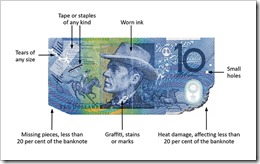
damaged-noteInterest earned has a nasty sting in its tail: it's considered taxable income. Save some cash in a savings account (or term deposit or similar) and interest earned will be included in your taxable income and taxed at your marginal tax rate.

Don't forget to take out inflation too (which was not inconsiderable at 1.9% for 2016/17).

Here's the simple workup:

  • Invest $10k @ 5% p.a to earn $500
  • Assuming your income is $87-180k, your income will be taxed at roughly $0.37 per $1 earned. As such, the ATO takes $185 of your $500.
  • The cost of inflation, calculated on the principal of $10k @ 1.9% p.a., is a further $190 (in other words, your $10k is now worth $9,810 in real terms).
  • Instead of earning $500, you've only earned $125 (or achieved a rate of return of 1.25%)

Current interest rates are already low and a 5% interest rate is probably unrealistic. Most 60-month term deposit rates are earning less than 3%.

If you're saving cash, you'd better have a very generous interest rate or a very low income—or you're probably going backwards. Let’s not get started on the opportunity cost of not putting those savings into a better-performing (and safer) investment.

Given the above example again, if you’re earning 2.5% interest, your actually working at a net negative interest rate of –0.33% at a cost of $32.50. As a bonus exercise for the reader, compound these examples over multiple years.

If you have a mortgage, get an offset account and stash your money in there right now. Either way, get a good accountant who can help you legally maximise your deductions.

I suppose a disclaimer is also worth posting: I'm just a guy, I'm not an accountant, lawyer, solicitor, tax agent, mortgage broker, banker, financial adviser, insurance agent, land developer, builder, government agent, or anything else so I disclaim your application of anything I write here is to be applied at your own risk. What I write may be incorrect and you are best to seek your own professional advice (tax, legal, financial, and otherwise) before entering into contracts or spending your money. Your situation is unique to you and what I write here reflects my experience only. This content is not professional advice and is not tailored to your situation. I’m not selling anything and I do not receive any form of commission or incentive payments for any companies or individuals I endorse. I'm learning too and expect to make many, many mistakes along the way.

Enjoy,

Michael

48 - Making Money Lazy

LazyUp until lately we’ve been on a roll: a few years back the equity loan was approved against our family home—putting that “lazy money” to work for us, and we were approved for and built our first two investment properties using the bank’s money.

But things are tight these days in the banking and credit sector and, with only one income, our ability to service additional loans is viewed as risky by the big lenders. Which of course sucks because we have a sizeable “rainy day” fund, the wife is in a well-paid job, and we have a very strong history of paying our bills on time and saving.

In other words, we still have income coming in but no option (currently) to invest it in additional properties without tying up our own funds. Our mortgage broker said “no” :’(

This situation leads to the holding pattern which is Plan B: reducing interest payable on the investment property loans. In other words, we’ve started stashing our spare cash in the offset accounts attached to the interest-only investment loans. This cash is therefore fluid—it can be withdrawn at any moment—and, because we’re using the offset accounts instead of paying down the loan as principal and interest (or paying into redraw), interest on the full loan amount remains deductible if and when we do withdrawn cash in the future.

While I’d prefer to be building our property portfolio (the median house price moves forever upwards) using the bank’s money and tax-deductible debt to achieve long-term growth, at least we’re saving interest. In fact this is the exact strategy we adopted with our PPOR—but of course, interest on that debt was not not tax-deductible and there were different variables at work there.

The biggest problem I have now is our money could be working harder. Although it could be said we’re retiring debt (sort of), this is good debt and I don’t want to retire it… I want to use our money to borrow other people’s money so it can be put to work for us! Interest rates are low and likely to stay that way for the near-term and if we could buy again now, at today’s median house price or just below, we could achieve cheap capital growth over the next few years.

We’ll review things again in six month intervals—both serviceability but also capital growth of our existing investment properties, which may allow us to leverage that equity to fund a larger deposit for IP #3. But that’s not how I’d prefer to do it.

I suppose a disclaimer is also worth posting: I'm just a guy, I'm not an accountant, lawyer, solicitor, tax agent, mortgage broker, banker, financial adviser, insurance agent, land developer, builder, government agent, or anything else so I disclaim your application of anything I write here is to be applied at your own risk. What I write may be incorrect and you are best to seek your own professional advice (tax, legal, financial, and otherwise) before entering into contracts or spending your money. Your situation is unique to you and what I write here reflects my experience only. This content is not professional advice and is not tailored to your situation. I’m not selling anything and I do not receive any form of commission or incentive payments for any companies or individuals I endorse. I'm learning too and expect to make many, many mistakes along the way.

Enjoy,

Michael

47 – How we saved 1 million dollars tax free

UsererYou may not have realised but the mortgage on your family home is one of the most flexible and safest “investment” vehicles available to you.

Let’s start at the beginning, with the basics. Say you take out an owner-occupier, principal and interest home loan from a bank for $750,000; the loan is for thirty years with a variable interest rate of 5.25%.

As an owner-occupier you’ll live in the home (note different factors, such as tax deductibility, are at play with an investment loan). Your interest rate will rise or fall depending on several factors, including the RBA’s official cash rate, regulatory changes—such as those implemented by APRA in recent years, market conditions, and the business outlook of the bank itself (such as exposure to business issues in other industries or countries).

As a principal and interest loan, you’ll start by paying off the interest (mainly) and your regular repayments will likely be about $4,100/month. You’ll pay that amount every month for thirty years. After 360 payments, you’ll have paid off the principal amount of $750k and nearly $750k again in interest.

So in a nutshell, your house will cost you twice as much as the price of the house itself if you take on a mortgage (I’m glossing over deposits and stamp duty, of course). That’s a lot of money!

This is why my #1 tip is to pay off your mortgage as soon as you can. To achieve this, negotiate annually with your bank to secure the best interest rate you can and move banks if you’re not happy; employ an offset account (don’t use redraw) to ensure all of your cash is being used to reduce the principal owing; switch to fortnightly or weekly repayments; throw everything you’ve got at your mortgage until it’s at least well under control if not obliterated—and by this I mean scrimp and save and defer buying the things you want for a few years.

Many banks and financial institutions offer interactive, visual calculators which demonstrate how changes in interest rates and repayment frequency will affect the total cost of your loan. Check out this calculator from CANSTAR, as one example. It was the looming threat of having to pay thousands of dollars every month, illustrated in a calculator like this, and the idea that our house would cost twice as much in interest, that drove me to our strategy of removing our home loan from our lives. 

Repayment Calculator

If you’ve got money squirrelled away elsewhere, it’s probably time to liquidate and toss it into you offset account. If you’re using a high interest savings account, the ATO will treat your earned savings as taxable income (which will be taxed at your marginal tax rate). The same goes for capital gains income from other investment vehicles such as stocks. Don’t forget your savings are also being eroded by inflation at a rate of ~3% every year—meaning your cash loses 3% of its value once every year to the point where you position is probably moving backwards.

Ask yourself if your other investments are earning you a return of 5% p.a. or more, after CPI and tax—where the 5% figure is taken from interest rate on your mortgage. You’ll likely find they’re not. Don’t forget to consider your risk exposure with these investments: when the next dotcom crash or GFC arrives, will your investments hold their current value?

By contrast, you live in your home and, while it’s not an income-producing asset, it is a huge (albeit generally low-risk) liability which will undermine your ability to purchase strong assets if not reduced. That said, no matter what happens, your house will provide you with shelter and warmth and privacy even if it drops in value or the worst happens: it’s something you can use.

Suppose you are taming the bear that is your mortgage: you’re chipping away at it using an offset account and making extra repayments. Meanwhile, the value of the security—the land on which your house sits—has likely increased in value. If you need a large amount of cash for that rainy day emergency, it’s immediately accessible to you from your offset account or by redrawing. In other words, your mortgage as a “reverse investment” (if that makes sense!) is not only low-risk but it’s fluid in that it can be rapidly converted into cash.

With the passage of time and increase in value of your property, you may now be able to take out a line of credit, effectively a mini-mortgage secured against the difference between the current value of your property and its original value or what’s been paid down (the equity but this is also called your “lazy money”—set it to work for you!). You could go silly and use this to fund a holiday or buy a fancy car but that would undo your hard work. Instead, use that available money to pay a deposit and costs for your first investment property. Welcome to the world of leverage.

The above is exactly what we did and we effectively paid down our mortgage in full in about eight years (ours was largely a dual-income family on average salaries for the majority of that time). From the line of credit, we’ve been able to extend ourselves into two investment properties, all the while saving somewhere between $500k – $1m in interest (depending on future interest rates), paying no additional tax, and watching the value of what is now our home increase rather than moving backwards, as cash would have.

I suppose a disclaimer is also worth posting: I'm just a guy, I'm not an accountant, lawyer, solicitor, tax agent, mortgage broker, banker, financial adviser, insurance agent, land developer, builder, government agent, or anything else so I disclaim your application of anything I write here is to be applied at your own risk. What I write may be incorrect and you are best to seek your own professional advice (tax, legal, financial, and otherwise) before entering into contracts or spending your money. Your situation is unique to you and what I write here reflects my experience only. This content is not professional advice and is not tailored to your situation. I’m not selling anything and I do not receive any form of commission or incentive payments for any companies or individuals I endorse. I'm learning too and expect to make many, many mistakes along the way.

Enjoy,

Michael

41 – Why bother reviewing your bank interest rate

I write constantly here about reviewing your interest rates (and insurance premiums, etc) but that’s because I’m constantly astounded by how willing large organisations are to take us all for a ride with very subtle interest rate movements and other fees.

I recently noticed the interest rate advertised online for our PPOR and line of credit were a little way from the actual interest rates we’ve been paying. I thought the interest rates on these products would keep pace with both RBA rate changes and changes to the original product but of course that’s not always the case with RBA rate and perhaps not so much the case regarding changes to the loan product.

So I contacted the bank and, after chatting with a representative from the retention department, the rate on our PPOR loan was reduced by .20% (they couldn’t move the LOC rate).

It’s worth noting the rate advertised online is for new loans and the rep I spoke with told me they can’t “match” that rate as our loan was established at a certain point in time when interest rates were likely higher (i.e. when the bank “bought” the money they lent to us). I was told we’d have to refinance to achieve the lower rate.

The rep also mentioned the interest rate isn’t adjusted automatically as the product itself changes and it’s best to review the interest rate every twelve months or so and give the bank a call if necessary—good advice.

So what does .20% actually mean to us in dollar terms, I wondered? Is it $10 per annum and hardly worth bothering about or is $1000 (or more) per annum? I don’t like to wonder these things, I like to know with certainty so I put together a spreadsheet to multiply a given daily interest rate (or part thereof) by a specified amount for a specific timeframe (i.e. 30 days, 1 year, 2 years, etc).

Working off a principal amount of $500,000 (let’s call that the national medium house price, roughly speaking), I was surprised at the results.

For example, let’s say I’m comparing two loan products with an interest rate of 4% and 4.5% p.a. respectively. How much does that extra 0.5% cost per year? From my table (below), intersect the 0.5% column and the 365 (days) row and you can see the answer is $2,500. That’s a lot of money to unburden yourself of every year for no benefit. If you’re capitalising that charge it’s also going to compound in the bank’s favour!

The table shows two sets of columns. The first set with the dark headings shows part percentages up to 1%; the right-most columns with the lighter shading show a range of current rates, increasing at 0.5% intervals.

Have a look and compare the rates on your loans and then talk to your bank—or refinance if you have to (talk to a mortgage broker).

Click the image to see a a full-size version of the table.

Interest Rate Table

I suppose a disclaimer is also worth posting: I'm just a guy, I'm not an accountant, lawyer, solicitor, tax agent, mortgage broker, banker, financial adviser, insurance agent, land developer, builder, government agent, or anything else so I disclaim your application of anything I write here is to be applied at your own risk. What I write may be incorrect and you are best to seek your own professional advice (tax, legal, financial, and otherwise) before entering into contracts or spending your money. Your situation is unique to you and what I write here reflects my experience only. This content is not professional advice and is not tailored to your situation. I’m not selling anything and I do not receive any form of commission or incentive payments for any companies or individuals I endorse. I'm learning too and expect to make many, many mistakes along the way.

Enjoy,

Michael

36 - On Goals

top-50-super-quotes-of-all-times-19-728I scared myself silly when we signed up for our first mortgage in 2006 to buy a block of land and cover the ensuing house construction. That mountain of debt looked insurmountable and, considering the higher interest rates at the time, the repayments felt like an invisible shackle binding us to the daily grind of working life. The system had us by the balls and would continue to hold on for the next thirty years—according to the bank’s timeline.

This mortgage was, in many ways, a necessity (of modern life, anyway) as it would fund the establishment of our family home and promote us from the status of mere tenants. As projected, we now have two young children and are proceeding to raise them in the house we built.

In the years preceding the build we rented, paying what felt like dead money to our landlords—around $125/week or so. After repaying a student loan to my mom and moving to Perth we had very little money to our names, despite the fact I’d been working full-time as a professional for two years. My infamous frugality comes to me honestly after several years of having to live on the cheap!

On deciding to buy the block, the savings we had put aside for a deposit were all but spent by the time the deposit (we borrowed 95%, from memory) and stamp duty were paid and then we had that fun little surprise of lender’s mortgage insurance to deal with.

It was around this time I casually voiced my apprehensions about all of this to a work colleague (the CIO where I was working at the time, Colin Macdonald). His simple advice to me—which I would readily pass on to anyone else in a similar position—was to repay the loan as quickly as possible.

The bank had us down for thirty years. Colin’s advice was to clear the loan in ten years.

Say what now?!

I broke out a spreadsheet and projected some numbers forward in time. At best, I thought we might be able to repay the principal amount by 2018 (so ten or eleven years). I played with the bank calculators and quickly realised we could save the value of the property itself in interest costs—hundreds of thousands of dollars—by making extra repayments. I was intrigued.

We had a basic home loan at the time with no offset facility. The bank did include a free redraw facility with this product, however. With the redraw setup, we could manually (electronically) transfer our savings into the mortgage and therefore save the associated interest costs that would otherwise be charged on that amount. Better yet, the redraw funds were fluid, meaning we could redraw, on demand, some or all of funds we put in if we needed that money (in an emergency, to fund a car purchase, for a holiday, or for any reason).

There is one caveat to note with redraw, which I only learned about more recently: the ATO considers funds contributed to redraw to have contributed to paying down the original debt. In brief, if you think you might rent out your property in the future, you’ll only be able to tax deduct costs associated with the loan amount you haven’t yet repaid (even if you redraw the surplus funds). Offset accounts may attract a small fee but are immune from the ATO, work in the same way as redraw, and are more convenient.

And so we set ourselves a goal, which would later become our very basic financial strategy: put it all into redraw. Rather than making interest at whatever low interest rate the bank would offer, we save the interest the bank would charge for some of the mortgage amount (whatever we could put in).

With me working as a contractor and the wife working long hours in a good job (that doesn’t pay terribly well) we continued to live as we had: simply. We didn’t spend excessively—we didn’t often have the opportunity to do so with the wife working 60-80 hours a week. Entertainment costs were out!

Instead of keeping our savings in a regular bank account, we kept them in the redraw account.

Slowly but surely the extra contributions started to add up with the added benefit of reversing the huge impact of compounding interest fees the bank would have otherwise been charging us. The Albert Einstein quote says it all: “Compound interest is the eighth wonder of the world. He who understands it, earns it ... he who doesn't ... pays it.”

But today’s post isn’t about compound interest, it’s about goals—specifically the huge goal we set out to achieve nine or so years ago.

Admittedly I’ve been a little distracted by being back to work and the kids and I’d neglected for some time to update my spreadsheet that tracks the balance of our home mortgage and the offset account we now employ in place of redraw. I updated this spreadsheet recently and noticed what I first thought was an anomaly in the data: the negative amount highlighted red I normally show for the balance of our home loan minus the offset balance was no longer negative and it was no longer red: it was black and it was positive. The balance in our redraw account was more than what was owing on the mortgage.

I do keep an eye on our monthly repayments so I knew before this point we were heading in the right direction. In the last six months the monthly interest charge had plummeted steadily from a couple of hundred dollars to less than $10.00.

It then dawned on me: we’d met our goal. We’d met our goal a year early. Although the mortgage account was still open (and will remain so for a couple of specific reasons), we effectively have the option to repay the mortgage balance in full, if and when we choose to do so.

Back in 2006, this milestone was equivalent in my mind to being financially free. Today that’s not quite the case as our commitments—financial and life-related—have increased and of course there is a cost of living in groceries, petrol, clothing, and so on. I can say achieving this goal feels as good as I hoped it would back in 2006—perhaps all the more so because I neglected to watch as the odometer tick over.

This post is isn’t to boast, it’s to celebrate and inspire. From a very low base, ten years of hard work and time has allowed us to meet our single financial goal. Your goal(s) might be different depending on your circumstances: your timeline to repay your mortgage, depending on the value of your mortgage and your income, might be the same or it might be a shorter timeframe or a longer timeframe. You may also favour a better balance in life than what we’ve managed to achieve (I believe strongly in delayed gratification but I’m also nearing forty…). Nonetheless, set a goal and then plan to achieve it. The world can then be yours.

I suppose a disclaimer is also worth posting: I'm just a guy, I'm not an accountant, lawyer, solicitor, tax agent, mortgage broker, banker, financial adviser, insurance agent, land developer, builder, government agent, or anything else so I disclaim your application of anything I write here is to be applied at your own risk. What I write may be incorrect and you are best to seek your own professional advice (tax, legal, financial, and otherwise) before entering into contracts or spending your money. Your situation is unique to you and what I write here reflects my experience only. This content is not professional advice and is not tailored to your situation. I'm learning too and expect to make many, many mistakes along the way.

Enjoy,

Michael
24 – Teaching the Kids About Money

Kids_money_lemonadeI grew up watching my mother balancing the cheque book (manually) at the kitchen table. She worked as a bank teller before she had us kids and she’d regularly fret about being out by a penny or a few cents. I’ve written previously about some of the key financial nuggets my mom implanted in my mind—mainly the old line “every penny counts!” and the idea that you can call up and challenge the banks if they’re not being helpful.

My father was an economist working for the Canadian federal government and although he did not regale us with the highs and lows of economic social policy, he was an educated man with a lot of common sense. My dad was a newspaper subscriber and we had the Ottawa Citizen delivered daily, which of course contained a business section which I’d infrequently leaf through.

Every night over dinner we’d talk about school and friends and some news but we’d also talk about family. Specifically, both of my parents were open, in simple terms, with us about the family’s financial situation. Money was never a “dirty” subject within the confines of our immediate family and we always received an honest answer when we curiously put up the question “how much money do you make, dad?”

My sister and I both received a modest allowance and when we were older we were also paid to mow the lawn—a sweaty, two-hour job in the Canadian summer humidity and blackflies! We had piggy banks and bank accounts from an early age and would occasionally buy a few savings bonds. Our parents covered our basic needs in terms of clothing, shelter, and food but if we wanted something special, we were encouraged to save our money until we could afford it. We also had to buy our lunch at school one day a week and did so from a young age—I remember buying my lunch in second grade.

My first allowance was a quarter: 25c.

Beyond those basics, the financial education I received at home was minimal. Some of these core tenets I’ve noted today form the foundation of my financial sensibility but I plan to raise the benchmark considerably with my children.

Growing up, for example, I knew my dad earned a “salary” of x dollars and my parents had a mortgage on the family home. I knew my paternal grandmother gave my parents a chunk of money when she downsized and I knew our family home (land and house) was bought and built for $60k in the early 70’s. I was also vaguely aware the inheritance received following the death of my maternal grandmother allowed my parents to pay off the mortgage. I was told we were a middle class family and my mom returned to work when my sister and I were older because she wanted to not because she had to. Beyond that, I was not taught about the relationship between income (salary) and expenses (mortgage, cars, and other costs). I knew my parents were cautious and somewhat frugal—definitely not flashy in their spending—but I didn’t know why; I always assumed it was because we were balancing on the knife-edge of affordability.

With our kids—the newborn and a clever toddler—I’m starting them young. Both kids have their own bank account (high interest accounts at 5% interest currently with deposit/withdrawal limitations imposed by the bank). Interest is paid monthly and I make a point to take a moment on the first day of every month to show our eldest her bank account and note how much interest she’s earned “for doing nothing” (as I put it!).

I pay each child, despite being very young, a weekly allowance (currently paid monthly into each account and rounded up slightly to $25/month). Although I don’t want to train her that working is the only way to earn money, I remind her that she needs to her earn her allowance by helping me vacuum, for instance (with her toy vacuum). We also receive the occasional cheque from family in Canada for birthdays and Christmas and that money typically goes into accounts. My 3yo already has a fair chunk of money to her name and earns monthly interest of about $10 (which stays in the account to earn interest).

I’ll note here I typically wouldn’t recommend an adult save their money in a bank account or even a high interest savings account. Although the risk is theoretically low, the interest rates are typically low too and the interest earned is counted as taxable income. And then inflation quietly takes most of whatever gain is left. In the kid’s case, the interest rate at 5% is higher than our mortgage interest rate, for example, and there are no bank fees or income tax. At the end of the day, this is an accessible learning exercise for the kids; if they eventually have the savings to fund a house deposit (possibly as a team) I’d encourage them to go that route but they may opt to travel or study or start a business instead.

I also talk to our oldest child about money. My goal is to create in her a clever, shrewd consumer able to work the system to her advantage, rather than be taken advantage. I typically take her grocery shopping with me each week and I explain to her how I compare prices. I’ve taken her to the accountant in the past and she’s sat beside me when the mobile mortgage broker has come out to the house (she colours…). She comes with me to the bank to deposit cheques and when we opened her brother’s bank account. She can count to ten and I’m slowly teaching her to add.

The core message I’ll be teaching our children is money can set you free but you have to be prudent and sensible in your financial dealings. This may work for us—will it make us wealthy? I can’t say but my hope is it won’t leave us poor. In either case, I hope our children will learn from our successes and our mistakes and my intention is to be as generally transparent on the subject of money as I am other subjects. Instead being taught to be a worker/consumer, my intention is to teach my children to think and behave wisely about money.

I suppose a disclaimer is also worth posting: I'm just a guy, I'm not an accountant, lawyer, solicitor, tax agent, mortgage broker, banker, financial adviser, insurance agent, land developer, builder, government agent, or anything else so I disclaim your application of anything I write here is to be applied at your own risk. What I write may be incorrect and you are best to seek your own professional advice (tax, legal, financial, and otherwise) before entering into contracts or spending your money. Your situation is unique to you and what I write here reflects my experience only. This content is not professional advice and is not tailored to your situation. I'm learning too and expect to make many, many mistakes along the way.

Enjoy,

Michael

19 – Bank Error

When our last progress payment came due for the frame stage, our mortgage broker (Mortgage Choice) sent us a form to be signed, authorising the bank to draw down against our mortgage for the amount of that invoice. This was the first construction invoice paid by the bank as they asked us to pay the first invoice for the base stage.

Our invoices to date have come through on a Thursday and payment is due within seven days. Our builder has previously returned a receipt to us within a day of payment so I became suspicious something had gone awry when I hadn’t received a receipt by Tuesday.

After following up with Mortgage Choice, I was informed the bank (one of the big four) had paid the builder, in a single payment, both the amount for the frame stage invoice and the builder’s 5% deposit. This would have been great if we were still back in December when the deposit was due but, as we’re now in May and I’d already paid the deposit myself from our line of credit, I raised an eyebrow.

Specifically, why did the bank pay an invoice we hadn’t authorised them to pay? That invoice was issued before land settlement and before this mortgage was finalised.

In speaking with the builder, they confirmed they weren’t sure what to do with this extra money, hence the delay with the receipt, and we agreed it would be credited against the next stage invoice. This plan was also communicated back to the bank, presumably through the builder to Open Wealth and then through Open Wealth to the mortgage broker (did anyone say “Chinese whispers”?).

And then it dawned on me: would the bank—one of the big four Australian banks, as mentioned, with annual profits in the billions and who charged me interest when they overdrew our transaction account during the land settlement process—reimburse the interest charged on the amount that was paid in error?

Simple question.

I put this one to Mortgage Choice and their initial response was ‘no’. Obviously I wasn’t happy with that answer and asked them to please explain.

They followed up with the bank and [after a few days passed] I was informed there will be an adjustment to compensate for this error once the next invoice is been paid.

The math is simple and the funds are not significant but it’s the principle of the matter, gosh darn it! And I hate it when banks steal my money!!
  • 5% builder’s deposit = ~$11k
  • Annual interest rate = ~5%
  • Annual interest = $550 ($45/month)
  • Estimated time to next invoice: 1-2 months
  • Money that’s better in my pocket: yes
I’ve written in the past about keeping an eye on your banks and insurance companies. Here’s yet another example to reinforce the point. Hopefully future progress payments run more smoothly.

I suppose a disclaimer is also worth posting: I'm just a guy, I'm not an accountant, lawyer, solicitor, tax agent, mortgage broker, banker, financial adviser, insurance agent, land developer, builder, government agent, or anything else so I disclaim your application of anything I write here is to be applied at your own risk. What I write may be incorrect and you are best to seek your own professional advice (tax, legal, financial, and otherwise) before entering into contracts or spending your money. Your situation is unique to you and what I write here reflects my experience only. This content is not professional advice and is not tailored to your situation. I'm learning too and expect to make many, many mistakes along the way.

Enjoy,


Michael

11 - Bank Deals

Here we go again! I recently posted about the improved deal I got on our house insurance just by phoning up and asking for a better price. Almost to prove my point, I called up the lender who holds the mortgage on our PPOR, asked for a better rate, and they were able to pretty much instantly knock off .05% (pending new paperwork to sign).

Not a vast improvement but nothing to sneeze at either—that works out to about $50/year for every $100,000 owing (.0005 x 100,000). Since this is the mortgage for our PPOR, we can’t tax deduct expenses like mortgage interest so every bit less we have to pay back is more money to us instead of the bank.

It’s worth noting we’re already on a discounted rate by virtue of having both our PPOR mortgage and IP LOC together under the one umbrella product.

The bank wasn’t, unfortunately, able or willing to improve the rate applicable to our equity loan but did suggest we could convert that loan to a fully-fledged home loan to achieve a better rate. Interesting concept but I’m not clear on the tax implications—i.e. the debt may be considered non-deductible.

We’re on a variable rate loan product and intend to stay there. I briefly considered fixing some or all of the loan before the most recent rate cut but was obviously glad I didn’t as interest rates dropped .25%. Some pundits in the media are predicting a second rate cut this year.

Michael Beresford at Open Wealth recently published a brief but informative “Wealth Workout of the Day” video on the subject of variable vs fixed and some of the implications you may not have considered, such as pulling equity out of your property. Here’s the video.

I suppose a disclaimer is also worth posting: I'm just a guy, I'm not an accountant, lawyer, solicitor, tax agent, mortgage broker, banker, financial adviser, insurance agent, land developer, builder, government agent, or anything else so I disclaim your application of anything I write here is to be applied at your own risk. What I write may be incorrect and you are best to seek your own professional advice (tax, legal, financial, and otherwise) before entering into contracts or spending your money. Your situation is unique to you and what I write here reflects my experience only. This content is not professional advice and is not tailored to your situation. I'm learning too and expect to make many, many mistakes along the way.

Enjoy,

Michael

5 - How to Spend Money

This is simple but for so many people the concept is something from the stratosphere. My rules are as follows:

  1. Don’t spend money
  2. Use other people’s money (a mortgage to buy property, interest free periods on a credit card) when you have to spend money
  3. Build your credit history (if you’re new to borrowing)

Let me explain in a bit more detail…

1. Don’t Spend Money

This is really the golden rule. Some people might choose to read this as “don’t spend money you don’t have” but see Rule #2 before you adopt that approach. But there’s no need to interpret the wording at all: just don’t spend money!

Although simple in theory, this is extremely difficult for many people to implement in practice. We’re used to spending money and our culture conditions us to spend more money than we need through marketing and advertising and by watching our friends and families succeed. Break the habit, become wealthier, spare the planet the extra plastic, and change the world, maaaaan!!! Ignore the adverts and recognise and accept your friends might be earning more money than you are/in a different financial situation to yours/stupider than you are. Spending money is not a measure of success or intelligence.

If you don’t need something, don’t buy it. Live frugally, is what I always say (rather than calling myself cheap!). Don’t live in the moment and buy impulsively. The time for spending money will come but right now you need to accumulate money and wealth and the easiest way to do this is via the magical effects of compounding, a subject on which I’ll write more about in detail another day. For now, just understand the less money you throw away, the more money you’ll have to make more money.

Before you whip our your credit card, stop and think whether what you’re about to buy is going to increase the number of days (or months or years) you’re going to have a mortgage to repay—or increase the time it’s going to take to save up a deposit for a first home loan. Ask yourself if this doodad, that beer, this seemingly insignificant expenditure is really necessary to your wellbeing and fulfilment. Can it wait another month? Another year? I remember when I first reviewed the interest costs on our PPOR mortgage: over the thirty year term, we would ultimately end up paying the bank the value of our home again. The quicker we could repay the principal, the less we’d pay on interest.

The best way not to spend money is to understand what you need to spend to survive (i.e. a plan or budget—anything), spend that amount and record the transactions against your plan or budget, and treat  yourself occasionally but in moderation.

There are also many subtleties at play here. Never spend money on a depreciating asset like a car—i.e. don’t buy cars, at least not new ones, until you can genuinely afford to. Don’t buy an ultra HD curved OLED television. Don’t waste food. If you’re spending more than $50 a month on booze, you’re spending too much. Definitely don’t smoke or quit if you do. Take it easy on the holidays. Don’t eat out too much.

There are also some really easy things you can do. Buy store brand ketchup instead of Heinz ketchup. Mow your own lawn. Change your behaviours by wearing your clothes for a second season instead of refreshing your wardrobe every three months. Use grocery store fuel vouchers to save on petrol. Pay your bills on time to avoid fees. Ensure you’re never in a position where you have to pay late payment fees or, worse, credit card interest. Make your lunch and take it to work instead of buying lunch every day. Cancel your cable TV subscription. Become a vegetarian and stop eating meat. Ride a bike to work instead of catching the bus or train (or worse, driving your car and paying for parking). As you start thinking like this, you find all sorts of ways to save a few dollars and as my mom always said: “every penny counts!”

Keep the achievement of your long-term goals front of mind and what you give up today is easier to bear. We took on a $700k+ mortgage in 2006; it’s all but paid off less than ten years later through moderate (minimal, really) spending and careful saving.

Edit: Please read my follow up post “Think Rich”—it explores a valid counterpoint to this concept.

2. Use Other People’s Money

If you insist on spending money, don’t use your money, use someone else’s money—at least for as long as you can and if you can do so for free.

Credit cards are considered intrinsically evil by some people but if these facilities are not abused they can be used to your advantage. As long as your balance owing is paid by the due date—that is, you have the cash flow to afford what you’ve purchased—you won’t have any interest to pay for the privilege of borrowing that amount for up to sixty days.

We buy everything (EVERYTHING—except purchases that attract a fee) on a single credit card with a reasonable limit and we pay the credit card bill on time. Our typical credit card bills run between $2,000 and $3,000 (more around Christmas, sometimes less after a really good month); instead of being paid for immediately from our cash, the value of our monthly spend is being lent to us at no charge by the credit card company. During that interest free period, that lent money is working for us in our offset account—reducing the amount on which mortgage interest is charged.

The added bonus is having the majority of our transactions centralised on one card, which makes it easy to know how much we’re spending month to month; it’s also easy to spot any problems. I typically pay off the credit card, in full, a day or two before it’s due to maximise the credit benefit.

The key takeaway here is to never pay interest on your credit card. Most cards will charge interest at an annual rate of around 20%. This adds up to lot of money—I’m always astounded how my credit card statement tells me if I only pay the minimum amount I’ll pay off the closing balance in “58 years and 07 months” and “end up paying an estimated total interest charge of $22,828”! That’s crazy talk.

If you get stuck with credit card debt, plan on getting rid of that debt first before anything else because it will most likely be the highest interest rate you’re faced with (apart from a bad car loan, perhaps). Call your credit card company and have a chat with them about a repayment plan or an interest-free period—ask to speak to the manager if necessary. If your card company won’t help—and by help I mean be very generous to you—roll over the balance on the card to a new card with a 0% introductory balance for 12 months or whatever period you can find. Hopefully that will give you enough time to clear the debt without the interest burden accumulating on top of the original amount.

Finally, I don’t use cards that incur an annual fee just for the sake of a few perks.

When it comes to your home loan, you also need to be careful. If you have a number of debts (i.e. a car loan, credit card, personal loan, etc) you may be offered the option of consolidating all those loans into your home loan. The benefit of doing so is a better interest rate: instead of a 20% rate for your card debt, you’ll be paying 5% at today’s rates. The downside is that debt will follow you for the term of your home loan, meaning the interest on the amount you’ve consolidated will compound every year until it’s repaid—along with x number of years of interest. You could end up paying off that new car for thirty years—long after the car is gone!

You might similarly be tempted to refinance your home to free up equity for a holiday or a new toy (boat?) or a swimming pool. This is easily done but, again, be mindful that in doing so you’re hiding the true cost and using money you can’t really afford.

Credit cards and home loans are generally considered “bad debt” because it’s money that doesn’t work for you. Consider the alternative: “good debt”. This is money borrowed that you in turn use to make money through investing in real estate, a business, or stocks. In contrast to the loan on your PPOR which will cost you money on interest (this interest cannot be claimed as a tax deduction), a investment property mortgage will serve to earn you money. So as a footnote to this section, if you’re buying an investment property, use the bank’s money—secured by the equity in your home—instead of putting down your cash that can be better used elsewhere.

A student loan like a HECS debt is also someone else’s money. If you have the option to reduce interest by making early repayments, ask yourself if the cost of holding onto that loan and not making early repayments will allow you to use that money more productively elsewhere. How much will you save by making early repayments? How much do you stand to make by investing the value of those repayments elsewhere (e.g. in an offset transaction account, saving you interest of say 5% at today’s rates on your PPOR mortgage)?

3. Build your Credit History

If you’re new to property and are looking to take on your first home loan in the next twelve months or so you’re probably also saving for a deposit and implementing a lot of the tips I’ve offered above—good on you. The next step is to ensure you have some form of credit history for lenders to look at when assessing your eventual loan application. To carry on from Rule #2, the easiest way to build your credit history is to take on a single credit card, use it, and ensure it’s paid off in full by the due date. This will help identify you as a borrower with a proven track record of debt repayment—through both intention and financial means.

I suppose a disclaimer is also worth posting: I'm just a guy, I'm not an accountant, lawyer, solicitor, tax agent, mortgage broker, banker, financial adviser, insurance agent, land developer, builder, government agent, or anything else so I disclaim your application of anything I write here is to be applied at your own risk. What I write may be incorrect and you are best to seek your own professional advice (tax, legal, financial, and otherwise) before entering into contracts or spending your money. Your situation is unique to you and what I write here reflects my experience only. This content is not professional advice and is not tailored to your situation. I'm learning too and expect to make many, many mistakes along the way.

Enjoy,

Michael