Showing posts with label Wealth. Show all posts

49 - Cash savings cost you money

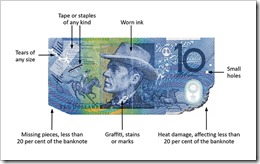
damaged-noteInterest earned has a nasty sting in its tail: it's considered taxable income. Save some cash in a savings account (or term deposit or similar) and interest earned will be included in your taxable income and taxed at your marginal tax rate.

Don't forget to take out inflation too (which was not inconsiderable at 1.9% for 2016/17).

Here's the simple workup:

  • Invest $10k @ 5% p.a to earn $500
  • Assuming your income is $87-180k, your income will be taxed at roughly $0.37 per $1 earned. As such, the ATO takes $185 of your $500.
  • The cost of inflation, calculated on the principal of $10k @ 1.9% p.a., is a further $190 (in other words, your $10k is now worth $9,810 in real terms).
  • Instead of earning $500, you've only earned $125 (or achieved a rate of return of 1.25%)

Current interest rates are already low and a 5% interest rate is probably unrealistic. Most 60-month term deposit rates are earning less than 3%.

If you're saving cash, you'd better have a very generous interest rate or a very low income—or you're probably going backwards. Let’s not get started on the opportunity cost of not putting those savings into a better-performing (and safer) investment.

Given the above example again, if you’re earning 2.5% interest, your actually working at a net negative interest rate of –0.33% at a cost of $32.50. As a bonus exercise for the reader, compound these examples over multiple years.

If you have a mortgage, get an offset account and stash your money in there right now. Either way, get a good accountant who can help you legally maximise your deductions.

I suppose a disclaimer is also worth posting: I'm just a guy, I'm not an accountant, lawyer, solicitor, tax agent, mortgage broker, banker, financial adviser, insurance agent, land developer, builder, government agent, or anything else so I disclaim your application of anything I write here is to be applied at your own risk. What I write may be incorrect and you are best to seek your own professional advice (tax, legal, financial, and otherwise) before entering into contracts or spending your money. Your situation is unique to you and what I write here reflects my experience only. This content is not professional advice and is not tailored to your situation. I’m not selling anything and I do not receive any form of commission or incentive payments for any companies or individuals I endorse. I'm learning too and expect to make many, many mistakes along the way.

Enjoy,

Michael

47 – How we saved 1 million dollars tax free

UsererYou may not have realised but the mortgage on your family home is one of the most flexible and safest “investment” vehicles available to you.

Let’s start at the beginning, with the basics. Say you take out an owner-occupier, principal and interest home loan from a bank for $750,000; the loan is for thirty years with a variable interest rate of 5.25%.

As an owner-occupier you’ll live in the home (note different factors, such as tax deductibility, are at play with an investment loan). Your interest rate will rise or fall depending on several factors, including the RBA’s official cash rate, regulatory changes—such as those implemented by APRA in recent years, market conditions, and the business outlook of the bank itself (such as exposure to business issues in other industries or countries).

As a principal and interest loan, you’ll start by paying off the interest (mainly) and your regular repayments will likely be about $4,100/month. You’ll pay that amount every month for thirty years. After 360 payments, you’ll have paid off the principal amount of $750k and nearly $750k again in interest.

So in a nutshell, your house will cost you twice as much as the price of the house itself if you take on a mortgage (I’m glossing over deposits and stamp duty, of course). That’s a lot of money!

This is why my #1 tip is to pay off your mortgage as soon as you can. To achieve this, negotiate annually with your bank to secure the best interest rate you can and move banks if you’re not happy; employ an offset account (don’t use redraw) to ensure all of your cash is being used to reduce the principal owing; switch to fortnightly or weekly repayments; throw everything you’ve got at your mortgage until it’s at least well under control if not obliterated—and by this I mean scrimp and save and defer buying the things you want for a few years.

Many banks and financial institutions offer interactive, visual calculators which demonstrate how changes in interest rates and repayment frequency will affect the total cost of your loan. Check out this calculator from CANSTAR, as one example. It was the looming threat of having to pay thousands of dollars every month, illustrated in a calculator like this, and the idea that our house would cost twice as much in interest, that drove me to our strategy of removing our home loan from our lives. 

Repayment Calculator

If you’ve got money squirrelled away elsewhere, it’s probably time to liquidate and toss it into you offset account. If you’re using a high interest savings account, the ATO will treat your earned savings as taxable income (which will be taxed at your marginal tax rate). The same goes for capital gains income from other investment vehicles such as stocks. Don’t forget your savings are also being eroded by inflation at a rate of ~3% every year—meaning your cash loses 3% of its value once every year to the point where you position is probably moving backwards.

Ask yourself if your other investments are earning you a return of 5% p.a. or more, after CPI and tax—where the 5% figure is taken from interest rate on your mortgage. You’ll likely find they’re not. Don’t forget to consider your risk exposure with these investments: when the next dotcom crash or GFC arrives, will your investments hold their current value?

By contrast, you live in your home and, while it’s not an income-producing asset, it is a huge (albeit generally low-risk) liability which will undermine your ability to purchase strong assets if not reduced. That said, no matter what happens, your house will provide you with shelter and warmth and privacy even if it drops in value or the worst happens: it’s something you can use.

Suppose you are taming the bear that is your mortgage: you’re chipping away at it using an offset account and making extra repayments. Meanwhile, the value of the security—the land on which your house sits—has likely increased in value. If you need a large amount of cash for that rainy day emergency, it’s immediately accessible to you from your offset account or by redrawing. In other words, your mortgage as a “reverse investment” (if that makes sense!) is not only low-risk but it’s fluid in that it can be rapidly converted into cash.

With the passage of time and increase in value of your property, you may now be able to take out a line of credit, effectively a mini-mortgage secured against the difference between the current value of your property and its original value or what’s been paid down (the equity but this is also called your “lazy money”—set it to work for you!). You could go silly and use this to fund a holiday or buy a fancy car but that would undo your hard work. Instead, use that available money to pay a deposit and costs for your first investment property. Welcome to the world of leverage.

The above is exactly what we did and we effectively paid down our mortgage in full in about eight years (ours was largely a dual-income family on average salaries for the majority of that time). From the line of credit, we’ve been able to extend ourselves into two investment properties, all the while saving somewhere between $500k – $1m in interest (depending on future interest rates), paying no additional tax, and watching the value of what is now our home increase rather than moving backwards, as cash would have.

I suppose a disclaimer is also worth posting: I'm just a guy, I'm not an accountant, lawyer, solicitor, tax agent, mortgage broker, banker, financial adviser, insurance agent, land developer, builder, government agent, or anything else so I disclaim your application of anything I write here is to be applied at your own risk. What I write may be incorrect and you are best to seek your own professional advice (tax, legal, financial, and otherwise) before entering into contracts or spending your money. Your situation is unique to you and what I write here reflects my experience only. This content is not professional advice and is not tailored to your situation. I’m not selling anything and I do not receive any form of commission or incentive payments for any companies or individuals I endorse. I'm learning too and expect to make many, many mistakes along the way.

Enjoy,

Michael

12 – Progress Update: Settlement

Settlement day today and everything went smoothly, as far as I know. I received an SMS from the bank to notify us settlement is complete, an email from our solicitor, and an email and phone call from our Client Liaison Manager at Open Wealth to say congratulations. So I’ll call that done.

I’d suggest this would be a good occasion to pop a bottle of bubbly but the wife is pregnant and heading out for dinner with the girls tonight, no less. So, in our usual way, we’ll let the occasion pass without much excitement. What investment property?!

Here’s a picture of a pile of dirt—but it’s our pile dirt (er, the bank’s pile of dirt rather)! Good to see the skies are blue in Queensland so hopefully progress can be made without too many disruptions from the weather.

Site 4

I’m told by Open Wealth “the builder has arranged the soil test, engineering plans and working drawings and the plans have been submitted into council for approval”. “While the plans are being approved the builder will be organising the site works, retaining walls, sediment barriers, driveway shake-down and signage.”

Open Wealth expect 6-8 weeks for permits (ideally six since we paid the 5% builder’s deposit up front and should have jump-started the process) and then things start to really get underway.

I would have preferred to be further along by now, with the original aim of having tenants in place by the end of the 2014/15 financial year but settlement has pushed us out to October (worst case, on the basis of the 30-week construction guarantee Open Wealth includes). Naturally, this will be particularly awesome timing—he said sarcastically—as I’ll likely be overseas as we transition from construction to rental.

The base stage complete milestone is next, which is everything before framing starts.

All said, I’m impressed with myself for a) doing this and b) doing this as well as I possibly could using my newfound knowledge. When we built our PPOR in 2006, we were clueless and did as we were told. Rather than try and understand the process, we followed the bouncing ball. We lucked out in general, but for an investment property I felt complete engagement was necessary. This will be one of several (future) income generating assets which I intend to run as a business and I believe it would have been amiss of me not to dive deep into the semantics. Yes, we’ve still followed the bouncing ball in general because the process outlined by Open Wealth is aligned to my knowledge and strategy but I now understand why the ball bounces and I’ve not hesitated to correct its trajectory when I felt it was heading in the wrong direction.

Time will tell whether we’re doing the right thing but right now I’m comfortable knowing I’ve taken the first steps to secure my financial future and done it in a way that I understand and believe to be correct.

I suppose a disclaimer is also worth posting: I'm just a guy, I'm not an accountant, lawyer, solicitor, tax agent, mortgage broker, banker, financial adviser, insurance agent, land developer, builder, government agent, or anything else so I disclaim your application of anything I write here is to be applied at your own risk. What I write may be incorrect and you are best to seek your own professional advice (tax, legal, financial, and otherwise) before entering into contracts or spending your money. Your situation is unique to you and what I write here reflects my experience only. This content is not professional advice and is not tailored to your situation. I'm learning too and expect to make many, many mistakes along the way.

Enjoy,

Michael
6 – Think Rich

Immediately after writing my last post “How to Spend Money”—in which I advocate being frugal and not spending money unnecessarily, a library book I’d reserved came available: Robert Kyosaki’s Rich Dad’s Guide to Investing. The first section of this book is almost entirely dedicated to the concept of retraining and refocusing your mind to think like the rich do. In other words, instead of pinching pennies as part of a frame of reference where money is scare, change your mindset to one in which money is abundant and don’t be cheap.

This makes a lot of sense to me. I won’t make a full about-face in follow up to “How to Spend Money” but am inclined to adjust my thinking somewhat. The standard disclaimer I include with every blog post includes a note that I’m learning too, so here’s direct evidence of that! Most importantly, I’m learning and have a very open mind on financial matters as I’m not yet prejudiced by a lot of experience; I’m therefore willing to adapt and adjust my thinking on the fly and explore new ideas and concepts like this one.

A note: I realise this post isn’t directly related to property investment but—for me—property investment is simply a means (a “vehicle” in rich dad speak) to wealth.

Although I’ve not necessarily been cheap, I’ve definitely been frugal often and modesty always has been—and always will be—a pillar of what it means to be me.

Rich dad wisdom suggests being frugal is okay but there’s no sense in being rich but living poor. As an extension to that, it’s worth pointing out another Rich Dad pearl, which suggests having a low income and high expenses is superior to the traditional goal of having a high income and low expenses. In other words, use good expenses to reduce your taxable income (and to tie that back to our current discussion: don’t be cheap by trying to keep your expenses low). I’ll add this book is by far the best of the three Rich Dad, Poor Dad books I’ve read to date—it’s very conceptual but so worth the read—see the Amazon.com link above to check it out.

Frugality I would define as choosing to not be extravagant in your daily spending habits (for me this also relates directly to my greenie sensibilities: I choose not to be a consumer and pollute my environment with unnecessary packaging and products). I always prefer to buy quality and do not buy to throw away—this is and always will be a way of life for me. If I were cheap, I would buy poorly made, disposable things in quantity—at the very least.

To quote from Kiyoaski’s book: “My rich dad would say, ‘There are two ways to become rich. One way is to earn more. The other way is to desire less. The problem is that most people are not good with either way.’ […] this book [is] about how you can earn more so you can desire more.”

I’ve not been too bad on the desiring less front but I do look at people around me who seem content spending a lot of money and wish I could be less frugal, if not less cheap! I certainly want to be more generous and focus the money I must spend on the positive aspects of life.

Kiyosaki also cites another article on this subject which suggests the wealth you can build by living as though you were poor is finite (the article cited also discusses penny pinching in the context of becoming not just a “millionaire” but a “multimillionaire”).

The book doesn’t offer much in terms of definition between frugality and cheapness but the author does leave us with another rich dad quote: “‘If you want to be really rich, you need to know when to be frugal and when to be a spendthrift. The problem is that too many people know how to be cheap only.’” I think this point also extends beyond the black and white argument of frugality versus cheapness and into the broader educational context of the investor: do we understand the difference between good debt and bad debt, good expenses and bad expenses, assets versus liabilities, taxation laws, ownership structures, etc, etc? In other words, are we being constantly cheap or are we being selectively cheap? I mentioned in the previous post not spending money on a depreciating asset like a car; that’s not frugality but rather understanding how not to waste money quickly.

Notably, Kiyosaki goes on to write (later in the book) that rich dad focused on delayed gratification in the short term in favour of a long-term reward. I think this is key and really at the crux of what I was suggesting in my earlier post. Nonetheless, I do believe in the power of setting goals and ‘thinking yourself’ into the reality you desire. 

As a final thought, I’ll suggest not being cheap doesn’t mean splashing out at every opportunity. Meanwhile, keep thinking rich!

I suppose a disclaimer is also worth posting: I'm just a guy, I'm not an accountant, lawyer, solicitor, tax agent, mortgage broker, banker, financial adviser, insurance agent, land developer, builder, government agent, or anything else so I disclaim your application of anything I write here is to be applied at your own risk. What I write may be incorrect and you are best to seek your own professional advice (tax, legal, financial, and otherwise) before entering into contracts or spending your money. Your situation is unique to you and what I write here reflects my experience only. This content is not professional advice and is not tailored to your situation. I'm learning too and expect to make many, many mistakes along the way.

Enjoy,

Michael

5 - How to Spend Money

This is simple but for so many people the concept is something from the stratosphere. My rules are as follows:

  1. Don’t spend money
  2. Use other people’s money (a mortgage to buy property, interest free periods on a credit card) when you have to spend money
  3. Build your credit history (if you’re new to borrowing)

Let me explain in a bit more detail…

1. Don’t Spend Money

This is really the golden rule. Some people might choose to read this as “don’t spend money you don’t have” but see Rule #2 before you adopt that approach. But there’s no need to interpret the wording at all: just don’t spend money!

Although simple in theory, this is extremely difficult for many people to implement in practice. We’re used to spending money and our culture conditions us to spend more money than we need through marketing and advertising and by watching our friends and families succeed. Break the habit, become wealthier, spare the planet the extra plastic, and change the world, maaaaan!!! Ignore the adverts and recognise and accept your friends might be earning more money than you are/in a different financial situation to yours/stupider than you are. Spending money is not a measure of success or intelligence.

If you don’t need something, don’t buy it. Live frugally, is what I always say (rather than calling myself cheap!). Don’t live in the moment and buy impulsively. The time for spending money will come but right now you need to accumulate money and wealth and the easiest way to do this is via the magical effects of compounding, a subject on which I’ll write more about in detail another day. For now, just understand the less money you throw away, the more money you’ll have to make more money.

Before you whip our your credit card, stop and think whether what you’re about to buy is going to increase the number of days (or months or years) you’re going to have a mortgage to repay—or increase the time it’s going to take to save up a deposit for a first home loan. Ask yourself if this doodad, that beer, this seemingly insignificant expenditure is really necessary to your wellbeing and fulfilment. Can it wait another month? Another year? I remember when I first reviewed the interest costs on our PPOR mortgage: over the thirty year term, we would ultimately end up paying the bank the value of our home again. The quicker we could repay the principal, the less we’d pay on interest.

The best way not to spend money is to understand what you need to spend to survive (i.e. a plan or budget—anything), spend that amount and record the transactions against your plan or budget, and treat  yourself occasionally but in moderation.

There are also many subtleties at play here. Never spend money on a depreciating asset like a car—i.e. don’t buy cars, at least not new ones, until you can genuinely afford to. Don’t buy an ultra HD curved OLED television. Don’t waste food. If you’re spending more than $50 a month on booze, you’re spending too much. Definitely don’t smoke or quit if you do. Take it easy on the holidays. Don’t eat out too much.

There are also some really easy things you can do. Buy store brand ketchup instead of Heinz ketchup. Mow your own lawn. Change your behaviours by wearing your clothes for a second season instead of refreshing your wardrobe every three months. Use grocery store fuel vouchers to save on petrol. Pay your bills on time to avoid fees. Ensure you’re never in a position where you have to pay late payment fees or, worse, credit card interest. Make your lunch and take it to work instead of buying lunch every day. Cancel your cable TV subscription. Become a vegetarian and stop eating meat. Ride a bike to work instead of catching the bus or train (or worse, driving your car and paying for parking). As you start thinking like this, you find all sorts of ways to save a few dollars and as my mom always said: “every penny counts!”

Keep the achievement of your long-term goals front of mind and what you give up today is easier to bear. We took on a $700k+ mortgage in 2006; it’s all but paid off less than ten years later through moderate (minimal, really) spending and careful saving.

Edit: Please read my follow up post “Think Rich”—it explores a valid counterpoint to this concept.

2. Use Other People’s Money

If you insist on spending money, don’t use your money, use someone else’s money—at least for as long as you can and if you can do so for free.

Credit cards are considered intrinsically evil by some people but if these facilities are not abused they can be used to your advantage. As long as your balance owing is paid by the due date—that is, you have the cash flow to afford what you’ve purchased—you won’t have any interest to pay for the privilege of borrowing that amount for up to sixty days.

We buy everything (EVERYTHING—except purchases that attract a fee) on a single credit card with a reasonable limit and we pay the credit card bill on time. Our typical credit card bills run between $2,000 and $3,000 (more around Christmas, sometimes less after a really good month); instead of being paid for immediately from our cash, the value of our monthly spend is being lent to us at no charge by the credit card company. During that interest free period, that lent money is working for us in our offset account—reducing the amount on which mortgage interest is charged.

The added bonus is having the majority of our transactions centralised on one card, which makes it easy to know how much we’re spending month to month; it’s also easy to spot any problems. I typically pay off the credit card, in full, a day or two before it’s due to maximise the credit benefit.

The key takeaway here is to never pay interest on your credit card. Most cards will charge interest at an annual rate of around 20%. This adds up to lot of money—I’m always astounded how my credit card statement tells me if I only pay the minimum amount I’ll pay off the closing balance in “58 years and 07 months” and “end up paying an estimated total interest charge of $22,828”! That’s crazy talk.

If you get stuck with credit card debt, plan on getting rid of that debt first before anything else because it will most likely be the highest interest rate you’re faced with (apart from a bad car loan, perhaps). Call your credit card company and have a chat with them about a repayment plan or an interest-free period—ask to speak to the manager if necessary. If your card company won’t help—and by help I mean be very generous to you—roll over the balance on the card to a new card with a 0% introductory balance for 12 months or whatever period you can find. Hopefully that will give you enough time to clear the debt without the interest burden accumulating on top of the original amount.

Finally, I don’t use cards that incur an annual fee just for the sake of a few perks.

When it comes to your home loan, you also need to be careful. If you have a number of debts (i.e. a car loan, credit card, personal loan, etc) you may be offered the option of consolidating all those loans into your home loan. The benefit of doing so is a better interest rate: instead of a 20% rate for your card debt, you’ll be paying 5% at today’s rates. The downside is that debt will follow you for the term of your home loan, meaning the interest on the amount you’ve consolidated will compound every year until it’s repaid—along with x number of years of interest. You could end up paying off that new car for thirty years—long after the car is gone!

You might similarly be tempted to refinance your home to free up equity for a holiday or a new toy (boat?) or a swimming pool. This is easily done but, again, be mindful that in doing so you’re hiding the true cost and using money you can’t really afford.

Credit cards and home loans are generally considered “bad debt” because it’s money that doesn’t work for you. Consider the alternative: “good debt”. This is money borrowed that you in turn use to make money through investing in real estate, a business, or stocks. In contrast to the loan on your PPOR which will cost you money on interest (this interest cannot be claimed as a tax deduction), a investment property mortgage will serve to earn you money. So as a footnote to this section, if you’re buying an investment property, use the bank’s money—secured by the equity in your home—instead of putting down your cash that can be better used elsewhere.

A student loan like a HECS debt is also someone else’s money. If you have the option to reduce interest by making early repayments, ask yourself if the cost of holding onto that loan and not making early repayments will allow you to use that money more productively elsewhere. How much will you save by making early repayments? How much do you stand to make by investing the value of those repayments elsewhere (e.g. in an offset transaction account, saving you interest of say 5% at today’s rates on your PPOR mortgage)?

3. Build your Credit History

If you’re new to property and are looking to take on your first home loan in the next twelve months or so you’re probably also saving for a deposit and implementing a lot of the tips I’ve offered above—good on you. The next step is to ensure you have some form of credit history for lenders to look at when assessing your eventual loan application. To carry on from Rule #2, the easiest way to build your credit history is to take on a single credit card, use it, and ensure it’s paid off in full by the due date. This will help identify you as a borrower with a proven track record of debt repayment—through both intention and financial means.

I suppose a disclaimer is also worth posting: I'm just a guy, I'm not an accountant, lawyer, solicitor, tax agent, mortgage broker, banker, financial adviser, insurance agent, land developer, builder, government agent, or anything else so I disclaim your application of anything I write here is to be applied at your own risk. What I write may be incorrect and you are best to seek your own professional advice (tax, legal, financial, and otherwise) before entering into contracts or spending your money. Your situation is unique to you and what I write here reflects my experience only. This content is not professional advice and is not tailored to your situation. I'm learning too and expect to make many, many mistakes along the way.

Enjoy,

Michael