Showing posts with label Taxation. Show all posts

49 - Cash savings cost you money

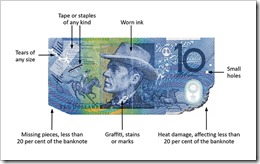
damaged-noteInterest earned has a nasty sting in its tail: it's considered taxable income. Save some cash in a savings account (or term deposit or similar) and interest earned will be included in your taxable income and taxed at your marginal tax rate.

Don't forget to take out inflation too (which was not inconsiderable at 1.9% for 2016/17).

Here's the simple workup:

  • Invest $10k @ 5% p.a to earn $500
  • Assuming your income is $87-180k, your income will be taxed at roughly $0.37 per $1 earned. As such, the ATO takes $185 of your $500.
  • The cost of inflation, calculated on the principal of $10k @ 1.9% p.a., is a further $190 (in other words, your $10k is now worth $9,810 in real terms).
  • Instead of earning $500, you've only earned $125 (or achieved a rate of return of 1.25%)

Current interest rates are already low and a 5% interest rate is probably unrealistic. Most 60-month term deposit rates are earning less than 3%.

If you're saving cash, you'd better have a very generous interest rate or a very low income—or you're probably going backwards. Let’s not get started on the opportunity cost of not putting those savings into a better-performing (and safer) investment.

Given the above example again, if you’re earning 2.5% interest, your actually working at a net negative interest rate of –0.33% at a cost of $32.50. As a bonus exercise for the reader, compound these examples over multiple years.

If you have a mortgage, get an offset account and stash your money in there right now. Either way, get a good accountant who can help you legally maximise your deductions.

I suppose a disclaimer is also worth posting: I'm just a guy, I'm not an accountant, lawyer, solicitor, tax agent, mortgage broker, banker, financial adviser, insurance agent, land developer, builder, government agent, or anything else so I disclaim your application of anything I write here is to be applied at your own risk. What I write may be incorrect and you are best to seek your own professional advice (tax, legal, financial, and otherwise) before entering into contracts or spending your money. Your situation is unique to you and what I write here reflects my experience only. This content is not professional advice and is not tailored to your situation. I’m not selling anything and I do not receive any form of commission or incentive payments for any companies or individuals I endorse. I'm learning too and expect to make many, many mistakes along the way.

Enjoy,

Michael

21 – Tax Time

PAPERWORK 040317 AFR PHOTO BY VIRGINIA STAR Generic pic of an income tax assessment form for year ending  30 june , tax return , wages , taxes , tax office , ATO , tax file number , accountancy , accountants , afrphotos.com AFR FIRST ONLY USE SPECIALX 24147<br /><br />** LOCKED FOR AFR BUDGET SPECIAL - 10-5-2005 **I’ve spent the last few days (on and off) gathering together everything needed by our accountant to complete our tax returns. This year’s tax return is more involved than normal because we have the purchase of our first investment property to consider and my wife’s life insurance—part of which may be tax deductible.

We’ve had an accountant prepare our tax returns for many years now—initially because it all seemed a little complicated and now because it is a little complicated.

Back then we had income from one or two employers, bank interest, HECS debts, and deductions like professional memberships and insurances, training, mobile phones, internet, stationary, uniforms, and depreciation of office equipment and furniture. I wasn’t sure how my income and tax returns related to my wife’s and vice versa.

These days, we’ve got more of the same plus private health insurance, life insurance, the investment property establishment costs (any IP is an interesting mess in its own right when it comes to taxation), dependent children, and the occasional minor offset to me as a non-earning stay-at-home parent. And of course the tax laws are always changing in many of these areas, making it hard to keep on top of what we can and cannot do, legally. Next year we’ll have the IP income or loss, interest and running costs to deduct, building and fittings depreciation, and so on.

The first accountant we worked with claimed he would be able to to cover his costs and we always found that to be the case… in other words, he was able to include valid deductions that we probably wouldn’t have considered (plus he didn’t charge us much). 

That first year our intention was to use his return as a template for subsequent years but it seemed just as easy to go back to him and so we did.

Although I wouldn’t recommend using your accountant as your financial adviser, our first accountant was the only financial professional we relied on at that point in time and he was able to offer some useful tips. For example, he highlighted the benefits of having private health insurance instead of paying roughly the same amount for the Medicare Levy (of course our insurance premiums increased as we started planning a family and it seems like the Medicare Levy doubled at some point along the way too…).

Now days our accountant is a key member of our broader financial team and we’ve “upgraded” to an accounting firm that deals regularly with clients who own investment properties (WSC Group—I’ve written about them before in the context of financial advice and insurance). WSC were recommended to us by Open Wealth and they’ve offered an outstanding service thus far—note they’re not directly affiliated with Open Wealth.

We pay for the expertise of an accountant but did you know accounting costs can be deducted the following year? Our first accountant also claimed he’d never had the ATO question a return he submitted (I assume tax return audits are fairly random but having a professional submit your return can’t hurt). While I probably could do our taxes, I’d prefer to know the return is correct and, more importantly, that I’ve claimed all of the deductions I can to reduce our taxable income.

If you’re considering the purchase of an investment property, or hold an investment property today, do you know how your quantity surveyor’s report relates to the depreciation of your building and fittings—and therefore you tax return? I’m estimating those two deductions alone will be worth nearly $10,000 in the first year. Don’t know what a quantity surveyor’s report is? Ask your accountant!

I forwarded 7MBs of PDFs to our accountant this morning so that’s my job done for now, hopefully.

I suppose a disclaimer is also worth posting: I'm just a guy, I'm not an accountant, lawyer, solicitor, tax agent, mortgage broker, banker, financial adviser, insurance agent, land developer, builder, government agent, or anything else so I disclaim your application of anything I write here is to be applied at your own risk. What I write may be incorrect and you are best to seek your own professional advice (tax, legal, financial, and otherwise) before entering into contracts or spending your money. Your situation is unique to you and what I write here reflects my experience only. This content is not professional advice and is not tailored to your situation. I'm learning too and expect to make many, many mistakes along the way.

Enjoy,

Michael

13 – Life Insurance

Life InsuranceAs part of a review of all matters financial I initiated in the middle of 2014, one of the items I added to my list of things to mull over was life insurance. The matter surfaced for me when I realised I no longer had any insurance cover through my superannuation fund by virtue of not working (i.e. being a stay-at-home parent) and not contributing regularly to my super account.

I’m not planning to die or be critically injured any time soon but I remember when we took on the mortgage for our PPOR in 2006: the commitment felt almost too large handle. I used to commute into the city regularly by bicycle but, having recently moved to Perth from Adelaide—with a related increase in minor accidents, and as one of two income earners critical to our ability to repay the mortgage, I felt it was time to stop riding. With a few years of wisdom on my side, I don’t feel the same way this time around with the investment property but, conversely, I now have kids and want more than ever to protect my family from the risk of loosing an income/resource.

From personal experience again, my father died at the age of 56 and my grandfather at 65 so I joke that I’ll likely expire at 45. Specifically, my father had a life insurance policy worth $500k when he died and had only recently opted not to increase that policy to $1m. The $500k has served my mom well over the years as she retired and downsized the family home but she also weathered the 2001 tech bubble and then the GFC with most of that money in the stock market. With the payout she’s been comfortable; without it, I don’t know that her retirement years would have been as amenable as she was expecting had my dad lived to retire with her.

When we were working, my wife and I both had automatic life and salary continuance insurance (SCI) (also called income protection) through our super funds. We didn’t pay directly for these policies but they were funded through the fees we pay to each fund (a percentage of our super balances). Notably, the amounts insured were very small—a couple of hundred thousand each for life and SCI.

We had the option, of course, to increase the benefit amounts and do everything through super but I soon came to learn there is a better way—an approach that not only pays for some of the premiums from our otherwise inaccessible (preserved) super balances (we’re not running SMSFs) but also offers tax benefits.

By way of background, I’d scheduled a complimentary meeting with a financial advisor through our accountants at WSC Group (through Jigsaw Financial Planning—again no affiliation here). I took with me our written financial goals and described to Matthew Laird (the advisor) what we’re doing with real estate, where we are with super, and that I’m not looking at stocks or mutual funds. It soon became apparent we didn’t need much in terms of paid financial advice… yet. We did, however, talk about insurance and Matt promised to get some numbers together for us. Importantly, he highlighted the concept of a partial rollover from our super funds to pay some of the premium costs, reducing our out-of-pocket expenses and thereby removing what had been the single biggest blocker, to my mind, to insuring ourselves adequately: cost.

The first thing Matt’s team did was prepare a Personal Protection Plan document for us which summarised our current position in terms of income, assets, expenses, liabilities, goals, and existing insurance. This offered a framework for understanding our insurance shortfall and potential requirements into which the planner injects their recommendations for level of cover and ownership structure. There was no charge for this.

It’s worth quickly describing the different types of insurance because I found this enormously confusing at first. I like to categorise insurance into two simple groups: living benefit, which you receive if you’re not dead, and death benefit, which your estate or nominated beneficiary receives when you die.

Living Benefit

  • Total or Permanent Disability (TPD). A lump sum payout when you’re declared totally and permanently disabled—and can’t work. These policies might exclude heart attack, stroke, cancer and others. A very important distinction to be aware of between TPD policies is that of “Any Occupation” versus “Own Occupation”: with an Own Occupation policy, you’ll receive a payout if you can’t work in your own profession; with an Any Occupation you’ll only receive a payout if you can’t work in any occupation (as Matt says, “as long as you can lick stamps…”). The premium is not tax deductible and the payout is typically not taxed.
  • Trauma (also called Critical Illness or Living). A lump sum payout that covers heart attack, stroke, cancer, and other specific conditions. The sum insured is typically lower and this cover overlaps somewhat with income protection. The premium is not tax deductible and the payout is typically not taxed. For us, I felt this was very much an optional insurance given our SCI cover (see below) and we didn’t buy any trauma.
  • Salary Continuance (SCI) (also called Income Protection). Pays ~75% of your income on an on-going basis, after a waiting period, to the age of 65 if you can’t work. SCI covers heart attack, stroke, cancer, etc. The premium is tax deductible and can be paid through super but I’m told it’s best to pay this one yourself for maximum tax benefits. The benefit is classed as taxable income. With the wife’s insurer, the maximum monthly benefit they’ll underwrite is based on 75% of her highest income year in the last three years.

Death Benefit

  • Term Life. A lump sum payout at death or when you are declared terminally ill (i.e. before you die but with less than 12 months to live). You’ll likely purchase “term” life insurance, in which your premiums cover you for death up to a certain age. You might also be able to purchase permanent life insurance, although I’m not sure this is available in Australia. The premium is not tax deductible and the payout is typically not taxed (but it may be if paid via a super fund or if paid to someone who isn’t a financial dependent—i.e. not your spouse or children).

Note that life insurance tends to get more expensive the older you get—I suppose because you’re more likely, statistically, to receive a payout. I was specifically told by Matt insurance gets a lot more expensive past the age of 47.

The other problem you might face the older you are relates to your medical history. In my (young) case, I broke my back in a snowboarding accident at the age of 21. So my insurance policy includes a blanket exclusion on spinal cover—with no reduction in premium, of course. Basically if my back suddenly gives way tomorrow I’m not covered but if I’m in a car accident and break my back I would be covered. Of course, some insurers may offer you a policy with increased premiums to cover the additional risk. My suggestion therefore is to get yourself insured as soon as you can, as a young person, so you at least have something in place even if health problems do present as you get older which might preclude you from becoming insured.

In the same vein, you’ll also want to be careful what you tell your GP—and what they record in your patient file (the insurer will request your patient file from your GP as part of the assessment process). One thing in particular to be mindful of is mental health—depression, anxiety, etc. If you’re having a bad week at work and mention that when you visit your GP for an unrelated reason—and let’s say your GP recommends you see a counsellor, the insurer may take that into consideration when assessing your application.

With some insurance products like SCI you can insure at indemnity value or agreed value. Indemnity value means the benefit is paid as a percentage of your earnings (i.e. 75%) whereas agreed value means your benefit is whatever fixed amount the insurer has agreed to cover.

Your premiums will also increase annually (these are called “stepped” premiums)—beyond the rate of inflation. You may have the option to pay a higher, “levelled” premium that remains constant throughout the course of your policy. If you can afford to, a levelled premium seems like the way to go to me—assuming premiums will increase beyond the levelled premium and you’ll save money. That said, part of me thinks “the house always wins”.

Our risk of death increase as we age but we conversely approach the end of our careers and our income generating potential. In other words, we should theoretically have a lessened need for insurance as we get older. My aim therefore is to wind back insurance over the next twenty years, with the assumption that we’ll be further progressed in our financial lives and less dependent on income or a large payout to set us in good stead. I’ve therefore opted for stepped premiums.

With other products you can purchase a lower-cost “rider” policy. For example, if you have a trauma rider to your life policy and claim against the trauma policy, your life policy benefit will be reduced by the amount you claim for trauma.

With the concepts out of the way, we started by defining our insurance goals, i.e. what costs would need to be paid for if one or both of us could no longer work. With my wife as the only income earner, we would firstly want to reduce debt and replace her income. With me providing child care, we would also want to cover the cost of child care if I couldn’t provide that function. Pretty simple. Anything else is a bonus—i.e. paying down property debt. In short, we calculated benefits from income, factoring in living expenses and debt. As with most things we do, we insured for modest amounts. Since income protection would be paid at 75%, I opted to go for the maximum amount we could purchase however.

From there, we were able to structure the insurance so the premiums are partly held through a superannuation account. This is accomplished through a partial rollover from our own super funds to the insurer’s zero-balance fund for the amount of the annual premium. In other words, that percentage of the premium for the policy held in the super fund is paid with super dollars that I otherwise cannot touch until I reach preservation age or retire. Yes, that money is no longer earning money for me in my super account but at least I’m not having to pay out of pocket for something as mundane as insurance (and in all honesty I consider the balance of my super as dead money… I’ll look at an SMSF one day).

In my particular case since I’m not working, I wasn’t eligible for an Own Occupation policy or SCI and all of my premiums were covered by the partial rollover. My policy covers me for life and TPD.

In the wife’s case—interestingly—the advisor recommended a different insurer and she’s covered for life, TPD, and SCI. Premiums are again paid through a combination of a partial rollover and a personal contribution. Interestingly, dear wife is with an untaxed super fund so there’s the little catch that rolling over from an untaxed fund to a taxed fund will likely result in tax being payable on the rolled over amount. This is still being resolved but it sounds like a tweak to the ownership structure will sort it out.

Finally, I should mention buying this insurance didn’t cost us anything in broker fees. The broker received a commission from the insurer which is detailed to us. I didn’t think insurance was sold this way so that was a nice cost savings and, since I know nothing about these types of insurance companies, saved me a lot of research. Yes, brokers are selling products that make them a commission which may vary from product to product but WSC Group (through their subsidiary Jigsaw Financial Planning) seemed very professional and above board in their dealings with us.

I suppose a disclaimer is also worth posting: I'm just a guy, I'm not an accountant, lawyer, solicitor, tax agent, mortgage broker, banker, financial adviser, insurance agent, land developer, builder, government agent, or anything else so I disclaim your application of anything I write here is to be applied at your own risk. What I write may be incorrect and you are best to seek your own professional advice (tax, legal, financial, and otherwise) before entering into contracts or spending your money. Your situation is unique to you and what I write here reflects my experience only. This content is not professional advice and is not tailored to your situation. I'm learning too and expect to make many, many mistakes along the way.

Enjoy,

Michael

6 – Think Rich

Immediately after writing my last post “How to Spend Money”—in which I advocate being frugal and not spending money unnecessarily, a library book I’d reserved came available: Robert Kyosaki’s Rich Dad’s Guide to Investing. The first section of this book is almost entirely dedicated to the concept of retraining and refocusing your mind to think like the rich do. In other words, instead of pinching pennies as part of a frame of reference where money is scare, change your mindset to one in which money is abundant and don’t be cheap.

This makes a lot of sense to me. I won’t make a full about-face in follow up to “How to Spend Money” but am inclined to adjust my thinking somewhat. The standard disclaimer I include with every blog post includes a note that I’m learning too, so here’s direct evidence of that! Most importantly, I’m learning and have a very open mind on financial matters as I’m not yet prejudiced by a lot of experience; I’m therefore willing to adapt and adjust my thinking on the fly and explore new ideas and concepts like this one.

A note: I realise this post isn’t directly related to property investment but—for me—property investment is simply a means (a “vehicle” in rich dad speak) to wealth.

Although I’ve not necessarily been cheap, I’ve definitely been frugal often and modesty always has been—and always will be—a pillar of what it means to be me.

Rich dad wisdom suggests being frugal is okay but there’s no sense in being rich but living poor. As an extension to that, it’s worth pointing out another Rich Dad pearl, which suggests having a low income and high expenses is superior to the traditional goal of having a high income and low expenses. In other words, use good expenses to reduce your taxable income (and to tie that back to our current discussion: don’t be cheap by trying to keep your expenses low). I’ll add this book is by far the best of the three Rich Dad, Poor Dad books I’ve read to date—it’s very conceptual but so worth the read—see the Amazon.com link above to check it out.

Frugality I would define as choosing to not be extravagant in your daily spending habits (for me this also relates directly to my greenie sensibilities: I choose not to be a consumer and pollute my environment with unnecessary packaging and products). I always prefer to buy quality and do not buy to throw away—this is and always will be a way of life for me. If I were cheap, I would buy poorly made, disposable things in quantity—at the very least.

To quote from Kiyoaski’s book: “My rich dad would say, ‘There are two ways to become rich. One way is to earn more. The other way is to desire less. The problem is that most people are not good with either way.’ […] this book [is] about how you can earn more so you can desire more.”

I’ve not been too bad on the desiring less front but I do look at people around me who seem content spending a lot of money and wish I could be less frugal, if not less cheap! I certainly want to be more generous and focus the money I must spend on the positive aspects of life.

Kiyosaki also cites another article on this subject which suggests the wealth you can build by living as though you were poor is finite (the article cited also discusses penny pinching in the context of becoming not just a “millionaire” but a “multimillionaire”).

The book doesn’t offer much in terms of definition between frugality and cheapness but the author does leave us with another rich dad quote: “‘If you want to be really rich, you need to know when to be frugal and when to be a spendthrift. The problem is that too many people know how to be cheap only.’” I think this point also extends beyond the black and white argument of frugality versus cheapness and into the broader educational context of the investor: do we understand the difference between good debt and bad debt, good expenses and bad expenses, assets versus liabilities, taxation laws, ownership structures, etc, etc? In other words, are we being constantly cheap or are we being selectively cheap? I mentioned in the previous post not spending money on a depreciating asset like a car; that’s not frugality but rather understanding how not to waste money quickly.

Notably, Kiyosaki goes on to write (later in the book) that rich dad focused on delayed gratification in the short term in favour of a long-term reward. I think this is key and really at the crux of what I was suggesting in my earlier post. Nonetheless, I do believe in the power of setting goals and ‘thinking yourself’ into the reality you desire. 

As a final thought, I’ll suggest not being cheap doesn’t mean splashing out at every opportunity. Meanwhile, keep thinking rich!

I suppose a disclaimer is also worth posting: I'm just a guy, I'm not an accountant, lawyer, solicitor, tax agent, mortgage broker, banker, financial adviser, insurance agent, land developer, builder, government agent, or anything else so I disclaim your application of anything I write here is to be applied at your own risk. What I write may be incorrect and you are best to seek your own professional advice (tax, legal, financial, and otherwise) before entering into contracts or spending your money. Your situation is unique to you and what I write here reflects my experience only. This content is not professional advice and is not tailored to your situation. I'm learning too and expect to make many, many mistakes along the way.

Enjoy,

Michael

4 - Risky Business?

Risk is one of those misunderstood concepts that seemingly plagues everything we do: riding a bike is risky, crossing the street is risky, buying property is risky.

I’ve found people throw around the word risk in a very self-limiting way and when it’s used in the context of any random conversation they: 

a) haven’t identified the actual risks that apply to that situation;

b) haven’t classified those risks in terms of their likelihood of actually occurring and the impact if they do occur;

c) haven’t identified ways of mitigating those risks or reducing the likelihood of their occurrence and severity should they occur.

Your mom or sister or brother or uncle will just say “oohhh that’s too risky for me” without understanding why it’s risky. This annoys me to no end because their ignorance suggests I haven’t evaluated risk and am therefore as ignorant and blind as they are myself—I am not!

Experience also reduces the risks that apply and time, of course, redresses many risks—especially in the world of long-term property investment.

Not taking risks could be said to be just as risky as taking managed risks! How else do we move forward as individuals and as a society and culture?!? NASA didn’t put men on the moon without taking risks.

The key to managing risk in any situation is understanding and qualifying the risks that might eventuate.

The example cited above of riding a bicycle is simplistic but the risks of riding a bike are numerous and include falling off, getting hit by a car, riding into a pedestrian, vehicle, animal, or lake, the chain falling off, getting wet if it rains, getting a flat tyre, having to shower when you get to work but having no soap. I used to ride my bike to work every day and these are all real risks!

Having identified the risks, scrutinise each risk in further detail to categorise and rate each one. Here are a few examples from bike riding:

  • Falling off: There’s a small chance you might fall off your bike and the result might be of no consequence if you land on your feet or it might be catastrophic if you bump your head. Maybe you’re riding over a loose surface or in the snow. Maybe you’re trying to stay balanced while you’re clipped in at a traffic light. Maybe you’ve made the poor decision to ride home after a few beers on a Friday night after work. The risk of falling off could be decomposed into several risks which are easier to think about and to manage but let’s keep things simple for now. In all cases, you can mitigate the risk of falling off by wearing a helmet and gloves, taking a safe route on bike paths and becoming familiar with the route and all of its hazards, and of course making good decisions while you ride such as unclipping from your pedals at intersections! You could also take out life insurance to cover your healthcare expenses, protect your income if you’re seriously hurt, and reduce your liability if you hurt someone else.
  • Flat tyre: This one’s easy: the risk is very low as it’s bound to happen every so often and is something that can be fixed on the spot in ten minutes (or worst case: call someone to collect you and your bike). Mitigation includes not riding over broken glass and fields of prickles; of course, you’ll also want to carry a spare tube or patch kit, tyre levers, and a pump and a flat may make you late for work… which might get you fired.

Don’t forget to take a moment to look at the risks in the context of what you gain, which in the case of our example include improved health (if you don’t fall off!), cost-effective transport and exercise, less stress, nice tan, etc.

In a similar vein, property investment has it’s own set of risks but it’s not inherently “risky”. You’ll want to identify the risks that apply to your situation but this is easily done and takes only a few minutes to think through the details. You’ll sleep better at night having done so—I promise: if your mind starts playing tricks, all you have to do is return to your risk assessment and you can say “nup, that’s a low-likelihood risk and although the consequences are high these mitigations are in place” and carry on sleeping.

Here’s a shortlist of property risks to get you started:

  • Buying a low growth property
  • Buying a property with expensive problems (pests, asbestos, etc)
  • Buying a low cash flow property
  • Paying more than the property is worth (i.e. buying at auction)
  • Sharks and dodgy investments
  • Problem tenants/property management
  • Vacancy
  • Unexpected repairs/shonky builder
  • Interest rate increases
  • Job loss
  • Hidden costs (stamp duty, mortgage lender’s insurance, council rates, insurance, accounting, management, etc)
  • Change in legislation (i.e. taxation laws relating to negative gearing)
  • Liquidity
  • Capital gains tax
  • Selling costs

It’s also important to weigh up the risks you identify in context of the reward—the gains you stand to make if the risks you identify do not eventuate. These might include income through a positively geared property, equity, and wealth.

We mitigated a number of the early risks related to buying by going through Open Wealth but I compiled a risk matrix for each of the risks that do apply in our case, specifically as we move into the post-construction phase. It’s a simple grid. I noted the risk, the criteria for that risk to be fulfilled, probability, impact, ranking, mitigation, and contingency.

Simplistic definitions for these terms are as follows:

Probability:

  • Improbable
  • Remote
  • Occasional
  • Probable
  • Frequent

Impact:

  • Negligible
  • Marginal
  • Critical
  • Catastrophic

Ranking:

  • Acceptable as-is
  • Acceptable with controls
  • Undesirable
  • Unacceptable

If, in future, I do encounter one or more of the risks I’ve defined, I have a ready-made framework for understanding those risks—at the very least—and some initial guidance for dealing with them in the heat of the moment. Hopefully I’ve taken steps to mitigate a risk before it becomes a big problem. If nothing else, my risk matrix is an integral part of my strategy relating to property investment and prompts me to think about things that might go wrong before they go wrong—or more specifically—how to measure my success or lack thereof.

Property investment is not inherently risky and I consider it to be far less risky than investing in stocks, where you have no real control over how your investment performs, or leaving in the bank to suffer at the hand of inflation. Many risks in the property sphere are readily overcome and the risk of losing money—or not making money—are often under your control with reasonable opportunities for mitigation.

Of course not doing anything is the biggest risk of all to building your future wealth. Time, conversely, is your biggest ally and will help to remove many short-term risks if you’re prepared to hold and ride out any lumps and bumps.

I suppose a disclaimer is also worth posting: I'm just a guy, I'm not an accountant, lawyer, solicitor, tax agent, mortgage broker, banker, financial adviser, insurance agent, land developer, builder, government agent, or anything else so I disclaim your application of anything I write here is to be applied at your own risk. What I write may be incorrect and you are best to seek your own professional advice (tax, legal, financial, and otherwise) before entering into contracts or spending your money. Your situation is unique to you and what I write here reflects my experience only. I'm learning too and expect to make many, many mistakes along the way.

Enjoy,

Michael
3 - First Steps

There are so many subtle decisions and parallel steps in the property buying process it’s hard to know where to start in describing how we went from A to B. I suppose I’ll start at the very beginning, following our decision residential property investment was the thing for us.

Selecting an Investment Advisor

I’ve written about our “A-Team” previously so won’t reiterate the contents of that post here. Suffice to say we knew we’d need to decide on an individual or company to assist us to select a market, suburb, and property. I considered the risks too high to attempt this on my own, the first time around. You might do this yourself, someone might do it for you at no cost to you, or you might pay someone to provide this service (such as a broker).

I met with a few property investment companies and ultimately decided to move forward with Open Wealth Creation. We aligned to the Open Wealth methodology because it made sense and the Open Wealth team provided a large quantity of quality educational materials at no charge (a reminder, this blog is not an advertisement or referral for any of the entities I mention in these posts).

As we evaluated Open Wealth, I was also interacting with Joyce Property (based in Perth) but I opted not to move forward with them because they also promote and sell apartments; I don’t believe apartments are a good residential investment and I believe if you’re spruiking apartments you’re not working in the interest of those who are investing with your firm. Notably, Joyce does not charge a fee for their services, whereas Open Wealth do charge a fee. Joyce are obviously a very experienced organisation (I met with Graham Joyce and he oozes professional history). 

My wife and I also met with a representative from Investmark and I attended a seminar and had a follow up meeting with IPG but neither were up to the task I set them and seemingly just wanted to shift stock onto naive investors. Their eyes widened when we first explained how much useable equity we had but neither one followed up with me, despite prompting, when I asked them to back up their claims. The free IPG seminar was more or less promising and it seemed like what they were selling was based on good research. At the end of the day, both felt very slippery, verging on dodgy.

Finally, I met with Nicheliving a few times (primarily for their mortgage brokering services but initially for their house and land packages). They’re obviously big in WA but were really pushing us towards NRAS properties and their approach seemed somewhat thick. I knew pretty quickly I wanted to be building in Queensland (Brisbane) but it was worth the discussion with Nicheliving. Nicheliving are a one stop shop, which might be a good thing (or might not!). Their advertising also shows a dude holding wads of cash so it seemed like they target the get rich quick crowd which is not what I’m about.

Getting Money

In parallel with the discussions I was having with these advisors and property development firms, I initiated contact with our current bank and with the mortgage broker we used when purchasing our PPOR.

Although I didn’t intend to send the investment property mortgage to the bank that holds the mortgage over our PPOR, I needed to understand how much equity we had in our family home and, secondarily, how much they thought we could borrow. This turned out to be a good move as the bank was able to very quickly order a full valuation at no charge to me and it turned out to be a very positive engagement in terms of learning how to to converse successfully with the bank. Importantly, because the bank ordered the valuation directly, I was able to get a copy (I wasn’t able to get a copy when our mortgage broker requested a second valuation—which also went through the bank…). 

I wasn’t as impressed with the bank’s view about our loan serviceability—and in turn how much they would lend us; this was due primarily to the fact we’re a single-income family. Nonetheless, the home loan specialist I dealt with was immensely useful in helping me to understand the value of our family home and how we might go about refinancing its corresponding mortgage and optionally financing the investment property purchase. The specialist was also able to share the valuation report with me and it was helpful to see how the valuer saw our property (interestingly, we have a four bedroom house—as per the plans I supplied to him—but he recorded and valued the property as a three bedroom house with a study…).

I didn’t want the bank which has our PPOR mortgage to also hold our IP mortgage because I didn’t want to cross-securitise the loans. I highlighted this when I spoke to our bank and was reassured it wouldn’t be a problem but I’ve read a single lender holding both mortgages will always ensure they come out best in the event of any problems. Yes, we might have secured a lower interest rate and it would have been convenient having everything in one place but I’d only consider a single bank scenario if we eventually get to the world of private banking.

Following that initial conversation with the bank I also got in touch with a mortgage broker. Broker’s are often recommended and, as mentioned, we’d had success with a broker when mortgaging our PPOR (we used Mortgage Choice). You can do your homework and check out products from each of the banks on your own but why bother when using a mortgage broker doesn’t cost you anything and they’re already familiar with countless loan products? The broker I dealt with reassured me Mortgage Choice is paid the same commission for all of the products they recommend, removing the opportunity for the broker to recommend one product above another that will earn them more money; of course I’m not sure how true that is.

Our broker told me he has a few investment properties himself and I think finding people who understand investment property is really important because they’ll have a better appreciation of the path you’re following. As some of our requirements were different to your mortgage broker’s average client requirements (more on that in a moment), I wanted to structure our loans differently than what the broker first had in mind. At the end of the day the broker was able to find the products we needed, submit the applications (he walked through every line on the application forms with me), and secure an interest rate on the main loan that is 0.02% better than what that bank would have offered had I gone to them directly.

With my wife being a doctor, it turned out she was also eligible for a partial LMI waiver (this is one of the interesting requirement I mentioned earlier). Essentially, some lenders will offer members of specific professions an LMI waiver on the basis that they present a lower risk as borrowers. Search for LMI discount or see here for examples—you may be surprised what you find. I certainly wish I’d known about this offer/wish it existed when we purchased our PPOR as we had some major cash flow problems for a little while when we first had to sort out stamp duty and then LMI (and then retaining walls)!

Both of the brokers I was dealing with (Mortgage Choice and Nicheliving) were across the major lenders offering LMI waivers (initially CBA and Westpac but now ANZ and possibly Macquarie and St Georges) and we ended up being able to borrow 90% of the IP costs without incurring LMI. Note the 10% balance was paid from the line of credit secured against the equity in our PPOR but we could have done an 80/20 split if necessary. You can take the latter approach too if you don’t qualify for an LMI waiver but don’t want to pay LMI and have sufficient equity.

Mortgage Choice submitted applications for the main IP loan and the line of credit with our existing lender. Both lenders performed their respective valuations, the first on the property we were buying and the second on our home.

After all was said and (nearly*) done, our unconditional finance approvals came through without a hitch. People get all bent out of shape about finance but I don’t let it phase me—in this case I’d done my homework and knew what to expect. In other words, I wasn’t asking for more than any reasonable person in our situation might need and the numbers were simple and made sense. I was also confident our team would get us through. Might be different next time around though!

* Land settlement is due in the next few weeks. When settlement occurs, the solicitor will meet with the bank and land developer to ensure monies are dispersed appropriately and all of the legals are taken care of.

Land and Builder (etc)

Following an initial phone consultation with Open Wealth and a bit more back and forth, the first thing we needed to do with them was have our name added to a waiting list for a property in the area (the development) they were recommending.

After looking over the property details and the house specifications, we had to sign an “Exclusive Hold Agreement”, which essentially allowed us to deliberate further, and undertake additional due diligence, while the property could not be offered to anyone else. The hold agreement also required payment of a $1,000 refundable deposit. If we chose to back out, the deposit would be refunded in full. This deposit was payable to Open Wealth and is ultimately part of their 2% fee.

With the land contracts submitted, we then had to pay a $2,000 refundable holding deposit to the land developer. This deposit is essentially part of what would be a typical 10% land deposit—there is no further deposit to pay for the land and the balance of the land price and costs are paid at land settlement. The land contracts included the Contract for House and Residential Land (REIQ) and Terms of Contract for House and Residential Land (REIQ), as well as special annexures.

Note we had no opportunity throughout this process to submit an “offer” as such and when I enquired about negotiating on price, I was told the prices are essentially non-negotiable. This is something I want to find out more about if we repeat the process again with Open Wealth.

Next, we had to pay the balance of the Open Wealth “Development Management Agreement Fee” (their fee) within seven days following unconditional approval. This fee is 2% plus GST of the total land and construction price and is tax deductible.

Finally (FINALLY!) we had the 5% builder’s deposit to pay; we were given the option of paying this before settlement so the builder could make a start before we actually owned the land (due to an arrangement between the land developer and the builder negotiated by Open Wealth). We had the option to pay this after settlement.

Note I would have paid all of these costs from our line of credit in order to tax deduct the interest but unfortunately the LOC wasn’t yet available when I paid the $1k and $2k deposits. I may still be able to claim something for these but it gets tricky as I paid both of these initial deposits from our personal transaction account and that gets messy in the eyes of the ATO; will let the accountant sort that one out come tax time! [Update: on advice from our accountant, I “refunded” the $3k to our personal account, in two separate transactions, from our LOC.]

In summary, these were our upfront costs and the timing of relevant milestones:

September

  • Exclusive Hold Agreement signed and returned.
October
  • Open Wealth deposit: $1,000 (of the total Development Management Fee) to Open Wealth. Refundable.
  • Land contracts signed by us and returned.
November
  • Land developer deposit: $2,000 (of the land price) to the land developer. Refundable. Payable once land sale contracts submitted
  • Unconditional finance approval received. 
  • Development Management Agreement Fee: 2% plus GST (minus $1,000 paid initially) of the land and construction costs to Open Wealth. Tax deductible.
  • Construction contracts signed by us and returned.
December
  • Builder’s deposit: 5% of the construction price to the builder. Tax deductible.
[Update: March
  • Land settlement]

Reading and Learning

As all of these events unfolded, I was busily reading everything I could get my hands on. I’ve started a bibliography which I’ll publish soon in case you want to follow what I’ve read. Education is obviously a time consuming (and at times tiresome) activity but I feel it’s important to understand the principles of property investment inside and out—especially as I lack the repeated experiences myself.

I suppose a disclaimer is also worth posting: I'm just a guy, I'm not an accountant, lawyer, solicitor, tax agent, mortgage broker, banker, financial adviser, insurance agent, land developer, builder, government agent, or anything else so I disclaim your application of anything I write here is to be applied at your own risk. What I write may be incorrect and you are best to seek your own professional advice (tax, legal, financial, and otherwise) before entering into contracts or spending your money. Your situation is unique to you and what I write here reflects my experience only. I'm learning too and expect to make many, many mistakes along the way.

Enjoy,
Michael

1 - The A-Team

When it comes to property investing, one snippet of advice I hear repeated is to assemble your own, personal A-Team. Your team may look slightly different to ours but most A-Teams will typically include a tax account (ideally with significant experience in property investment), a mortgage broker, a solicitor or conveyancer, one or more lenders, a property manager, and one or more real estate agents, buyer’s agents, etc. You may optionally pull in or need to liaise with a financial adviser, an insurance broker, and potentially land developers, builders, and councils if you’re building new.

This is the team we ended up with as we purchased our first investment property. I’ve listed team members in rough order of importance (to my mind).

A very quick note: I do not receive any incentive to mention these companies and individuals, i.e. this is not an advertisement.

Accountant

I consider myself a numbers guy so you can imagine the accountant is going to be important to me. A good accountant will help you understand why you need to do things in a certain way to maximise your tax benefits and stay clear of any trouble with the ATO.

On recommendation from Open Wealth (see below), we’ve ended up with WSC Group and I can’t speak highly enough of them. Their customer service is above and beyond and Rainer Lamb, in particular, has been instrumental in my own learning, helping us to ensure our ownership and financial structures were correct. The introductory materials provided a detailed overview of how they recommend buying investment property and they specialise in investment property. It’s remarkably clear to me they know what they’re doing.

Interestingly, WSC are based in the Eastern states and we of course live in Perth. I was a little reluctant to leave behind our local accountant but they were not meeting my needs despite being available face-to-face. The WSC accountants do travel interstate and, as mentioned, Rainer in particular has been expedient and accurate in responding to my many, many questions via email. David Shaw, CEO has also been running some webinars of late and came over to Perth for a talk about retirement planning so they’re very engaged with their clients from the top down.

We’ll rely on WSC in the near future to prepare PAYG variations, do our tax returns, of course, and apply depreciation schedules for building and fittings. Basically, their job is to squeeze out every last dollar in tax savings as this first property will be negatively geared initially.

Mortgage Broker

You can shop around to find a good lender but why bother when using a mortgage broker doesn’t cost anything? We used Mortgage Choice when buying our family home before the GFC and although I initiated a conversation directly with our current lender (which proved immensely valuable) I knew we’d likely get a better outcome through a broker. There are a few reasons for saying this: a) I didn’t want to cross-collateralise the investment property loan against our family home b) an impartial broker will almost certainly get you a good product with a good rate from a reputable lender.

We set up a line of credit and a separate main loan for this property so there were a lot of moving parts and paperwork. I knew how I wanted to structure the loans from the get go so had to be fairly direct with Mortgage Choice on that front to get what I wanted but we got there in the end.

It was a mortgage broker who also put me on to the idea that certain low-risk professionals with high-income and/or stable careers (such as my wife—a doctor) may have access to special offerings from the banks when it comes home loans. For example, we could borrow up to 90% of the property value before lender’s mortgage insurance kicked would be required (this doesn’t really matter as we used a split loan structure—a line of credit and the main loan—so LMI shouldn’t be payable even if you don’t have a fancy job title… I’ll go into this more in a subsequent post).

Note mortgage brokers get paid a commission from the lender and don’t charge you a fee. I’m told the commissions Mortgage Choice is paid are consistent across lenders so it should be guaranteed you’ll get the right product for you rather than the product that will achieve the highest commission for the broker. Mortgage Choice told me this so how true it is I can’t say.

For many people getting finance approved is hard and awkward. We originally tried to finance our family home through Wizard Home Loans who eventually came back to us, late into the finance period while the block of land was under offer, to say they couldn’t help us (for whatever reasons—I can’t remember why). We then turned to Mortgage Choice who got us sorted with a bank before the finance deadline. As very naive first home buyers we didn’t have a clue this processes is officially painful but it all worked out in the end. This time around, once finance approvals were all in place, the various members of our team called to congratulate us and my response (not uttered) was pretty much “duh”. In other words, I knew we could achieve the financing we needed, I was confident our mortgage broker would get us there, and guess what? It all worked as it should have.

Buyer’s Agent/Project Manager

This one is optional but may help you find a better buy. You can do the legwork yourself if you’re comfortable doing so to decide which suburb you’ll buy in and which property you’ll buy but if you’re a first-timer (as we are) you might get it wrong—or not do as well as you could have. It depends on your risk appetite and individual circumstances. Some of these companies will charge a fee (percentage-based) while others won’t charge you but get paid commissions (which may or may not be fully disclosed to you) from the land developer and builder.

We elected to go with a company called Open Wealth Creation for many reasons, one of which is the quality of the educational materials they provide at no charge (Cameron McLelland’s book My Four-Year-Old The Property Investor, his booklet The Ultimate Mini Property Investors Guide, and the Wealth WODs (Workout of the Day) he and colleague Al Lewison publish most days in video format). I like that Open Wealth aren’t pushing a get rich scheme but give you a reasonable, sound process (which is fully explained in the materials and backed up by common sense). Open Wealth do charge a significant fee (2% plus GST) but for that you get two things: a) an unbiased recommendation where to buy and b) a project management wrapper around the entire process of buying a block of land, constructing a new house on that land, and renting it out. If you’re time-poor they can pretty much do it all for you, if you want, but I’m choosing to be as involved as I can and have bought in predominantly for the research and experience on offer.

Some readers may scoff at the idea of paying for this service but to me, as a first-time investor, it’s worthwhile. The materials have explained the approach, with which I am comfortable, and, unlike other firms, I’m aligned to the process and believe we’ll do better in the short-term and long-term than had we attempted to do this ourselves.

Notably this is one place to be wary of unscrupulous sharks. Open Wealth will have proven themselves to me only when the build is complete and we have a tenant but they seem—so far—like one of the few legitimate companies I’ve come across. There are all sorts of sales people out there trying to unload their stock (rather than the best property) and make a commission. Be very careful to understand the financial motivations of those you deal with and push them hard to ensure what you’re being told actually makes sense. I initiated conversations with several other companies during the selection process which eventually led us to Open Wealth and as soon as I pushed these companies on really basic matters they backed away and went quiet. It was really weird but I guess they want a pushover who’s just going to open their wallet and make it easy.

Brokers or buyers advocates I’m not familiar with but they may help you find something suitable. I have heard brokers tend to push existing real estate that’s closer to the CBD, rather than new builds in the outer ring suburbs. It’s worth understanding the benefits of building new and buying more low-cost properties over fewer expensive properties.

The Bank

Interesting things, banks. They’re big (even the small ones), operate in isolation from each other (apart from overarching legislation), and are an integral part in property investment. Although we went through a mortgage broker, I started my enquiries with our current bank and the holder of the mortgage over our PPOR. I wanted to give them the opportunity to come up with a good offering even though I didn’t want to cross-securitise an investment property and our PPOR and I therefore new it was unlikely we’d give them our business for the main IP loan.

After assessing our circumstances, a free valuation on our family home was ordered. Knowing the bank value of our home was helpful in understanding how much equity we had in the property and therefore our LVR and what we can do over the next year or two in terms of investments.

The mobile lending specialist was a great help to me in understanding what options were available to us through our current bank and was able to answer many of the questions I had as we progressed with the purchase.

If nothing else, it felt like I had insider access to the bank!

Solicitor/Conveyancer

In WA I’d refer to a conveyancer for settlement but because we bought in Queensland we’re dealing with a solicitor. Again, on recommendation from Open Wealth, we went with Blaak & Associates. A solicitor will ensure contracts are in order and ultimately work with the vendor and your lender to ensure settlement goes according to plan. Being from WA I’m not familiar with the settlement process in Queensland. For that matter I’m not particularly familiar with the process in WA! Nor do I wish to be! Conveyancing and settlement is, quite frankly, a chore I’m more than happy to pay someone to do. And the costs are really minimal—a few thousand dollars at most—and are, I believe, tax deductible (or contribute to the cost base of the property at the very least).

A solicitor can also prepare your will, which is something we’re sorting out for the first time as we move ahead. Notably, I’m using the DIY couples will kit from Australia Post… for now, anyway.

Property Manager

I’ll leave this as a placeholder to revisit once our IP is built and we’ve got a property manager on board.

Financial Advisor

For some readers, a financial advisor will be very important. For us, I know we’re forging ahead with property—pretty much exclusively—and I’ve defined our own financial goals and strategy for the short-term, medium-term, and long-term. I could pay a financial advisor to help here but for now I feel it would be wasted money (they do charge a fee). WSC Group do provide financial advice if you’re looking. WSC offer a financial planning service through a company they own called Jigsaw Financial Planning.

Insurance Broker

This listing is at the bottom as it isn’t directly related to property investment. It should probably be higher up in our case. By insurance I’m referring to life insurance, total and permanent disability (TPD), and salary continuance insurance (SCI) or income protection insurance. Although they overlap to some extent they’re all different and can be bought differently. If you’re employed and receive superannuation, you’ll likely find your super company offers basic life and SCI insurance. If you still hold super but aren’t working (like me) then double-check; in my case, I’m not insured.

Admittedly, insurance bores me to tears. More importantly, we’ve considered it too expensive to worry about to date. But with mounting debts and children—and being a single-income family—it’s something we need to consider. Once again, WSC is helping us here and we’re in the early stages of getting a solution in place that will keep us financially safe if something bad happens. I have found the premiums can be adjusted in relation to the amount of cover and, more interestingly, we can pay for some of those premiums using a partial rollover from our existing super funds. I’m not clear how this works but apparently it was introduced with recent (June 2014) legislative changes.

Odds and Ends

Other roles you may need to call on include:

  • A justice of the peace to witness mortgage documents (thank you Queensland!)
  • Your employer
  • Your superannuation fund
  • Your credit card companies
  • Your car and personal loan financier
  • Etc, etc…

I don’t want to suggest you need to have all of these team members in place from day one. We built this team gradually when the need arose and I hope we can reuse team members again in the future without making any changes to the line up. You may need fewer people or have the option to rely on one or two key players to facilitate multiple functions. The communication lines can get a bit complicated (and that’s one area where I’ve already seen tremendous value in Open Wealth as the central hub around which the other functions operate).

I’ll update this list when and as needed.

I suppose a disclaimer is also worth posting: I'm just a guy, I'm not an accountant, lawyer, solicitor, tax agent, mortgage broker, banker, financial adviser, insurance agent, land developer, builder, government agent, or anything else so I disclaim your application of anything I write here is to be applied at your own risk. What I write may be incorrect and you are best to seek your own professional advice (tax, legal, financial, and otherwise) before entering into contracts or spending your money. Your situation is unique to you and what I write here reflects my experience only. I'm learning too and expect to make many, many mistakes along the way.

Enjoy,

Michael

Setting the Scene

I’ve previously mentioned property investment and that’s what I’m here writing about (or will be soon once the formalities are out of the way). So before we get started in earnest allow me to explain why we felt the need to invest. As always, I’ll go into specifics in future posts—I promise.

Our pathway through life has been, to date, very much what most people would expect: grow up, go to school (university), get a good job (refer to Robert Kiyoasaki’s excellent Rich Dad Poor Dad book for more on this mantra). You might follow that with work hard, retire, die.

In my case, I opted to start my tertiary education in the arts to lay the groundwork for future specialisation so I studied English Literature and Art History. I followed that with a Masters in Information Technology.

My wife followed a similar path, starting out in veterinary studies before shiftingd over to medicine.

I did alright, academically, in my undergraduate degree and did very well in my Masters degree. The wife did very well throughout. I landed in a pretty good job out of university and my wife entered the public health system to complete her training.

Our incomes grew rapidly as we progressed from junior positions in the first few years of our respective careers and we soon focused on buying a block of land and building a house. We saved enough for a deposit on the land and took on a mortgage worth a lot of money (not quite three quarters of a million dollars at the time—2006—but close enough to make me uncomfortable) for the purchase costs and the build. Interest rates were higher then and bounced around a lot but we were protected by naivety, our double income, and a thrifty nature.

We went to work. We paid our mortgage (which cost over $4,000 a month in the early days). We saved a bit where could, using high-interest savings accounts—and paying tax on the interest of course. We were scared to spend and saved hard to establish a buffer or rainy day account.

At one point, the CIO I was working under suggested to me the best thing we could do with our saving was reduce the interest costs on our mortgage by pushing our spare cash into the included redraw facility. If you’re not familiar with redraw, it works very much like an offset account: any money you put in reduces the principal on which you pay interest. Whereas an offset account is a separate transaction account, a redraw account is basically your mortgage account. The cash you push in can just as easily be pulled back out again. It’s not quite as flexible as an offset account but redraw didn’t attract any fees in our case.

Important note: there are significant downsides to redraw if you ever want to turn the property into an investment property—against which  you would likely want to claim tax deductions. The ATO considers payments into redraw as payments which reduce how much interest you can claim. So watch out for redraw and prefer an offset account instead which doesn’t have the same problem.

From this simple idea was born our financial strategy: manually move cash into the redraw account when it was available, thereby reducing interest costs. This approach would save us hundreds of thousands of dollars and result in the mortgage being paid off early. Oh and there would be no tax to pay (if our cash was instead held in a high-interest savings account or other investment vehicle we would pay tax on the earnings).

Meanwhile, the equity in our home was increasing. It’s now 2014, we’ve owned the block of land since mid-2006 and been in the house since mid-2008. As we worked at our jobs, the property market—and the property cycle—kept working in our favour too, ensuring the value of our house was aligned to the median house price and comparable recent sales in our area.

In round numbers, let’s say we’ve been living in the house for five years; in that time, the equity in the house has increased by over $400k. Of course there’s inflation to contend with and we spent close to $100k on very necessary post-construction activities like pouring a very long driveway (we’re on a rear block), building a deck and pergola, fencing, tiling, painting, carpets, blinds, built in vac, etc, etc.

Equity, locked up in a family home is like almost-free money. That’s simplistic, of course, because to access that “money” really and truly you’d need to sell the house and crystalise the gain which most people probably won’t want to do if they’re living in that house. But—and very importantly—the banks will loan money against that equity using a line of credit or an equity loan. You’ll pay interest just like any other bank loan but you can effectively do whatever you want to with that money such as use it to pay for a deposit on an investment property (or buy stocks or go on a holiday or whatever—but ask an accountant about the idea of mixing the purpose of the loan before you do anything other than attempt to generate money). A line of credit can be established for smaller amounts but can go quite high too—the bank site I’m looking at as I write suggests $750k and up.

At this point, we have a problem. We’ve got a plan to pay off our mortgage in ten years or less (by paying less interest, basically) and we’ve got increasing equity in our home. That’s good problem to have, I suppose! It also sounds like lazy money to me: money—or rather other people’s money (the bank’s)—that could be working for me to make more money (so I don’t have to) but that hasn’t been put to good use.

Following an initial conversation directly with our bank I realised we could be approved for an investment property mortgage and could effect the transaction with no money from our own pocket. Really. Nothing. We couldn’t get a 105% or 110% loan because they aren’t offered by the mainstream lenders post GFC but by combining a line of credit with an investment home loan we could cover all of the purchase costs and we’d avoid paying mortgage lender’s insurance.

Rental income would cover a significant majority of the ongoing costs and tax deductions would take us up near 95%, leaving only a small difference for us to pay. By my (pessimistic) calculations that works out to $4,000 or less a year.

The property will therefore be “negatively geared” but the plan is for it to become neutrally or positively geared in the years to come meaning it makes money (“net cashflow positive”) and costs me nothing in the long-term. All the while the equity in this first property is growing and can be used for other investments.

So we’ve redefined our financial strategy—I plan to dedicate a future post that topic. In short we’ve now outgrown what was a simplistic and great plan (put it all in redraw!) and are now thinking long-term and bigger picture (through retirement and on to death). I’ve done a lot of reading over the last six months and spoken to brokers, accountants, other investors, lenders, and solicitors to understand the moving parts when it comes to property investment. I have a lot more learning to do however!

I’ll write more about risk in the future as well but the way I see it property is in a sweet spot between shares and savings accounts. Understand the risks and they seem rather manageable for the long-term returns you hear about. [Update: see my post Risky Business? for my views in this area.]

A side note: I earned ten thousand dollars one summer as a young man planning bus routes for the school board in my area. Another long story but that money was invested in a handful of tech stocks around 1998/99—just before the tech bubble burst, if you’ll recall! I watched some of the five or six stocks I held soar magnificently in value but was mentored to hold for the long term and I neglected my instinct to sell and cash in the gains. The bubble burst soon enough and my $10k became almost worthless in a short matter of time. In retrospect, I probably bought when prices were already high so the correction left me hanging in the wind. In the next decade that money would have come in terribly handy for immigration to Australia, getting married, studying as an international student, and buying our first home. Of course by that time it was long gone. It’s easy to call stocks a gamble but there are reasons why I have no interest in stocks (to list some of those reasons quickly: market mentality, lack of control or direction over the investment, lack of time and interest to understand company fundamentals, and so on).

Super would be fine and dandy—apart from the fact any contributions are locked away until you reach your preservation age (55 in my case) and the canned investment options are built around securities (and property and cash). Self-managed super would be great, especially when it comes to property investment, but then the ATO won’t allow you to buy a block of land and improve it (build) and building new is what maximises your depreciation benefits.

Other options we considered were to simply save our income. This is simple and surely it’s safe, right? The bank guarantees your savings but it won’t protect your savings from inflation (which is roughly 3% a year on average). Most importantly, your money isn’t working hard enough, even if it is keeping pace with inflation. With interest rates so low, high-interest savings accounts are still quite boring in terms of their returns and term deposits, etc aren’t much better as far as I know.

So we’re starting with property. It costs very little to build an asset base that will grow in value over time and allow us to save tax. Our strategy, if you can’t tell, is very much buy and hold—forever.

Hopefully that gives you some context for the stories and tales that follow. Our situation is unique in that it is our own but in dollars and cents I think you’ll find we’re not all that different from you or your friends and neighbours. There are no secrets and no magic tricks. Yes, there are tricksters and sharks who will attempt to lead you astray and while they may not steal from you, you may not get what you expect in return for payment. There are alternative strategies and approaches you’ll come across, of course. And there is plenty to learn: the financial aspects are fascinating and then of course there’s the tax office and different state laws and functions to consider. As a simple person, however, I don’t believe this stuff is beyond my grasp… but I’ll keep you posted either way!

I suppose a disclaimer is also worth posting: I'm just a guy, I'm not an accountant, lawyer, solicitor, tax agent, mortgage broker, banker, financial adviser, insurance agent, land developer, builder, government agent, or anything else so I disclaim your application of anything I write here is to be applied at your own risk. What I write may be incorrect and you are best to seek your own professional advice (tax, legal, financial, and otherwise) before entering into contracts or spending your money. Your situation is unique to you and what I write here reflects my experience only. I'm learning too and expect to make many, many mistakes along the way.

Enjoy,
Michael