Showing posts with label Lazy Money. Show all posts

49 - Cash savings cost you money

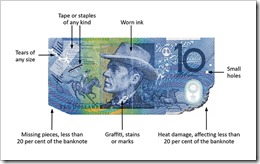
damaged-noteInterest earned has a nasty sting in its tail: it's considered taxable income. Save some cash in a savings account (or term deposit or similar) and interest earned will be included in your taxable income and taxed at your marginal tax rate.

Don't forget to take out inflation too (which was not inconsiderable at 1.9% for 2016/17).

Here's the simple workup:

  • Invest $10k @ 5% p.a to earn $500
  • Assuming your income is $87-180k, your income will be taxed at roughly $0.37 per $1 earned. As such, the ATO takes $185 of your $500.
  • The cost of inflation, calculated on the principal of $10k @ 1.9% p.a., is a further $190 (in other words, your $10k is now worth $9,810 in real terms).
  • Instead of earning $500, you've only earned $125 (or achieved a rate of return of 1.25%)

Current interest rates are already low and a 5% interest rate is probably unrealistic. Most 60-month term deposit rates are earning less than 3%.

If you're saving cash, you'd better have a very generous interest rate or a very low income—or you're probably going backwards. Let’s not get started on the opportunity cost of not putting those savings into a better-performing (and safer) investment.

Given the above example again, if you’re earning 2.5% interest, your actually working at a net negative interest rate of –0.33% at a cost of $32.50. As a bonus exercise for the reader, compound these examples over multiple years.

If you have a mortgage, get an offset account and stash your money in there right now. Either way, get a good accountant who can help you legally maximise your deductions.

I suppose a disclaimer is also worth posting: I'm just a guy, I'm not an accountant, lawyer, solicitor, tax agent, mortgage broker, banker, financial adviser, insurance agent, land developer, builder, government agent, or anything else so I disclaim your application of anything I write here is to be applied at your own risk. What I write may be incorrect and you are best to seek your own professional advice (tax, legal, financial, and otherwise) before entering into contracts or spending your money. Your situation is unique to you and what I write here reflects my experience only. This content is not professional advice and is not tailored to your situation. I’m not selling anything and I do not receive any form of commission or incentive payments for any companies or individuals I endorse. I'm learning too and expect to make many, many mistakes along the way.

Enjoy,

Michael

48 - Making Money Lazy

LazyUp until lately we’ve been on a roll: a few years back the equity loan was approved against our family home—putting that “lazy money” to work for us, and we were approved for and built our first two investment properties using the bank’s money.

But things are tight these days in the banking and credit sector and, with only one income, our ability to service additional loans is viewed as risky by the big lenders. Which of course sucks because we have a sizeable “rainy day” fund, the wife is in a well-paid job, and we have a very strong history of paying our bills on time and saving.

In other words, we still have income coming in but no option (currently) to invest it in additional properties without tying up our own funds. Our mortgage broker said “no” :’(

This situation leads to the holding pattern which is Plan B: reducing interest payable on the investment property loans. In other words, we’ve started stashing our spare cash in the offset accounts attached to the interest-only investment loans. This cash is therefore fluid—it can be withdrawn at any moment—and, because we’re using the offset accounts instead of paying down the loan as principal and interest (or paying into redraw), interest on the full loan amount remains deductible if and when we do withdrawn cash in the future.

While I’d prefer to be building our property portfolio (the median house price moves forever upwards) using the bank’s money and tax-deductible debt to achieve long-term growth, at least we’re saving interest. In fact this is the exact strategy we adopted with our PPOR—but of course, interest on that debt was not not tax-deductible and there were different variables at work there.

The biggest problem I have now is our money could be working harder. Although it could be said we’re retiring debt (sort of), this is good debt and I don’t want to retire it… I want to use our money to borrow other people’s money so it can be put to work for us! Interest rates are low and likely to stay that way for the near-term and if we could buy again now, at today’s median house price or just below, we could achieve cheap capital growth over the next few years.

We’ll review things again in six month intervals—both serviceability but also capital growth of our existing investment properties, which may allow us to leverage that equity to fund a larger deposit for IP #3. But that’s not how I’d prefer to do it.

I suppose a disclaimer is also worth posting: I'm just a guy, I'm not an accountant, lawyer, solicitor, tax agent, mortgage broker, banker, financial adviser, insurance agent, land developer, builder, government agent, or anything else so I disclaim your application of anything I write here is to be applied at your own risk. What I write may be incorrect and you are best to seek your own professional advice (tax, legal, financial, and otherwise) before entering into contracts or spending your money. Your situation is unique to you and what I write here reflects my experience only. This content is not professional advice and is not tailored to your situation. I’m not selling anything and I do not receive any form of commission or incentive payments for any companies or individuals I endorse. I'm learning too and expect to make many, many mistakes along the way.

Enjoy,

Michael

47 – How we saved 1 million dollars tax free

UsererYou may not have realised but the mortgage on your family home is one of the most flexible and safest “investment” vehicles available to you.

Let’s start at the beginning, with the basics. Say you take out an owner-occupier, principal and interest home loan from a bank for $750,000; the loan is for thirty years with a variable interest rate of 5.25%.

As an owner-occupier you’ll live in the home (note different factors, such as tax deductibility, are at play with an investment loan). Your interest rate will rise or fall depending on several factors, including the RBA’s official cash rate, regulatory changes—such as those implemented by APRA in recent years, market conditions, and the business outlook of the bank itself (such as exposure to business issues in other industries or countries).

As a principal and interest loan, you’ll start by paying off the interest (mainly) and your regular repayments will likely be about $4,100/month. You’ll pay that amount every month for thirty years. After 360 payments, you’ll have paid off the principal amount of $750k and nearly $750k again in interest.

So in a nutshell, your house will cost you twice as much as the price of the house itself if you take on a mortgage (I’m glossing over deposits and stamp duty, of course). That’s a lot of money!

This is why my #1 tip is to pay off your mortgage as soon as you can. To achieve this, negotiate annually with your bank to secure the best interest rate you can and move banks if you’re not happy; employ an offset account (don’t use redraw) to ensure all of your cash is being used to reduce the principal owing; switch to fortnightly or weekly repayments; throw everything you’ve got at your mortgage until it’s at least well under control if not obliterated—and by this I mean scrimp and save and defer buying the things you want for a few years.

Many banks and financial institutions offer interactive, visual calculators which demonstrate how changes in interest rates and repayment frequency will affect the total cost of your loan. Check out this calculator from CANSTAR, as one example. It was the looming threat of having to pay thousands of dollars every month, illustrated in a calculator like this, and the idea that our house would cost twice as much in interest, that drove me to our strategy of removing our home loan from our lives. 

Repayment Calculator

If you’ve got money squirrelled away elsewhere, it’s probably time to liquidate and toss it into you offset account. If you’re using a high interest savings account, the ATO will treat your earned savings as taxable income (which will be taxed at your marginal tax rate). The same goes for capital gains income from other investment vehicles such as stocks. Don’t forget your savings are also being eroded by inflation at a rate of ~3% every year—meaning your cash loses 3% of its value once every year to the point where you position is probably moving backwards.

Ask yourself if your other investments are earning you a return of 5% p.a. or more, after CPI and tax—where the 5% figure is taken from interest rate on your mortgage. You’ll likely find they’re not. Don’t forget to consider your risk exposure with these investments: when the next dotcom crash or GFC arrives, will your investments hold their current value?

By contrast, you live in your home and, while it’s not an income-producing asset, it is a huge (albeit generally low-risk) liability which will undermine your ability to purchase strong assets if not reduced. That said, no matter what happens, your house will provide you with shelter and warmth and privacy even if it drops in value or the worst happens: it’s something you can use.

Suppose you are taming the bear that is your mortgage: you’re chipping away at it using an offset account and making extra repayments. Meanwhile, the value of the security—the land on which your house sits—has likely increased in value. If you need a large amount of cash for that rainy day emergency, it’s immediately accessible to you from your offset account or by redrawing. In other words, your mortgage as a “reverse investment” (if that makes sense!) is not only low-risk but it’s fluid in that it can be rapidly converted into cash.

With the passage of time and increase in value of your property, you may now be able to take out a line of credit, effectively a mini-mortgage secured against the difference between the current value of your property and its original value or what’s been paid down (the equity but this is also called your “lazy money”—set it to work for you!). You could go silly and use this to fund a holiday or buy a fancy car but that would undo your hard work. Instead, use that available money to pay a deposit and costs for your first investment property. Welcome to the world of leverage.

The above is exactly what we did and we effectively paid down our mortgage in full in about eight years (ours was largely a dual-income family on average salaries for the majority of that time). From the line of credit, we’ve been able to extend ourselves into two investment properties, all the while saving somewhere between $500k – $1m in interest (depending on future interest rates), paying no additional tax, and watching the value of what is now our home increase rather than moving backwards, as cash would have.

I suppose a disclaimer is also worth posting: I'm just a guy, I'm not an accountant, lawyer, solicitor, tax agent, mortgage broker, banker, financial adviser, insurance agent, land developer, builder, government agent, or anything else so I disclaim your application of anything I write here is to be applied at your own risk. What I write may be incorrect and you are best to seek your own professional advice (tax, legal, financial, and otherwise) before entering into contracts or spending your money. Your situation is unique to you and what I write here reflects my experience only. This content is not professional advice and is not tailored to your situation. I’m not selling anything and I do not receive any form of commission or incentive payments for any companies or individuals I endorse. I'm learning too and expect to make many, many mistakes along the way.

Enjoy,

Michael

34 - Getting started, again

RepeatAs mentioned, we’re looking at doing it all again with a second investment property build on the cards. It’s not so much that the first property has already performed that well (it’s done neither well nor badly—it’s far to early to tell) but we’ve still got unused equity sitting in our family home and, hopefully—if the banks agree, some borrowing capacity. To be clear on this point, we’re not “duplicating” just yet.

Having been through the first IP build with Open Corp, we’re comfortable with the process and the principles. The land purchase, construction, and tenant selection for that property went very, very smoothly and I don’t think we could have expected more in a first purchase/build. I’d be very happy if we can match our first experience a second time around.

Sure, it would be great to see some strong initial growth in the Brisbane market but I’m confident that growth will come—if not in the next few years then in the next ten. The tenants only moved into the house in September and, very simply, we’re in this for the long-term: if the growth takes time, I don’t really care when it comes (assuming it will come eventually, of course!). Remember the Brisbane market has been flat for some time now (years) and everyone in the Australia was saying “it’s Brisbane’s turn in 2015”)… which didn’t happen. Now it’s a question of “when”. The sooner the better as that growth can then be leveraged to duplicate with no dependence on our family home.

Growth aside, the holding costs for the first IP are almost negligible (a final reckoning will come at tax time but even then we’ll have only a partial picture with the wife having been on maternity leave for most of this financial year).

Having been busy back at work myself for the last quarter, we’re looking to Open Corp again. As noted, I’m confident in their process but not so much in my ability to implement their process. It’s also a risk management thing to my mind, especially with these crucial first purchases. Open Corp have pointed us to Melbourne and identified some initial areas and properties to looks at.

I’ve meanwhile been speaking with our broker from Mortgage Choice, Nathan, to start the finance pre-approval wheels turning. Nathan and I met to go through a pre-assessment completed by Mortgage Choice, which gave us a rough indication of what we might (or might not) be able to borrow and which lenders might be in the mix.

In our case, we had only one lender to consider (one of the big four) following the recent belt tightening by the banks and the banking sector regulators and so we’re moving forward on that basis. As with the IP#1 pre-approval, we had to submit pay slips, credit card statements, bank account and mortgage statements, drivers licenses and passports, and the tenancy agreement for the first investment property.

All just a formality—or so it should be—but it all got a little bit hairy since my employment contract runs out early next year and I haven’t (yet) been offered a new contract. My wife already has contracts signed for when she returns to work from maternity leave and, interestingly, while the bank wouldn’t consider her future income, they were insistent on sighting her contracts. They also requested a letter from my employer stating my current arrangements and that they would (in principle) be on-going.

Mortgage Choice tells me we had a particularly hard bank-side assessor (especially for a pre-approval, thought I!) but we prevailed in the end. I find there’s no point in stressing about financing as the ultimate decision is beyond my control. It’s more a case of follow the bouncing ball, supply the information requested in a timely matter, and hope for the best!

We’re now back to Open Corp and waiting for a block to come available before our pre-approval expires in thirty days.

I suppose a disclaimer is also worth posting: I'm just a guy, I'm not an accountant, lawyer, solicitor, tax agent, mortgage broker, banker, financial adviser, insurance agent, land developer, builder, government agent, or anything else so I disclaim your application of anything I write here is to be applied at your own risk. What I write may be incorrect and you are best to seek your own professional advice (tax, legal, financial, and otherwise) before entering into contracts or spending your money. Your situation is unique to you and what I write here reflects my experience only. This content is not professional advice and is not tailored to your situation. I'm learning too and expect to make many, many mistakes along the way.

Enjoy,

Michael

32 - Preparing for the Second Build

Two-HousesIt’s been a little quiet here but for good reason: I’ve been back to work after a few years as a stay-at-home dad. In other words, Gemma is on maternity leave following the birth of our second child and her paid leave recently ran out.

Now if you’re a bank or lender, you’d probably worry about loan serviceability with neither of us working, two dependent children, a PPOR loan, and an investment loan to repay. According to our mortgage broker, Nathan, women on maternity leave statistically don’t always go back to work. So to keep things ticking over I’m back to the bad ol’ 9-5.

Of course serviceability only matters if we were to apply for another loan. The existing loans are already in place (and being repaid) so the banks don’t care what we get up to.

And that point naturally leads to the announcement that we’re looking at a second investment build. Having now been back at work full time for a few months, we may even be eligible to borrow again sooner rather than later, which is great.

As with the first IP, we’ve got unused or “lazy” equity in our PPOR. What that means is the value of our family home is worth more than what we owe the bank, thanks in part to appreciating property prices and the fact we’ve gone to great lengths to pay down the loan and thereby save on interest charges. That equity can now be used to fund the deposit and costs on an investment property through a line of credit secured against our family home.

Rounding up, we used around $70k of this equity to cover the 10% deposit and other costs for IP #1, meaning we didn’t pay lender’s mortgage insurance on the 90% main loan. I’ve got a pessimistic spreadsheet showing me, worst case, how much it costs to hold this property with tenants in place and that works out to around $4k/year for the first few years; I’m meanwhile looking at the actuals and so far the costs versus incoming rent are more or less balancing out. Open Corp suggests holding costs are typically around $50-60/week.

Of course with Gemma not working this year (IP #1 is in her name) we’ll have to defer any tax benefits so it’s hard to get a true picture of holding costs.

Nonetheless, with the IP#1 build behind us, tenants installed, and actual holding cost data now available, I’m feeling comfortable about repeating the process.

Because the first build with Open Corp was so smooth and because I’m working full-time and have little time to spare researching the market, area, and property, I’m planning on going through Open Corp again despite the costs. At the moment we’re looking at a build in Melbourne and Mortgage Choice tells me we should be able to borrow what we need. I’m planning on using the same team, with state-specific replacements for certain roles of course (e.g. settlement).

I’ll note my intention at this stage is not to own a dozen properties, as some firms may suggest. I’ll do what we can afford to do and can do comfortably. Open Corp suggests five or six properties may generate the cash flow and create the equity needed to live comfortably in retirement but even that will come in time as the equity in IP#1 (and IP#2) grows and becomes accessible.

I suppose a disclaimer is also worth posting: I'm just a guy, I'm not an accountant, lawyer, solicitor, tax agent, mortgage broker, banker, financial adviser, insurance agent, land developer, builder, government agent, or anything else so I disclaim your application of anything I write here is to be applied at your own risk. What I write may be incorrect and you are best to seek your own professional advice (tax, legal, financial, and otherwise) before entering into contracts or spending your money. Your situation is unique to you and what I write here reflects my experience only. This content is not professional advice and is not tailored to your situation. I'm learning too and expect to make many, many mistakes along the way.

Enjoy,

Michael

17 – The New Addition and a Change in Circumstances

Stay-At-Home-DadI’ve been a little quiet on the blog front as of late—for good reason: our second child arrived on Sunday morning, a little boy! If it were a previous age, I’d have extra reason to be excited, now having a male heir to who I can leave my vast riches and estates*… in our time, we’ll divide our assets in two between the kids but I’ll write more about wills another time. In brief, having a second child has highlighted the need to buttress our finances and ensure their well-being. 

Benjamin’s arrival also means his mother is now on maternity for the next twelve months, which, not coincidentally, means we’re now a zero-income family. In other words, time for me to hang up my apron and get back to work.

My original plan on this front was to return to the world of IT contracting but the current market situation in Perth isn’t as hot as it was a few years ago, on the back of the resources sector, and there aren’t as many options as I’d hoped for. In truth, I’ve always been pretty lousy at timing these things!

I could continue at home and enjoy this period with my wife and children. I’m sure we’d scrape by. I could also leave it for a while and revisit in three to six months. But the idea of having no income between the two of us, the fact we’ll be needing to support our first investment property financially—at least in part—from around August/September/October, and our plans for an overseas trip which will cost thousands in flights alone, leaves me wanting for some pocket money. What a pain, this working stuff!

I’m also considering whether I want to take on a job with less responsibility and a correspondingly low rate of pay or do something a little more stressful but that will generate a higher return on my time invested. It’s tricky this one: do I make it home for dinner every night or just push hard and maximise the limited time I’ll have back in the workforce?

On a related note, I spoke with our mortgage broker about the possibilities of a taking on a second IP sooner rather than later—presumably once I’m working full time again but while the wife’s still on maternity leave. We still have plenty of equity in our PPOR and the sooner we get one or more investment properties built, the sooner we can leverage the equity in those properties to duplicate.

Nathan at Mortgage Choice noted many lenders are wary of considering potential future income from a woman on maternity leave because—in percentages—many women do not return to work. He noted a letter from the wife’s employer would be required at a minimum. We left it there for now but decided to reconvene on the subject in August once I’ve hopefully been back at work for a little while.

In the meantime, I’ve lined up a second call with Michael Beresford at Open Wealth to discuss our options for IP #2. No reason not to at least have a chat!

I suppose a disclaimer is also worth posting: I'm just a guy, I'm not an accountant, lawyer, solicitor, tax agent, mortgage broker, banker, financial adviser, insurance agent, land developer, builder, government agent, or anything else so I disclaim your application of anything I write here is to be applied at your own risk. What I write may be incorrect and you are best to seek your own professional advice (tax, legal, financial, and otherwise) before entering into contracts or spending your money. Your situation is unique to you and what I write here reflects my experience only. This content is not professional advice and is not tailored to your situation. I'm learning too and expect to make many, many mistakes along the way.

Enjoy,

Michael

4 - Risky Business?

Risk is one of those misunderstood concepts that seemingly plagues everything we do: riding a bike is risky, crossing the street is risky, buying property is risky.

I’ve found people throw around the word risk in a very self-limiting way and when it’s used in the context of any random conversation they: 

a) haven’t identified the actual risks that apply to that situation;

b) haven’t classified those risks in terms of their likelihood of actually occurring and the impact if they do occur;

c) haven’t identified ways of mitigating those risks or reducing the likelihood of their occurrence and severity should they occur.

Your mom or sister or brother or uncle will just say “oohhh that’s too risky for me” without understanding why it’s risky. This annoys me to no end because their ignorance suggests I haven’t evaluated risk and am therefore as ignorant and blind as they are myself—I am not!

Experience also reduces the risks that apply and time, of course, redresses many risks—especially in the world of long-term property investment.

Not taking risks could be said to be just as risky as taking managed risks! How else do we move forward as individuals and as a society and culture?!? NASA didn’t put men on the moon without taking risks.

The key to managing risk in any situation is understanding and qualifying the risks that might eventuate.

The example cited above of riding a bicycle is simplistic but the risks of riding a bike are numerous and include falling off, getting hit by a car, riding into a pedestrian, vehicle, animal, or lake, the chain falling off, getting wet if it rains, getting a flat tyre, having to shower when you get to work but having no soap. I used to ride my bike to work every day and these are all real risks!

Having identified the risks, scrutinise each risk in further detail to categorise and rate each one. Here are a few examples from bike riding:

  • Falling off: There’s a small chance you might fall off your bike and the result might be of no consequence if you land on your feet or it might be catastrophic if you bump your head. Maybe you’re riding over a loose surface or in the snow. Maybe you’re trying to stay balanced while you’re clipped in at a traffic light. Maybe you’ve made the poor decision to ride home after a few beers on a Friday night after work. The risk of falling off could be decomposed into several risks which are easier to think about and to manage but let’s keep things simple for now. In all cases, you can mitigate the risk of falling off by wearing a helmet and gloves, taking a safe route on bike paths and becoming familiar with the route and all of its hazards, and of course making good decisions while you ride such as unclipping from your pedals at intersections! You could also take out life insurance to cover your healthcare expenses, protect your income if you’re seriously hurt, and reduce your liability if you hurt someone else.
  • Flat tyre: This one’s easy: the risk is very low as it’s bound to happen every so often and is something that can be fixed on the spot in ten minutes (or worst case: call someone to collect you and your bike). Mitigation includes not riding over broken glass and fields of prickles; of course, you’ll also want to carry a spare tube or patch kit, tyre levers, and a pump and a flat may make you late for work… which might get you fired.

Don’t forget to take a moment to look at the risks in the context of what you gain, which in the case of our example include improved health (if you don’t fall off!), cost-effective transport and exercise, less stress, nice tan, etc.

In a similar vein, property investment has it’s own set of risks but it’s not inherently “risky”. You’ll want to identify the risks that apply to your situation but this is easily done and takes only a few minutes to think through the details. You’ll sleep better at night having done so—I promise: if your mind starts playing tricks, all you have to do is return to your risk assessment and you can say “nup, that’s a low-likelihood risk and although the consequences are high these mitigations are in place” and carry on sleeping.

Here’s a shortlist of property risks to get you started:

  • Buying a low growth property
  • Buying a property with expensive problems (pests, asbestos, etc)
  • Buying a low cash flow property
  • Paying more than the property is worth (i.e. buying at auction)
  • Sharks and dodgy investments
  • Problem tenants/property management
  • Vacancy
  • Unexpected repairs/shonky builder
  • Interest rate increases
  • Job loss
  • Hidden costs (stamp duty, mortgage lender’s insurance, council rates, insurance, accounting, management, etc)
  • Change in legislation (i.e. taxation laws relating to negative gearing)
  • Liquidity
  • Capital gains tax
  • Selling costs

It’s also important to weigh up the risks you identify in context of the reward—the gains you stand to make if the risks you identify do not eventuate. These might include income through a positively geared property, equity, and wealth.

We mitigated a number of the early risks related to buying by going through Open Wealth but I compiled a risk matrix for each of the risks that do apply in our case, specifically as we move into the post-construction phase. It’s a simple grid. I noted the risk, the criteria for that risk to be fulfilled, probability, impact, ranking, mitigation, and contingency.

Simplistic definitions for these terms are as follows:

Probability:

  • Improbable
  • Remote
  • Occasional
  • Probable
  • Frequent

Impact:

  • Negligible
  • Marginal
  • Critical
  • Catastrophic

Ranking:

  • Acceptable as-is
  • Acceptable with controls
  • Undesirable
  • Unacceptable

If, in future, I do encounter one or more of the risks I’ve defined, I have a ready-made framework for understanding those risks—at the very least—and some initial guidance for dealing with them in the heat of the moment. Hopefully I’ve taken steps to mitigate a risk before it becomes a big problem. If nothing else, my risk matrix is an integral part of my strategy relating to property investment and prompts me to think about things that might go wrong before they go wrong—or more specifically—how to measure my success or lack thereof.

Property investment is not inherently risky and I consider it to be far less risky than investing in stocks, where you have no real control over how your investment performs, or leaving in the bank to suffer at the hand of inflation. Many risks in the property sphere are readily overcome and the risk of losing money—or not making money—are often under your control with reasonable opportunities for mitigation.

Of course not doing anything is the biggest risk of all to building your future wealth. Time, conversely, is your biggest ally and will help to remove many short-term risks if you’re prepared to hold and ride out any lumps and bumps.

I suppose a disclaimer is also worth posting: I'm just a guy, I'm not an accountant, lawyer, solicitor, tax agent, mortgage broker, banker, financial adviser, insurance agent, land developer, builder, government agent, or anything else so I disclaim your application of anything I write here is to be applied at your own risk. What I write may be incorrect and you are best to seek your own professional advice (tax, legal, financial, and otherwise) before entering into contracts or spending your money. Your situation is unique to you and what I write here reflects my experience only. I'm learning too and expect to make many, many mistakes along the way.

Enjoy,

Michael
Setting the Scene

I’ve previously mentioned property investment and that’s what I’m here writing about (or will be soon once the formalities are out of the way). So before we get started in earnest allow me to explain why we felt the need to invest. As always, I’ll go into specifics in future posts—I promise.

Our pathway through life has been, to date, very much what most people would expect: grow up, go to school (university), get a good job (refer to Robert Kiyoasaki’s excellent Rich Dad Poor Dad book for more on this mantra). You might follow that with work hard, retire, die.

In my case, I opted to start my tertiary education in the arts to lay the groundwork for future specialisation so I studied English Literature and Art History. I followed that with a Masters in Information Technology.

My wife followed a similar path, starting out in veterinary studies before shiftingd over to medicine.

I did alright, academically, in my undergraduate degree and did very well in my Masters degree. The wife did very well throughout. I landed in a pretty good job out of university and my wife entered the public health system to complete her training.

Our incomes grew rapidly as we progressed from junior positions in the first few years of our respective careers and we soon focused on buying a block of land and building a house. We saved enough for a deposit on the land and took on a mortgage worth a lot of money (not quite three quarters of a million dollars at the time—2006—but close enough to make me uncomfortable) for the purchase costs and the build. Interest rates were higher then and bounced around a lot but we were protected by naivety, our double income, and a thrifty nature.

We went to work. We paid our mortgage (which cost over $4,000 a month in the early days). We saved a bit where could, using high-interest savings accounts—and paying tax on the interest of course. We were scared to spend and saved hard to establish a buffer or rainy day account.

At one point, the CIO I was working under suggested to me the best thing we could do with our saving was reduce the interest costs on our mortgage by pushing our spare cash into the included redraw facility. If you’re not familiar with redraw, it works very much like an offset account: any money you put in reduces the principal on which you pay interest. Whereas an offset account is a separate transaction account, a redraw account is basically your mortgage account. The cash you push in can just as easily be pulled back out again. It’s not quite as flexible as an offset account but redraw didn’t attract any fees in our case.

Important note: there are significant downsides to redraw if you ever want to turn the property into an investment property—against which  you would likely want to claim tax deductions. The ATO considers payments into redraw as payments which reduce how much interest you can claim. So watch out for redraw and prefer an offset account instead which doesn’t have the same problem.

From this simple idea was born our financial strategy: manually move cash into the redraw account when it was available, thereby reducing interest costs. This approach would save us hundreds of thousands of dollars and result in the mortgage being paid off early. Oh and there would be no tax to pay (if our cash was instead held in a high-interest savings account or other investment vehicle we would pay tax on the earnings).

Meanwhile, the equity in our home was increasing. It’s now 2014, we’ve owned the block of land since mid-2006 and been in the house since mid-2008. As we worked at our jobs, the property market—and the property cycle—kept working in our favour too, ensuring the value of our house was aligned to the median house price and comparable recent sales in our area.

In round numbers, let’s say we’ve been living in the house for five years; in that time, the equity in the house has increased by over $400k. Of course there’s inflation to contend with and we spent close to $100k on very necessary post-construction activities like pouring a very long driveway (we’re on a rear block), building a deck and pergola, fencing, tiling, painting, carpets, blinds, built in vac, etc, etc.

Equity, locked up in a family home is like almost-free money. That’s simplistic, of course, because to access that “money” really and truly you’d need to sell the house and crystalise the gain which most people probably won’t want to do if they’re living in that house. But—and very importantly—the banks will loan money against that equity using a line of credit or an equity loan. You’ll pay interest just like any other bank loan but you can effectively do whatever you want to with that money such as use it to pay for a deposit on an investment property (or buy stocks or go on a holiday or whatever—but ask an accountant about the idea of mixing the purpose of the loan before you do anything other than attempt to generate money). A line of credit can be established for smaller amounts but can go quite high too—the bank site I’m looking at as I write suggests $750k and up.

At this point, we have a problem. We’ve got a plan to pay off our mortgage in ten years or less (by paying less interest, basically) and we’ve got increasing equity in our home. That’s good problem to have, I suppose! It also sounds like lazy money to me: money—or rather other people’s money (the bank’s)—that could be working for me to make more money (so I don’t have to) but that hasn’t been put to good use.

Following an initial conversation directly with our bank I realised we could be approved for an investment property mortgage and could effect the transaction with no money from our own pocket. Really. Nothing. We couldn’t get a 105% or 110% loan because they aren’t offered by the mainstream lenders post GFC but by combining a line of credit with an investment home loan we could cover all of the purchase costs and we’d avoid paying mortgage lender’s insurance.

Rental income would cover a significant majority of the ongoing costs and tax deductions would take us up near 95%, leaving only a small difference for us to pay. By my (pessimistic) calculations that works out to $4,000 or less a year.

The property will therefore be “negatively geared” but the plan is for it to become neutrally or positively geared in the years to come meaning it makes money (“net cashflow positive”) and costs me nothing in the long-term. All the while the equity in this first property is growing and can be used for other investments.

So we’ve redefined our financial strategy—I plan to dedicate a future post that topic. In short we’ve now outgrown what was a simplistic and great plan (put it all in redraw!) and are now thinking long-term and bigger picture (through retirement and on to death). I’ve done a lot of reading over the last six months and spoken to brokers, accountants, other investors, lenders, and solicitors to understand the moving parts when it comes to property investment. I have a lot more learning to do however!

I’ll write more about risk in the future as well but the way I see it property is in a sweet spot between shares and savings accounts. Understand the risks and they seem rather manageable for the long-term returns you hear about. [Update: see my post Risky Business? for my views in this area.]

A side note: I earned ten thousand dollars one summer as a young man planning bus routes for the school board in my area. Another long story but that money was invested in a handful of tech stocks around 1998/99—just before the tech bubble burst, if you’ll recall! I watched some of the five or six stocks I held soar magnificently in value but was mentored to hold for the long term and I neglected my instinct to sell and cash in the gains. The bubble burst soon enough and my $10k became almost worthless in a short matter of time. In retrospect, I probably bought when prices were already high so the correction left me hanging in the wind. In the next decade that money would have come in terribly handy for immigration to Australia, getting married, studying as an international student, and buying our first home. Of course by that time it was long gone. It’s easy to call stocks a gamble but there are reasons why I have no interest in stocks (to list some of those reasons quickly: market mentality, lack of control or direction over the investment, lack of time and interest to understand company fundamentals, and so on).

Super would be fine and dandy—apart from the fact any contributions are locked away until you reach your preservation age (55 in my case) and the canned investment options are built around securities (and property and cash). Self-managed super would be great, especially when it comes to property investment, but then the ATO won’t allow you to buy a block of land and improve it (build) and building new is what maximises your depreciation benefits.

Other options we considered were to simply save our income. This is simple and surely it’s safe, right? The bank guarantees your savings but it won’t protect your savings from inflation (which is roughly 3% a year on average). Most importantly, your money isn’t working hard enough, even if it is keeping pace with inflation. With interest rates so low, high-interest savings accounts are still quite boring in terms of their returns and term deposits, etc aren’t much better as far as I know.

So we’re starting with property. It costs very little to build an asset base that will grow in value over time and allow us to save tax. Our strategy, if you can’t tell, is very much buy and hold—forever.

Hopefully that gives you some context for the stories and tales that follow. Our situation is unique in that it is our own but in dollars and cents I think you’ll find we’re not all that different from you or your friends and neighbours. There are no secrets and no magic tricks. Yes, there are tricksters and sharks who will attempt to lead you astray and while they may not steal from you, you may not get what you expect in return for payment. There are alternative strategies and approaches you’ll come across, of course. And there is plenty to learn: the financial aspects are fascinating and then of course there’s the tax office and different state laws and functions to consider. As a simple person, however, I don’t believe this stuff is beyond my grasp… but I’ll keep you posted either way!

I suppose a disclaimer is also worth posting: I'm just a guy, I'm not an accountant, lawyer, solicitor, tax agent, mortgage broker, banker, financial adviser, insurance agent, land developer, builder, government agent, or anything else so I disclaim your application of anything I write here is to be applied at your own risk. What I write may be incorrect and you are best to seek your own professional advice (tax, legal, financial, and otherwise) before entering into contracts or spending your money. Your situation is unique to you and what I write here reflects my experience only. I'm learning too and expect to make many, many mistakes along the way.

Enjoy,
Michael